
UN: conflicts, Sudanese refugees, restricted freedoms… Central Africa under pressure
The UN Security Council is concerned about the deterioration of civil and political rights in Central Africa, amid ongoing armed conflicts and humanitarian pressure related to the war in Sudan. Presenting the semi-annual report of UNOCA, Martha Pobee raised alarm about the massive influx of refugees to Chad, the violence in the Lake Chad basin, and the shrinking civic space in several countries in the sub-region.

SUMMARY
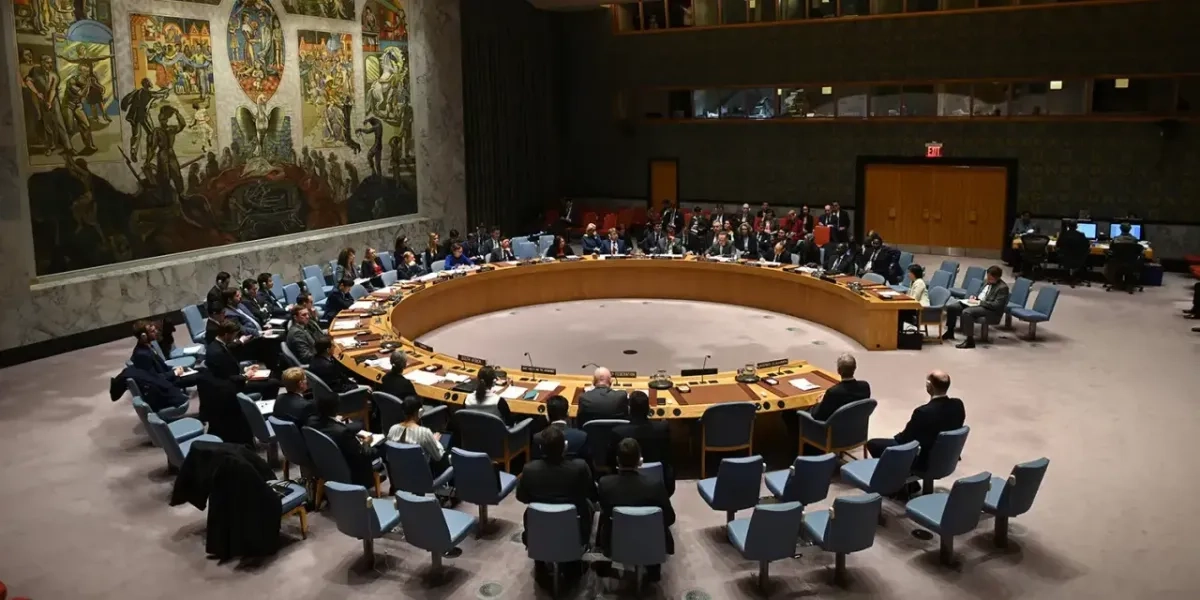
The UN Under-Secretary-General for Africa, Martha Pobee, presented the semi-annual UNOCA report on Central Africa to the Security Council on Tuesday, June 9, outlining a mixed picture of a sub-region marked by persistent armed conflicts, a massive influx of Sudanese refugees into Chad, and a shrinking of political spaces in several member states.
While presenting the 30th report of the UN Regional Office for Central Africa, Ms. Pobee acknowledged the “important steps” taken by the region in electoral processes and institutional reforms. However, she issued a direct warning about the growing restrictions on civil and political rights, calling the trend “worrying in several parts of Central Africa.”
The conflict in Sudan, which has entered its fourth year, dominates the situation report presented in New York. More than 900,000 Sudanese refugees have crossed into eastern Chad, along with 300,000 Chadians returning home. According to Ms. Pobee, the impact of this influx on social cohesion in eastern Chad and the humanitarian situation “cannot be overstated.”
Repeated cross-border incursions and drone strikes against Chadian military positions have also been reported, fueling fears of the Sudanese conflict expanding throughout the sub-region.
Security Pressure in the Lake Chad Basin
Around the Lake Chad basin, violence perpetrated by groups linked to Boko Haram continues against civilian populations in Cameroon and Chad, according to the report. The region’s armies have maintained a sufficient presence to prevent a security collapse but have not succeeded in dismantling the insurgency, with armed factions reassembling by exploiting areas of weak state presence.
Ms. Pobee acknowledged the commitments expressed by Presidents Mahamat Idriss Déby Itno of Chad and Bola Tinubu of Nigeria for enhanced security cooperation. However, she reminded the Council that a purely military response would not suffice to address the root causes of instability. The United Nations has called on multilateral development banks to finance cross-border stabilization, recovery, and resilience programs in the Lake Chad basin, which remain largely underfunded.
The anglophone crisis in the Northwest and Southwest regions of Cameroon, triggered in 2016, was also mentioned in the report, with the UN calling on the international community to strengthen support for national efforts towards peaceful resolution.
The Erosion of Political Freedoms, Case by Case
The report notes a shrinking civic space in at least four states. In Chad, sentences against opposition figures have rekindled political tensions. In Cameroon, the opposition contests extensions of mandates for elected officials and certain institutional reforms. In Gabon, restrictions on access to social media, a controversial nationality law, and the detention of former Prime Minister Alain-Claude Billie-By-Nze are subjects of criticism. In the Republic of Congo, the opposition continues to denounce the conditions of the presidential election held last March.
CEAAC (Economic Community of Central African States), long criticized for its ineffectiveness, has been presented by the UN as a factor of relative hope. The appointment of a new leadership team and the development of a strategic plan covering the period 2026-2030 were welcomed, as was its ambitious drug plan for the next five years. France, for its part, emphasized cooperation in climate matters while noting the need for community alert and resilience mechanisms to be established.
The ongoing Ebola outbreak in eastern Democratic Republic of Congo is among the health concerns listed in the report. The DRC, a non-permanent member of the Security Council since January 1, 2026, for a two-year term, is both a participant in the deliberations and a central subject of several regional issues.
The next semi-annual presentation of the UNOCA report is scheduled for December 2026.
Comments