
Abidjan: sanitation operators ordered to clean up the city within 72 hours
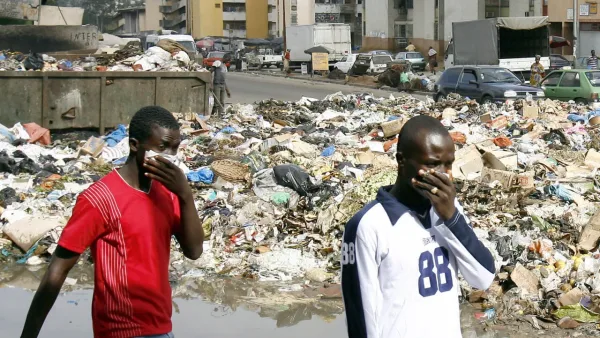
The Ivorian Minister of Sanitation, Amédé Koffi Kouakou, has given private operators 72 hours to clean up Abidjan, which is facing a resurgence of garbage deposits in several neighborhoods. This injunction comes as the economic capital produces more than 5,000 tons of waste per day, and the rainy season exacerbates health and flooding risks.

SUMMARY
The Minister of Water Resources, Sanitation, and Hygiene (MINHAS), Dr. Amédé Koffi Kouakou, gathered all urban sanitation operators from Abidjan at his office on Monday, June 1, and set a 72-hour deadline for them to clean up the city in light of the increasing household waste observed in the area. The summoned operators unanimously committed to meeting the deadline, according to a statement from the ministry.
The collection of household solid waste in the Autonomous District of Abidjan has been handled since 2018 through a public service delegation by two private operators: ECO EBURNIE, a subsidiary of the Portuguese group MOTA ENGIL, and ECOTI.SA. A third operator, CLEAN EBURNIE, manages the Kossihouen Technical Landfill Center (CET), which replaced the former saturated Akouédo dump. These companies operate under the oversight of the National Waste Management Agency (ANAGED) and MINHAS.
The ministerial ultimatum comes in a context of increasing pressure on waste management in Abidjan. The Ivorian economic capital, with over 5 million inhabitants in its expanded metropolitan area, generates more than 5,000 tons of waste each day according to the latest available data, of which effective collection reportedly only covers 3,000 tons, according to UN-Habitat. The rainy season, which intensifies runoff and flooding, worsens the visible effects of collection failures in popular neighborhoods and high-density areas like Yopougon, Abobo, and Adjamé each year.
A Minister with a Background in Major Projects
Amédé Koffi Kouakou is a civil engineer, born on March 26, 1966, in Divo. Graduating at the top of his class from the National School of Public Works (ENSTP) in Yamoussoukro in 1992, he has approximately forty years of experience in public works according to his ministry. He joined the government in 2017 as Minister of Economic Infrastructures, before heading the Ministry of Equipment and Road Maintenance in 2023. He was appointed to lead MINHAS during the cabinet reshuffle on January 23, 2026, in the Mambé 2 government, succeeding Bouaké Fofana.
Upon taking office in January 2026, he announced three priorities: continuity of the projects initiated by his predecessor, including the Sanitation and Hygiene Code adopted under Fofana and the urban waste recovery park in Cocody, innovation, and efficiency. The meeting on June 1 with the operators represents Kouakou’s first public injunction on urban waste issues.
A Recurrent Structural Problem in the Economic Capital
The sanitation crisis in Abidjan is not new. In July 2022, his predecessor Bouaké Fofana had already gathered the same operators – Ecoti.SA, Eco-Eburnie, and local operators – to remind them of their obligations in the face of a similar degradation of the city’s cleanliness. Commitments were made at that time, but the situation has not stabilized sustainably.
The structural factors remain unchanged: gradual saturation of the Kossihouen CET, insufficient truck fleets, accessibility issues in the uneven areas of disadvantaged neighborhoods, and inadequate funding for public cleanliness services – the annual budget allocated by the state to solid waste management in the Abidjan district was estimated at around 42 billion FCFA (64 million euros) according to UN-Habitat, an amount deemed insufficient by sector specialists in light of the volumes to be managed. The concrete outcome of the ultimatum given on June 1 will be known by Thursday, June 4 at the latest.
Comments