
Nigeria: in Lagos, the waste management crisis is intensifying
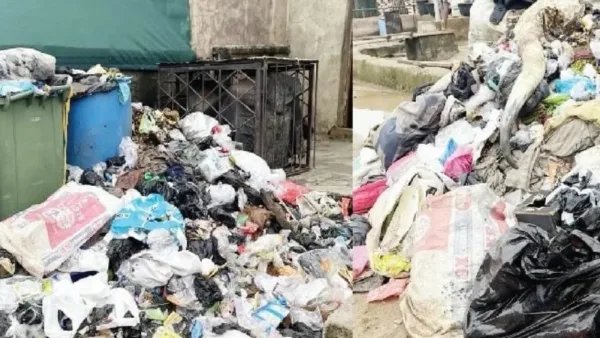
The Lagos government has urgently summoned private waste collection operators following the accumulation of waste in several neighborhoods of the Nigerian megacity. Authorities point to the irregularity of provider visits and blockages at the Olusosun dump, while residents are alerting about health risks and flooding as the rainy season approaches.

SUMMARY
The Lagos State government has ordered the Lagos State Waste Management Authority (LAWMA) to convene an emergency meeting with private sector operators (PSP) after the worsening waste management crisis in several districts, according to a field report by Punch Healthwise and a statement from the Commissioner for Environment and Water Resources, Tokunbo Wahab, made public on Monday, June 1st.
Teams from Punch Metro observed on Saturday along several routes in Oshodi, Isolo, Ajao Estate, Ilasamaja, Mushin, Idi Araba, and Alimosho larger piles of waste than during a previous visit, with some residents comparing them to “mini illegal dumps.” In front of a residential building on Yusuf Street in Oshodi, piles of trash partially block the sidewalk on several adjacent streets. PSP operators attributed this blockage to persistent congestion at the Olusosun dump in Ojota, the state’s main landfill, which is slowing down the entire waste removal chain.
Wahab stated that the emergency directive sent to LAWMA was a result of “residents’ concerns regarding the irregularity of PSP visits, particularly in such a large area as Alimosho.” He expressed satisfaction with resident participation in the monthly cleanliness day in May, held on the same weekend despite the festivities of Eid al-Adha, and announced that an assessment of the districts for a cleanliness ranking was underway.
Health risks documented by residents
The accumulated waste poses direct health risks according to residents interviewed by Punch. Rainwater carries waste into the streets and drainage systems, fueling a proliferation of flies, mosquitoes, and rodents. Several residents have warned of an increased risk of flooding with the intensification of the rainy season, as drainage systems are partially blocked. A local trader noted that some customers turn back upon seeing the waste, with PSPs failing to remove the trash collected during cleaning days.
Philips Obuesi, a waste management policy analyst, estimated Lagos’s daily waste production at over 13,000 metric tons, making it one of the largest waste-producing cities in Sub-Saharan Africa. He called on the government to declare a state of emergency in the sector and to decentralize operations into district structures to improve efficiency and accountability. According to him, the challenge is more organizational and logistical than it is about capacity.
A recent institutional reform tested on the ground
Lagos reintroduced the monthly environmental sanitation day at the beginning of 2026, which had been suspended for nearly ten years. Wahab noted that the first two months of operations showed “not bad at all” results, citing increasing participation and better collective awareness. The local government in Alimosho deployed two additional compactor trucks to support LAWMA’s equipment, an initiative praised by the commissioner as “the type of proactive partnership we need in all districts.”
The director-general of LAWMA, Muyiwa Gbedegesin, did not respond to calls and messages from Punch journalists at the time of publication.
Lagos, with an estimated population of over 20 million in its expanded metropolitan area, is the largest metropolis in Sub-Saharan Africa. Its ongoing population growth exerts increasing pressure on waste management infrastructure, which has not seen a proportionate increase in capacity for several years.
Comments