
Benin: why many executives from the UP-R and BR were not selected for the Wadagni government
The publication of President Romuald Wadagni’s first government continues to provoke reactions within the presidential movement. While several activists and leaders from the Union Progressiste Le Renouveau (UP-R) and the Bloc Républicain (BR) hoped to see more political figures join the government team, the choices made seem to have followed a logic quite different from that of partisan quotas.

SUMMARY
One week after the formation of President Romuald Wadagni’s first government, comments continue to flow within the presidential movement. Within the Union Progressiste Le Renouveau (UP-R) and the Bloc Républicain (BR), some activists struggle to understand why several well-known leaders, often very engaged in political battles over the past few years, were not called to serve in the new government team.
The question is even more pressing given that the two major parties supporting the government have a significant pool of experienced personalities. According to several sources, each party had prepared a list of around twenty names likely to be proposed to the new head of state as part of the government formation.
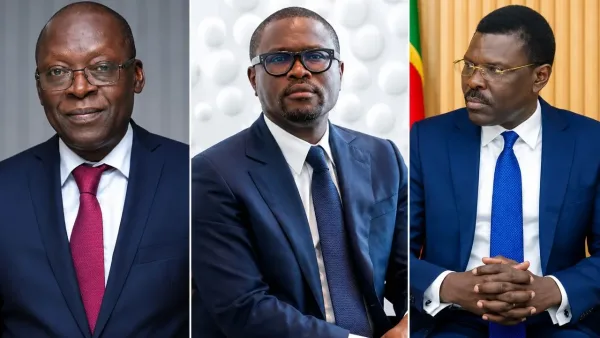
But in the end, the outcome is quite different. The government formed by Romuald Wadagni does include several political figures from the UP-R and the BR, but it is largely dominated by technocratic profiles. Several ministers are better known for their administrative, technical skills or experience in implementing public reforms than for their political commitments.
The Choice of Continuity
Indeed, the primary criterion guiding the nominations has been the will to preserve the dynamic of transformation initiated since 2016 under former President Patrice Talon. This orientation is reflected in the retention of several former ministers in sectors deemed strategic. The objective seems to be to avoid a sudden break in the implementation of major projects and to ensure the continuity of already initiated reforms.
In this logic, political affiliation might not have been the main element taken into account. The ability to continue ongoing programs, to produce quick results, and to handle the dossiers would have weighed more heavily in the balance.
A Government Designed for Efficiency
During a meeting with party activists in Littoral, the statements of UP-R President Joseph Djogbénou shed light on the decisions that were made. Acknowledging that the composition of the government was “difficult“, he explained to his activists that the challenge was to choose individuals capable of effectively assisting the head of state in pursuing the country’s development project.
Through this message, the UP-R leader suggests that considerations of competence, experience, and understanding of the mandate’s objectives took precedence over political reward logics. In other words, having actively campaigned for a party or having participated in the electoral victory was not a guarantee of entry into the government.
Forming a government is often a delicate exercise. The president must take into account several parameters: skills, political balances, representation of sensitivities, continuity of public action, personal trust, and the objectives set for his mandate.
In the case of the Wadagni government, the limited number of ministerial portfolios also played a role. With only 25 members, it was impossible to meet all the expectations expressed within the two major parties of the movement. Many leaders, sometimes very influential in their respective formations, thus find themselves waiting for other opportunities within public administration, institutions, or structures for implementing government policies.
Djogbénou Attempts to Calm Unrest
Aware of the frustrations expressed in certain activist circles, Joseph Djogbénou has chosen to speak out. “I know that many among you have the legitimacy, merit, and competence to be part of it“, he stated to UP-R activists.
Through this statement, the President of the National Assembly implicitly acknowledges the existence of disappointed expectations. But at the same time, he encourages party leaders to prioritize the country’s greater interest over individual ambitions. “I know that we, at the Union Progressiste Le Renouveau (UP-R), place the general interest above all, Benin“, he continued.
This discourse primarily aims to maintain internal cohesion within the movement at a moment when the new power is establishing itself and where initial frustrations could fuel political tensions.
Moreover, this choice does not end the ambitions of the political leaders of the UP-R and the BR. But it shows that, for this first government team, the pursuit of performance and continuity of public action have clearly weighed more than considerations of partisan representation.
Comments