
“Togbè Yéton vs Meko Prod: who really owns the mask?”
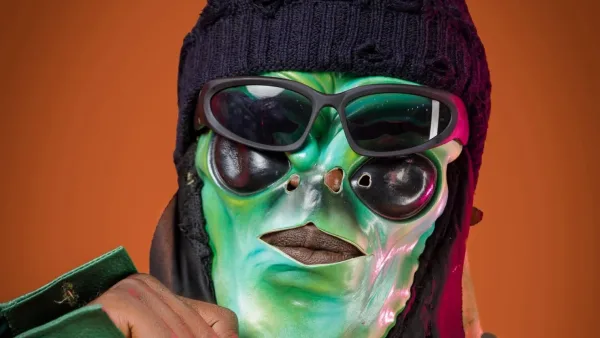
Consumed at the end of June 2026, the break between Togbè Yéton and Meko Prod quickly transcended the strictly professional framework. On social media, particularly Facebook and TikTok, the issue sparked a strong public mobilization, mostly concerned about the fate of the artist who embodied, in recent years, the famous masked character. At the heart of the dispute is a question as sensitive as it is complex: who really owns Togbè Yéton? The label that claims to have designed, structured, and protected the concept since its inception, or the artist who, through his voice, energy, and presence, gave life to this character that became popular among the Beninese public?

SUMMARY
The Beninese showbiz scene was shaken at the end of June 2026 by the public outbreak of a crisis brewing for several months between MEKO PROD, one of the most influential music labels in Benin, and its flagship artist, the masked rapper TOGBE YETON. Through a series of videos widely shared on social media, notably Facebook and TikTok, the artist spoke out to denounce serious shortcomings of his producer, including the non-payment of streaming revenues, the reporting and removal of his clips from digital platforms, and the alleged deletion of his official page. These accusations immediately ignited the Beninese internet and propelled the issue to the level of a national topic.
On Friday, June 27, 2026, MEKO PROD, founded by Koffi Vivien Medenou, broke its silence with an official statement reminding that the concept of the “mask” and the artistic identity “TOGBE YETON” are the exclusive property of the label, “in accordance with the provisions clearly stipulated in the contract signed by the concerned artist.” The label announced the arrival of a “Togbè 2.0,” a new bearer of the mask, while referring any potential dispute to the competent courts, even stating it is ready to cover 50% of the legal expenses of the opposing party.
On his part, the artist who has long embodied Togbè Yéton delivered a very different version. The artist, now renamed DESPELADO, created a new page on social media, taking with him the loyalty of a fan base that refuses to be transferred as a contractual asset. In several statements widely shared online, he expressed his bitterness and denounced a situation he considers unfavorable. He claims, in particular, not to have received any income from the streaming of his songs. He also accuses his former label of having reported some of his content on digital platforms, including a clip he says he co-financed. These accusations, at this stage, are based on his statements and have not yet been resolved by a court decision.
An artistic identity at the heart of the dispute
The matter is all the more sensitive since Togbè Yéton is not just a stage name. The character was built around a mask, anonymity, a visual universe, and a recognizable style. These elements have contributed to his notoriety and the public’s attachment. According to Meko Prod, the Togbè Yéton concept was born in 2017 within the Meko Family universe. The first bearer of the mask would have been Dean Weezi, before the character was handed over to another performer who became more popular among the public up until the break in 2026. This version allows the label to argue that Togbè Yéton is an artistic identity independent of the person who embodies it. In this logic, the mask, name, and universe of the character would belong to Meko Prod and could be passed on to a new artist.
This position is contested by part of the public. For many fans, Togbè Yéton is not limited to the mask or the name. The character’s success also relies on the voice, lyrics, personality, and the connection created by the artist who has carried it in recent years.
After his separation from Meko Prod, the former performer of Togbè Yéton chose to continue his career under the name Dexpelado, sometimes spelled Despelado. He opened new pages on social media and called on his fans to follow him. This name change marks a break from the identity claimed by Meko Prod. It also reflects the artist’s desire to continue his career outside the character whose ownership is currently disputed.
For its part, Meko Prod claims it wants to continue the Togbè Yéton concept with a new bearer of the mask. The label thus intends to defend the continuity of a project it presents as its creation. It remains to be seen whether the public will accept this new incarnation.
Comments