
In Benin, the Dangnivo affair resurfaces as the country prepares to establish its Senate.
Six years after the disappearance of Pierre Urbain Dangnivo, the case continues to haunt Benin’s public life. Born in a climate of high political tension under the regime of Boni Yayi, relaunched several times without ever knowing its conclusion, it returns once again to the courts as Benin enters a new institutional phase marked by the post-Talon era, the arrival of Romuald Wadagni in power, and soon the establishment of the Senate.

SUMMARY
- A disappearance in an explosive political climate
- 2015: the trial opens and revives suspicions
- A long silence under Talon
- 2025: a resumption at a time of major institutional reform
- June 2026: the case returns in the post-Talon Benin
- A judicial case turned political barometer
- July 3: a hearing anticipated at the turning point
Since the disappearance of Pierre Urbain Dangnivo on August 17, 2010, his legal case has never followed the linear trajectory of an ordinary criminal case. Each of its major reactivate occurrences – in 2010, 2015, 2025, and now in June 2026 – coincides with a politically or institutionally sensitive period in Benin. The correlation, too regular to be coincidental, invites one to read this case as a structural revealer of the tensions between justice, memory, and power in the country. As Benin prepares to establish its Senate, a new institution arising from the constitutional revision of November 2025, the Dangnivo case once again comes to the fore – and the question of its timeline arises with particular acuteness.
The Dangnivo case is no longer just a criminal case. Over the years, it seems to have become a mirror of the country’s political crises. Each major reappearance of the case appears to coincide with a sensitive moment in Benin’s institutional life: the 2011 presidential election, the end of the Yayi regime in 2015, the constitutional reshaping of 2025, and then the Talon-Wadagni transition in 2026. This repetition alone is not sufficient to establish a political manipulation of the case. But it imposes a broader reading, that of a legal matter which, lacking a definitive resolution, continues to serve as a revealer of the complex relationships between justice, power, memory, and impunity.
A disappearance in an explosive political climate
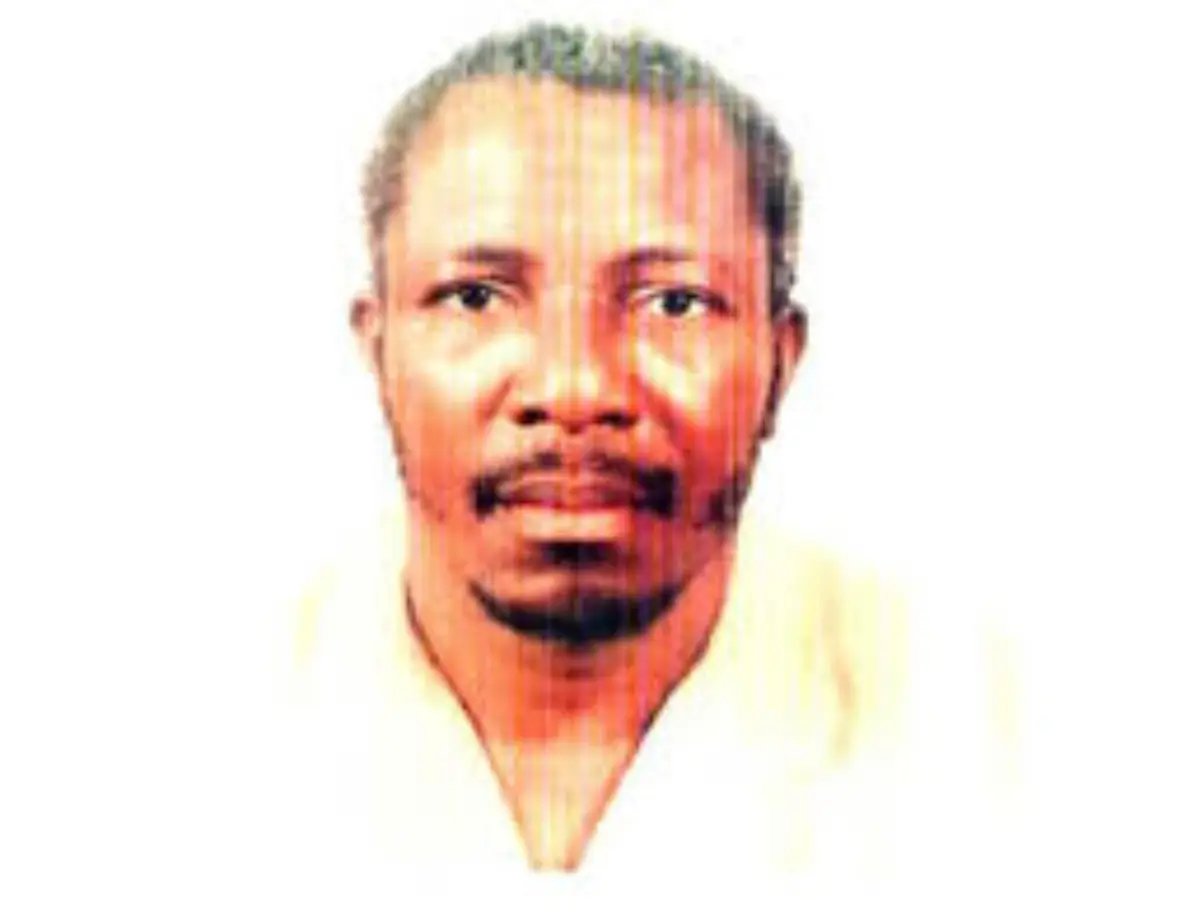
On August 17, 2010, Pierre Urbain Dangnivo, a senior official in the Ministry of Economy and Finance, disappears after his workday. His disappearance quickly causes a shockwave. Dangnivo was not an ordinary civil servant. He was known in union circles, notably within the FESYNTRA-Finances, and was also a member of the Social Democratic Party, which at the time was in opposition to Boni Yayi’s government.
His profile immediately makes the case sensitive. At the time, Benin was shaken by the ICC Services scandal, a vast affair of fraudulent financial investments that ruined many savers and put pressure on the government. At the same time, the country was preparing for the 2011 presidential election. Boni Yayi was seeking a second term, while a significant part of the opposition was regrouping under the Union fait la Nation to try to block his path.
It is in this climate that Dangnivo’s disappearance takes on a political dimension. For his loved ones, for unions, and for part of public opinion, the hypothesis of a simple common crime is not enough to explain the circumstances surrounding the case. Early on, suspicions began to point towards a possible state affair, even though no definitive judicial decision has, to this day, established political responsibility at the highest level.
On September 27, 2010, authorities exhumed a body in the yard of a charlatan named Codjo Cossi Alofa in Womey, a commune in Abomey-Calavi, claiming it to be Dangnivo. The victim’s brother, Grégoire Messan Dangnivo, who witnessed the exhumation, categorically refuses to recognize the body and publicly denounces a “state fabrication.” Morphological anomalies are reported, and DNA tests ordered from international laboratories, including in France, produce contradictory or inconclusive results, significantly feeding the theory of a body substitution.
In the face of popular pressure, Alofa and his alleged accomplice Donatien Amoussou are arrested and imprisoned in the civil prison of Akpro-Missérété. President Yayi publicly states that this is a “problem of one Adja who killed another Adja,” attempting to depoliticize the case. This attempt at a quick closure convinces neither the unions, nor the opposition, nor the Dangnivo family.
2015: the trial opens and revives suspicions
After several years of waiting, the trial opens on November 3, 2015, at the Assize Court of Cotonou, after two successive adjournments. The timing is not insignificant. Benin is just months away from the 2016 presidential election, which is to mark the end of Boni Yayi’s two terms. The political landscape is undergoing a major reshaping. Patrice Talon, who had long been at odds with the Yayi government before his return from exile, is preparing to enter the presidential race. Alliances are forming, rivalries are intensifying, and the outgoing regime is trying to organize its succession.
In this context, the Dangnivo trial quickly takes a spectacular turn. In court, Codjo Cossi Alofa retracts his previous statements. He claims he never knew Dangnivo and that he agreed to take on the role of the killer under duress, after being promised 25 million FCFA and a mere four-month imprisonment. He describes the case as a “theater” and a “Yayi scenario.” His co-defendant Donatien Amoussou goes further: he names Boni Yayi directly as the instigator of the “scenario” and mentions receiving assignments under the orders of Colonel Séverin Koumassegbô, then head of presidential security. These revelations create a national shockwave, especially since they occur just months before a presidential election where Yayi is still in office.
In February 2015, even before the Assize Court opens, Alofa escapes from the civil prison of Akpro-Missérété under circumstances never clarified. Captured in Togo a few months later, he claims to have been dropped off at the border with 50,000 FCFA to facilitate his escape. This escape, viewed by many as an attempt to silence him before the trial, fuels suspicions of complicities at the highest levels of the security apparatus of the time.
The trial of 2015 ultimately ends without a verdict. The case is put on hold, leaving the accused in prolonged preventive detention for years.
A long silence under Talon
Patrice Talon’s arrival in power in 2016 could have opened a new phase. The new president had himself been in open conflict with the previous regime. Therefore, some might have expected that the sensitive cases of the Yayi era would be brought back into the spotlight. Yet, the Dangnivo case does not experience any real decisive acceleration.
This prolonged silence is itself politically significant. Fully reviving the case posed the risk of disturbing the most sensitive areas of the security and judicial apparatus of the Yayi era. However, burying it definitively would have been difficult, as the case remained symbolic for unions, the Dangnivo family, and part of public opinion.
Meanwhile, the Beninese political landscape undergoes a profound transformation. The Talon years are marked by a restructuring of the party system, the creation of the CRIET, tensions with several opposition figures, and an increased concentration of institutional power. In this new context, the Dangnivo case remains suspended: too heavy to disappear, too explosive to be treated as an ordinary case.
An important signal, however, arises in November 2024 with the arrest of General Louis Philippe Houndégnon, former Director General of the National Police under Boni Yayi. His arrest pertains to other matters, but his name frequently resurfaces in discussions surrounding the Dangnivo case. From this point, a political and judicial connection appears to emerge between several sequences of the Yayi era and the new power dynamics under Talon.
2025: a resumption at a time of major institutional reform
On March 11, 2025, the trial officially resumes before the court in Cotonou. Fifteen years after Dangnivo’s disappearance, the hearings bring back to the forefront the contradictions, testimonies, and accusations that have accumulated since 2010.
Again, the timing is notable. The year 2025 marks a major constitutional reform in Benin. In November, the National Assembly passes a revision that creates the Senate, extends legislative terms, and modifies the country’s institutional architecture. The presidential mandate, that of deputies, and that of local elected officials extends from five to seven years. Simultaneously, the succession of Patrice Talon is being prepared around Romuald Wadagni, then Minister of Economy and Finance and the designated successor of the majority.
The 2025 hearings rekindle questions. The two defendants maintain that they are not the authors of the crime. Witnesses are called. Key figures from the past security apparatus are mentioned or expected. Colonel Séverin Koumassegbô, former head of presidential security under Boni Yayi, and Enock Laourou, former head of intelligence services, are among the names invoked during the debates.
As the hearings progress, the case evolves into a matter that exceeds the mere question of the identity of the material author of the crime. It now involves whether the initial investigation was guided, whether confessions were obtained under pressure, whether the two defendants served as scapegoats, and whether more powerful actors were protected.
But once again, the judicial dynamic is interrupted. After several days of hearings, the trial is postponed. The case falls back into silence until its resumption in June 2026.
June 2026: the case returns in the post-Talon Benin
The resumption of the trial on June 26, 2026, takes place in an equally sensitive political environment. Romuald Wadagni was elected president of the Republic in April 2026 and succeeded Patrice Talon in May. Benin enters a new institutional cycle. However, this change takes place within the ongoing political continuity of the previous regime, since Wadagni was one of the economic pillars of the Talon government for ten years.
At the same time, the Senate, created by the constitutional revision of 2025, becomes one of the major new features of the Beninese institutional landscape. This chamber is set to include former presidents of the Republic as members by right. Patrice Talon, now a former head of state, thus finds a new institutional place there. For supporters of the reform, the Senate is meant to play a role of wisdom, regulation, and stability. For its critics, it might also become a mechanism for extending the influence of former power holders.
It is in this context that the hearing on June 26, 2026, takes on particular significance. In court, Grégoire Dangnivo, the victim’s brother, exonerates the two main defendants, Codjo Cossi Alofa and Donatien Amoussou, from any direct responsibility for the murder. His position does not close the case; it shifts it. For him, the issue is no longer just to judge the two men present in the dock, but to understand the behind-the-scenes of the initial investigation and to identify those who may have organized or covered up a setup.
The defense then requests the appearance of General Louis Philippe Houndégnon. This request gives the hearing a potentially decisive dimension. If the former head of the national police were heard in this case, the trial could enter a new phase, with the risk of bringing to light responsibilities or information that have remained hidden until now.
The court ultimately adjourns the case until July 3, 2026. One more week in a case that already spans sixteen years. But this postponement is not trivial: it occurs at a time when the central question becomes less about the defendants officially prosecuted, and increasingly about the chain of decisions that constructed the initial version of the case.
A judicial case turned political barometer
The Dangnivo case thus seems to be becoming a barometer for the rule of law in Benin, raising several fundamental questions. Can a unionist and political activist disappear without all responsibilities being established? Can retracted confessions continue to structure a trial for sixteen years? Can figures from the security apparatus be heard without the procedure being hampered by political considerations? Does a change in government suffice to guarantee the manifestation of truth?
The difficulty of the case lies precisely in this overlap of issues. Judicially, it is a criminal trial with two defendants, a victim, a family, and a procedure. Politically, it is a case that originated under Yayi, remained suspended under Talon, and resumed under Wadagni. Institutionally, it resurfaces at a time when the country is reconfiguring its architecture with the Senate and a presidential mandate now extended to seven years.
The regularity with which the case re-emerges at sensitive times in national life does not prove manipulation. However, it shows that the Dangnivo case has become a permanent point of tension. It resurfaces when power is being reshaped, when former balances shift, when institutions change form, or when certain actors from the previous state apparatus become politically exposed once again.
July 3: a hearing anticipated at the turning point
The upcoming hearing scheduled for July 3, 2026, could therefore be crucial. The justice system will have to decide whether it accepts to go further in hearing the personalities requested by the defense and the civil party. It will also have to address a now unavoidable question: what remains of the initial accusation if the victim’s family itself considers that the two main defendants are not the true authors of the crime?
For the new power, the case is a heavy inheritance. Romuald Wadagni inherits both the institutional reforms of Patrice Talon, the establishment of the Senate, and a Dangnivo case that has never ceased to question the Beninese state’s capacity to confront its dark zones. How this trial evolves will reveal much about the real distance the new regime intends to take from the sensitive cases of the past.
Comments