
After the diplomatic break with Burkina Faso, the AES is now aligned with Paris.
Burkina Faso announced, on Friday, June 26, 2026, the immediate rupture of its diplomatic relations with France. This decision, presented by Ouagadougou as an act of sovereignty, confirms the deep deterioration of relations between the two countries and now aligns Burkina Faso with the position of Mali and Niger within the AES.

SUMMARY
Burkina Faso announced the immediate rupture of its diplomatic relations with France. This decision, made public on Friday, June 26, 2026, marks a new step in the deterioration of relations between Ouagadougou and Paris, which have already significantly declined since the rise to power of Captain Ibrahim Traoré.
The announcement was made through a statement read on national television by the government spokesperson, Pingdwendé Gilbert Ouédraogo. According to Burkinabè authorities, this rupture takes effect from June 26, 2026.
Ouagadougou reproaches Paris for an attitude deemed contrary to the interests of Burkina Faso. The Burkinabè government notably mentions accusations of interference, neocolonial ambitions, and support for networks presented as hostile to the country. These accusations are rejected by France, which denounces the decision as “hostile and unfounded.”
The decision from Burkina Faso does not arise in a calm context. Since the coup d’état in September 2022, relations between Ouagadougou and Paris have gradually become strained. In recent years, Burkinabè authorities have made numerous decisions reflecting their desire to reduce French influence in the country.
In January 2023, Ouagadougou had requested the departure of the French special forces present as part of Operation Sabre. Subsequently, several French media outlets, including RFI, France 24, and then TV5 Monde, have been suspended or banned from broadcasting. French diplomats have also been expelled in an atmosphere of recurring accusations of activities deemed incompatible with the interests of Burkina Faso.
This diplomatic rupture thus appears to be the culmination of a process already underway for several years. It confirms the choice of Burkinabè authorities to break with the former framework of cooperation with France, particularly in the diplomatic, military, and media fields.
France, for its part, states that it acknowledges Ouagadougou’s decision. The French Ministry of Foreign Affairs indicates that it is examining measures of reciprocity and urges its nationals in Burkina Faso to exercise increased vigilance.
The AES now aligned against Paris
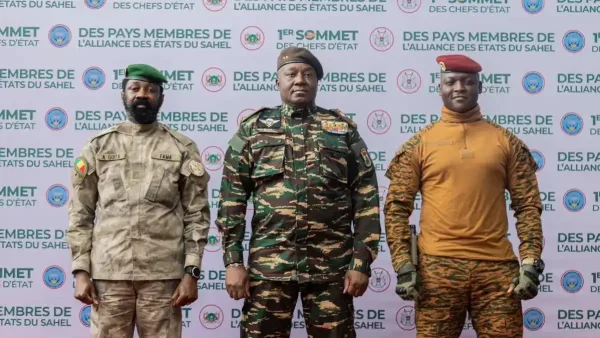
With this decision, Burkina Faso joins Mali and Niger in an explicit break with France. The three member countries of the Confederation of Sahel States now display a common position against Paris.
Mali and Niger had already initiated their own process of rupture with France, in a context marked by political, military, and diplomatic tensions. Burkina Faso thus completes the alignment of the three AES countries on a sovereignty-focused and anti-interference stance.
This evolution confirms the ongoing reconfiguration in the Sahel. After their withdrawal from ECOWAS, Mali, Burkina Faso, and Niger have strengthened their cooperation within the AES and diversified their partnerships, notably towards Russia, Turkey, and Iran.
For Ouagadougou, the break with Paris is part of a clear intention to redefine its alliances and regain control over its diplomatic and security choices. For France, it marks a further retreat of its influence in a region where it has long held a central position.
This decision now opens a period of uncertainty regarding the management of diplomatic, consular, and security interests between the two countries. It primarily confirms that the francophone Sahel has entered a new phase of reconfiguration, where the AES intends to speak with one voice against its former Western partners.
Comments