
Ivory Coast: the suspected author of the demolitions in Koumassi Campement, Alloui Brou Jacques, has been arrested.
Alloui Brou Jacques, former deputy mayor of Koumassi, was arrested near Grand-Bassam after two weeks of searches related to the controversial demolitions in the Campement neighborhood. Wanted since the statement from the prosecutor of Abidjan-Plateau, he is being charged with allegations of willful destruction of property, disturbance of public order, and real estate fraud.

SUMMARY
Alloui Brou Jacques, former deputy mayor of Koumassi accused of the controversial demolitions in the Campement neighborhood on June 3, was arrested on Thursday, June 18, near Grand-Bassam, a seaside town located about forty kilometers east of Abidjan, where he had taken refuge, according to the online media Afrik Soir citing sources close to the investigation. He had been wanted since June 10, the date on which the prosecutor of the Republic at the court of first instance of Abidjan-Plateau, Koné Braman Oumar, ordered his arrest through an official statement. He is presumed innocent, as the charges against him have not been adjudicated.
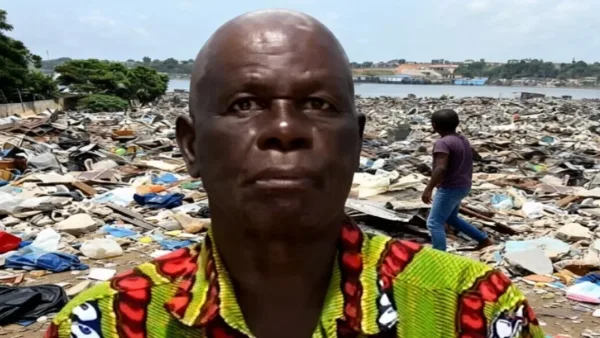
The case erupted on June 3, 2026 when an operation to demolish homes encompassing approximately ten hectares of makeshift constructions in the Campement neighborhood of Koumassi, in southern Abidjan, left dozens of families homeless. Alloui Brou Jacques, who presented himself as an economic operator, publicly claimed responsibility for these demolitions in videos shared on social media, asserting that he held property rights over 34 hectares which he claimed to have acquired while serving as second deputy mayor of Koumassi between 1996 and 2001, alongside the PDCI mayor Adou Assalé.
To justify his action, he brandished a court decision and a fill-in order dating from 2021, which he attributed to Secretary of State Célestin Serey Doh, who has since become a delegated minister. The prosecutor formally challenged this legal basis. According to his statement from June 10, the court decision referenced did not allow any demolition, as the request in this regard had been denied by the court and only concerned five constructions, not the entire neighborhood.
A relocation no one claims responsibility for
The operation sparked a wave of outrage. The Koumassi town hall, led by Narcisse Toussaint Balley, immediately distanced itself, clarifying that it was not a municipal action. The Minister of National Cohesion, Solidarity, and the Fight against Poverty, Myss Belmonde Dogo, visited the victims and called for the operation to be halted, reminding that the government was not the initiator of the operation.
The prosecutor’s statement gave the case its judicial dimension. The charges against Alloui Brou Jacques, according to the public prosecutor, are willful destruction of the property of others, disturbance of public order, and real estate fraud. The magistrate then labeled the individual as unavailable and instructed police services to actively seek him out.
The Association for the Defense of Ivorian Consumers has, for its part, questioned the responsibility of the administration, publicly wondering about the complicities that allowed an individual to carry out a large-scale demolition operation in broad daylight, visible to everyone, based on disputed documents.
Land pressure as a backdrop
The High Authority for Good Governance (HABG) has announced, in parallel with the judicial proceedings, the opening of its own investigations into possible administrative irregularities related to the land issue, according to the newspaper Fraternité Matin.
The case of Koumassi Campement highlights a recurring phenomenon in Abidjan, where land pressure is high and property titles are frequently disputed. Several popular neighborhoods find themselves at the crossroads of customary rights, various administrative documents, long-standing occupations, and development projects. The Campement neighborhood, long established, housed families that mostly did not have formalized property titles, making them vulnerable to such operations.
The arrest of Alloui Brou Jacques paves the way for a criminal procedure whose outcome will determine whether responsibility lies solely with him or if administrative or judicial complicities will be established.
Comments