
Nigeria-Benin-Niger: Abuja opens a new front against the terrorist advance
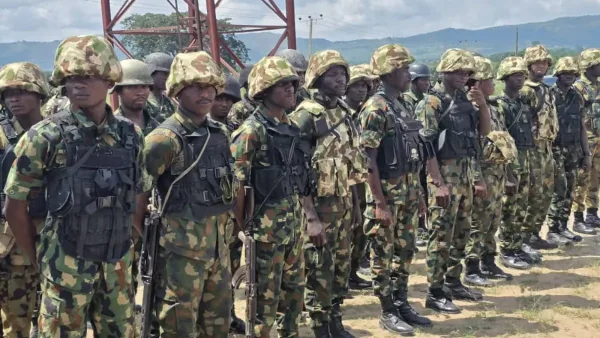
Nigeria aims to strengthen its military cooperation with Benin and Niger in response to the expansion of terrorist groups in the sub-region. The announcement was made by the Nigerian Minister of Defence, retired General Christopher Musa, as authorities in Abuja express concern over the advance of armed fighters toward the northwest of the country.

SUMMARY
According to the Nigerian official, a new operational sector is being established to cover the border area between Nigeria, Benin, and Niger. The goal is to better control this strategic space, which has become a potential transit zone for armed groups active in the Sahel.
Abuja is particularly worried about the movements of the Support Group for Islam and Muslims, known by its acronym JNIM, affiliated with Al-Qaeda. According to Christopher Musa, these fighters are looking to exploit the porous borders between Burkina Faso, Benin, and Nigeria to expand their operations into Nigerian territory.
The newly announced setup is thus expected to give Nigerian forces greater freedom of action in this area. No specific timeline has yet been provided for its effective deployment.
A threat that overflows borders
This initiative comes in a tense regional security context. Central Sahel continues to be marked by the activity of armed groups in Mali, Burkina Faso, and Niger. The northern part of Benin has also been exposed to attacks in border areas for several years, particularly in the departments of Alibori and Atacora.
For Nigeria, the main concern is the risk of a junction between Sahelian jihadist groups and the already existing security hotspots in the northwest of the country. This Nigerian region is facing armed attacks, kidnappings, and the activity of criminal and terrorist groups.
The border with Benin thus takes on particular importance. It could become, according to Abuja, a transit corridor for fighters coming from Burkina Faso seeking to enter Nigeria. This is the scenario the Nigerian government claims it wants to prevent through closer cooperation with Cotonou and Niamey.
The most sensitive aspect concerns Niger. Following the coup in July 2023 in Niamey, relations between Nigeria and Niger have experienced strong diplomatic tensions. Abuja, then at the head of ECOWAS, had supported a firm stance against the Nigerien junta before the gradual easing of regional sanctions.
Despite this political context, Christopher Musa assures that military cooperation remains possible. According to him, the armed forces of the concerned countries have managed to maintain operational channels to face the common threat.
This distinction between diplomatic tensions and security cooperation reflects a regional reality: the armed threat transcends borders and compels neighboring states to coordinate their actions, even when their political relations are fragile.
Abuja looks to secure its borders
For Benin, the Nigerian announcement confirms the country’s strategic position in the fight against insecurity from the Sahel. Long considered relatively spared, Benin’s territory is now integrated into regional security concerns. The northern areas of the country, close to Burkina Faso, Niger, and Nigeria, represent a sensitive space for defense forces. Cooperation with Abuja could enhance border monitoring, intelligence sharing, and operation coordination.
But it also exposes Benin to increased security pressure. If armed groups indeed seek to use Beninese territory as a corridor to Nigeria, Cotonou will need to maintain a high level of vigilance on its border routes.
Nigeria has been facing jihadist violence for more than fifteen years, first in the northeast with Boko Haram and the Islamic State in West Africa, and then in other regions weakened by insecurity. The porosity of the borders remains one of the main challenges for the Nigerian army. The new sector announced by Christopher Musa aligns with this strategy of securing borders. Abuja aims to prevent armed groups from exploiting territorial gaps between neighboring states to move, resupply, or open new fronts.
However, the success of this strategy will depend on coordination with Benin and Niger. Without intelligence exchanges, joint operations, and continuous surveillance of border areas, the initiative may remain limited.
A regional response still under construction
The Nigerian announcement shows that the fight against armed groups is gradually entering a more transboundary phase. Nigeria, Benin, and Niger share common security interests, despite differing political contexts.
For Abuja, it is about preventing the lasting presence of Sahelian fighters in northwestern Nigeria. For Cotonou, the challenge is to ensure that northern Benin does not become a passage or retreat area. For Niamey, despite its tensions with several neighbors, military cooperation remains necessary in the face of groups that already operate on multiple fronts.
The announced initiative is not yet fully detailed. But it marks an important evolution: in the face of the jihadist threat, Nigeria now wants to treat the border with Benin and Niger as a priority area for regional security.
Comments