
Kémi Séba abandoned by Niger?
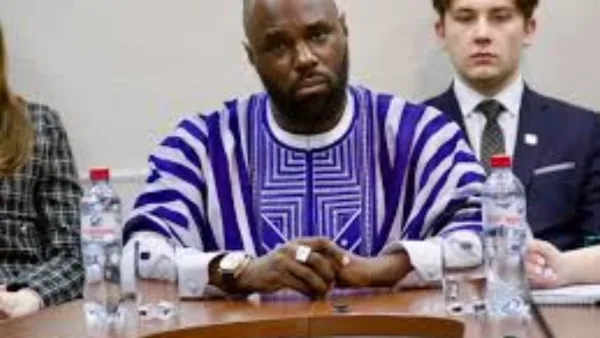
Special advisor to the Nigerien authorities and holder of a diplomatic passport from Niger, Kémi Séba has been detained in South Africa for three months. While Benin is demanding his extradition, the restraint observed by Niamey contrasts with the closeness previously shown to the pan-Africanist activist. This discretion raises questions about the evolution of their relationship.

SUMMARY
Is Niger gradually distancing itself from Kémi Séba? Since the arrest of the pan-Africanist activist in South Africa on April 13, 2026, this question has been repeatedly raised. Three months after his apprehension, the Nigerien authorities have not initiated any diplomatic or political offensive in his favor, even though they had granted him a diplomatic passport and presented him as one of their special advisors.
The case took a new turn on July 14. The Pretoria court, which was supposed to examine the extradition request made by Benin, has once again postponed the matter until August 11, 2026. This delay extends a process already marked by multiple adjournments.
Known as Stellio Gilles Robert Capo Chichi, Kémi Séba is being pursued by the Beninese justice system on multiple counts. Two international arrest warrants have been issued against him, notably for money laundering, advocating crime, and inciting hatred and violence. The charges are particularly linked to his public support for the coup attempt on December 7, 2025, against former President Patrice Talon. The activist has denied these accusations and claims he would not receive a fair trial if handed over to the Beninese authorities.
A diplomatic passport without real protection
One of the most commented aspects of this case remains the Nigerien diplomatic passport held by Kémi Séba. Following his arrest, several reports suggested that this document might be withdrawn by Niamey. The Nigerien Minister of Foreign Affairs, Bakary Yaou Sangaré, quickly denied these rumors, clarifying that the individual still held this passport at the time of his apprehension.
The Niger embassy in South Africa also confirmed the authenticity of the document before the South African court. However, Niamey has refrained from publicly demanding the release of its advisor or opposing the extradition process initiated against him.
For several observers, this position reflects a desire to respect the South African judicial framework. Others see it mainly as a way to avoid a diplomatic confrontation with Benin. Moreover, legal specialists remind us that possessing a diplomatic passport does not automatically grant judicial immunity. This immunity generally depends on the performance of an official mission recognized by the host state, which did not seem to be the case for Kémi Séba at the time of his arrest.
A warming Niger–Benin that complicates the issue
This relative silence comes as relations between Niamey and Cotonou, which were long strained, are experiencing a clear warming. Nigerien Prime Minister Ali Mahaman Lamine Zeine visited Benin on May 24 for the inauguration of the new president, Romuald Wadagni, before the latter undertook a tour of the Sahel States Alliance countries. Such a rapprochement offers little incentive for Niamey to turn the Séba case into a diplomatic standoff, especially since Niger’s access to Beninese ports remains a major economic issue for this landlocked country.
In this context, turning Kémi Séba’s case into a diplomatic crisis would present few advantages for the Nigerien authorities. Beyond bilateral considerations, several analysts believe this case highlights the limitations of pan-African discourse when confronted with the realities of exercising power. While Kémi Séba has long embodied media support for the military regimes of the Sahel, states are ultimately guided by their diplomatic, security, and economic interests.
Another notable element is that the mobilization around Kémi Séba seems today less significant than immediately following his arrest. Calls for his release have become rarer, and the Sahel States Alliance (AES) has not officially commented on his case.
However, nothing suggests that Niger has officially broken from its special advisor. His diplomatic passport has not been revoked, and the Nigerien authorities continue to respond, with much restraint, to inquiries about this matter. The gap between the support displayed before his arrest and the discretion observed since then fuels speculation.
Comments