
Ivory Coast: Alassane Ouattara justifies his 4th term due to the terrorist threat
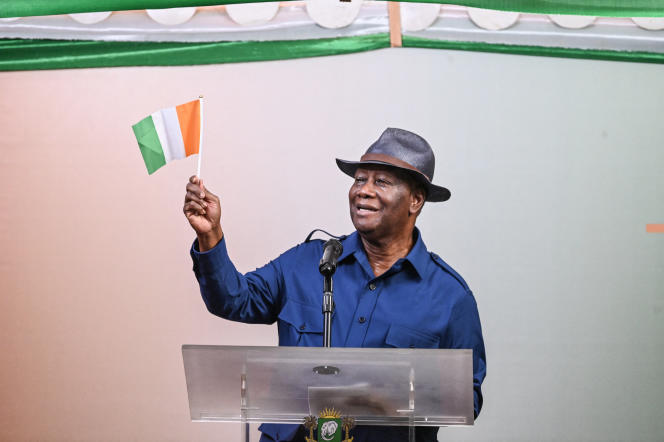
The Ivorian president, Alassane Ouattara, officially announced his candidacy for the presidential election scheduled for October 25, 2025, in a national address. Although he had previously mentioned his intention to pass the torch to a new generation, the head of state now justifies his comeback by the increasing security threats weighing on the country and the sub-region.

SUMMARY
“Yes, I am a candidate because our country’s Constitution allows me to serve another term, and my health permits it,” he declared, adding that “our country is facing unprecedented security, economic, and monetary challenges, the management of which requires experience.”
At the heart of his concerns is the rise of terrorism in the West African sub-region. The president emphasized that the threat is increasingly present on Ivory Coast’s borders, which makes the continuity of governmental action indispensable. “The terrorist threat is growing in the sub-region, and international economic uncertainties pose a risk to our country. It’s a reality that no one can deny. It’s a reality that I cannot ignore,” he insisted.
This announcement comes in a regional context marked by instability, with a series of coups and security tensions in several neighboring countries. By running again, Alassane Ouattara claims he wants to preserve the achievements of peace, stability, and development in Ivory Coast. He promises that this term, if elected, will be the “generational handover,” with the establishment of a new team to accompany this transition.
Therefore, the presidential election on October 25, 2025, is set to be a turning point for Ivory Coast. It will have to arbitrate between the continuity represented by the incumbent president and the aspirations for change held by a part of the population.
Certainly. Here’s a contextual reminder to insert in the article or use independently:
A similar speech in 2020
This isn’t the first time that Alassane Ouattara has expressed his desire to hand over power to a new generation. As early as March 2020, approaching the October presidential election of the same year, he surprised the public by announcing he wouldn’t seek a third term. He then stated his wish to “set an example” and “make way for a new generation of leaders.” This statement was hailed as a strong gesture in favor of democratic alternation.
However, following the sudden death of his designated successor, Prime Minister Amadou Gon Coulibaly, in July 2020, Alassane Ouattara eventually decided to backtrack on his promise. He ran for a third term, citing exceptional circumstances and the need to preserve the country’s stability. His decision sparked fierce criticism from the opposition and fed political tensions, although the Constitutional Council validated his candidacy, considering that the new 2016 Constitution reset the term count.
With this new candidacy in 2025, despite his advanced age and after fifteen years at the head of the state, Ouattara is repeating a familiar discourse, that of national duty and continuity in the face of security threats. But for a part of the public, the repetition of the scenario raises doubts about the sincerity of his will for generational handover.
Comments