
In Benin, “the Court is no longer a guarantor of human rights,” according to its president Dorothé Sossa.
The president of the Constitutional Court, Cossi Dorothé Sossa, stated that the constitutional reform of December 17, 2025, removed the high jurisdiction’s role as a direct guarantor of human rights. The Court remains competent to control the constitutionality of laws, but the scope of citizens’ petitions concerning fundamental rights will now have to be clarified by its upcoming decisions.

SUMMARY
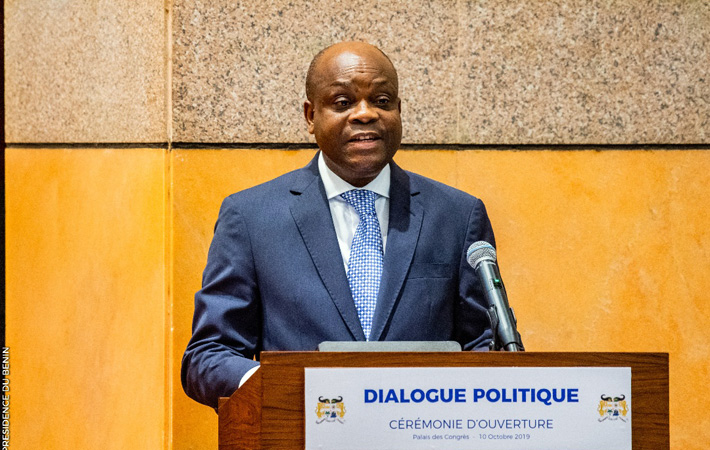
The president of the Constitutional Court of Benin, Cossi Dorothé Sossa, declared that since the constitutional reform of December 17, 2025, the high jurisdiction is no longer the guarantor of human rights, while still being responsible for overseeing the constitutionality of the laws that protect these rights. These statements, made on June 8 during a presentation at the French Constitutional Council, were further clarified by a press release from the Court dated June 11 and signed by its Secretary General, Gani Romuald Irotori.
Professor Sossa spoke at the invitation of the president of the French Constitutional Council, Richard Ferrand, on the theme of the protection of human rights by the Beninese Constitutional Court, in front of academics, members of the French institution, and PhD students. He clarified from the outset that his remarks were not aimed at evaluating the appropriateness of the reform adopted in Benin, but at examining its consequences for the protection of human rights.
According to the press release, Sossa indicated that the revision had sparked a legal debate regarding the continuation of citizens’ petitions to the Court for the defense of human rights. However, the Court emphasized that these statements should not be interpreted as an official position of the institution, as the constitutional judge has not yet had the opportunity to rule on the matter through a decision. The president of the Court invited citizens and legal actors to wait for upcoming decisions to assess the practical implications of the reform.
The Constitutional Reform of December 2025
Promulgated on December 17, 2025, by the then-president, Patrice Talon, law n°2025-20 was adopted by the National Assembly during the night of November 14 to 15, 2025, by 90 votes to 19, and later declared compliant with the Constitution by the Constitutional Court on December 12. It amends the Constitution of December 11, 1990, which had already been revised in 2019.
The reform creates a second parliamentary chamber, the Senate, and extends the terms of office for the President of the Republic, deputies, and local elected officials from five to seven years starting from the 2026 elections, while maintaining the limit of two presidential terms. The Senate, designed as a council of sages with 25 to 30 members, is tasked with regulating political life and ensuring national unity, security, peace, democracy, and human rights, with the power to sanction political actors.
The text refocuses the Constitutional Court on overseeing the constitutionality of norms and ends some of the prerogatives it had developed over more than thirty years, notably the direct protection of rights through citizens’ petitions and the oversight of the constitutionality of simple remarks or statements. Several legal scholars and civil society organizations see this as a weakening of a system previously considered one of the most protective in the sub-region, while its proponents present it as a refocusing of the Court on its primary mission.
The installation of the Senate, announced as imminent by the government, and the first decisions that the Court will render in its new framework will determine the concrete implications of this reorganization of rights guarantees in Benin.
Comments