
Benin: Official installation of the Senate in Porto-Novo this Thursday, July 30, 2026.
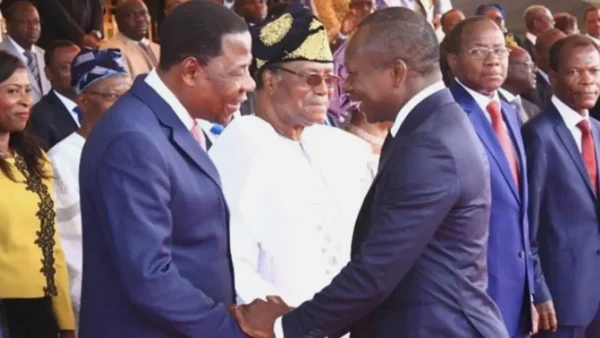
An important page in the institutional history of Benin is opening this Thursday, July 30, 2026, in Porto-Novo. Arising from the constitutional revision of November 2025, the second chamber of parliament, the Senate, is officially established with the installation ceremony of its first members.

SUMMARY
Designed as a regulatory and national stability body, this new institution is generating significant interest in the political landscape. Ahead of this event, the future senators gathered on Friday, July 24, in Cotonou for a closed-door introductory session. Presided over by Me Robert Dossou in place of the oldest member, Nicéphore Soglo, the meeting brought together 23 of the 25 members to finalize the procedural details of the inaugural session.
Powers Focused on Regulation and Neutrality
According to Article 113-1 of the Constitution, the Senate has a political regulatory mission aimed at safeguarding national unity, public security, state continuity, and respecting the political truce. Legislatively, it issues advisory opinions and can oppose constitutional, electoral, or political party laws by a qualified majority of two-thirds. The institution also has the ability to request a second reading of texts voted on by the National Assembly, except for finance laws and regulations.
Subject to a strict obligation of reserve and neutrality, senators cannot engage in partisan political activities. Additionally, the Senate holds disciplinary power that can extend to the suspension of civil and political rights of officials threatening stability or human rights.
An Autonomous Structure at the Heart of Debates
Organizationally, the Senate enjoys administrative and financial autonomy. Its bureau, elected for five renewable years, comprises a president, a vice-president, and a rapporteur. The institution holds two ordinary sessions each year lasting twenty-one days, aligned with the National Assembly’s schedule.
Composed of appointed members and legal personalities (former presidents and heads of institutions), this “Senate of the Elders” provokes divergent analyses. Its supporters see it as a framework of wisdom capable of anticipating crises and preserving institutional memory. Conversely, other observers view it as a risk of institutionalizing post-term authority for outgoing elites, outside of direct universal suffrage.
The assessment of this second chamber will unfold through its practice, starting with the taking of an oath and the adoption of its internal regulations.
Comments