
Patrice Talon addressing the Beninese youth: what to remember
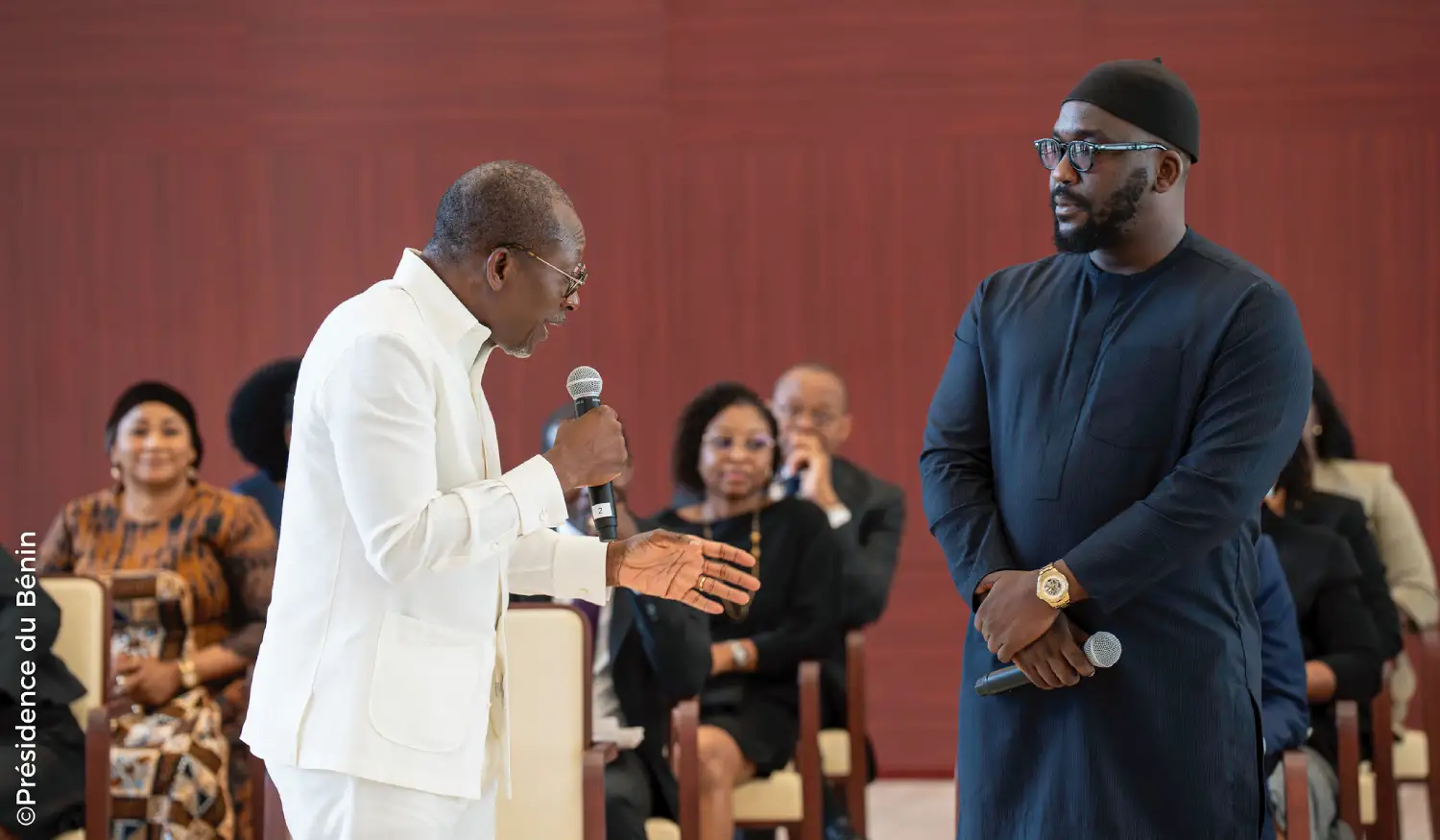
On Tuesday, July 29, 2025, on the eve of Benin’s 65th Independence Day, President Patrice Talon invited several young Beninese to the Republic’s palace for a direct, protocol-free discussion about the country’s future. The exercise, unique in its form, was intended to be interactive, transparent, and introspective. Between governance assessment, economic reflections, social aspirations, and political perspectives, the youth found an attentive ear in the president, who did not hesitate to share his thoughts candidly.

SUMMARY
With the start of the discussions, the youth raised their main concerns including employment, the high cost of electricity and the internet, and a hiring law they consider provides little protection. Patrice Talon took the opportunity to defend his liberal vision of economic development. According to him, the priority should be to create a large number of jobs through private investment, even if it meant easing some worker protections. For the president, “it’s better to deregulate employment to create jobs, than to regulate employment and create none.” He however acknowledged that employee security also depends on the quality of their performance and competition between employers in a dynamic environment.
The president also addressed the issue of infrastructures. He reminded that the state operates with limited resources, mainly from taxes, which limits investment capacity. He stressed that “even if it’s expensive, Benin must have water, electricity, the internet.” This logic, according to him, is part of a decided quest for sovereignty because, he stated, “independence means paying out of one’s pocket.”
A confessed frustration about professional technical training
Among the points of disappointment raised, Patrice Talon admitted he was unable to complete one of the projects he cared most about, the implementation of an efficient technical and vocational training system. He regretted that this ambition had not been prioritized earlier in his terms, but reassured that “everything is ready today” for the construction of about sixty technical schools across the country. A reform he hopes to see implemented in the next 18 to 24 months, with a goal that by 2035, 7 out of 10 young people will be trained in a practical profession.
On the issues of democracy, governance, and youth participation in public life, Patrice Talon urged for a move beyond partisan divides. He proposed the creation of a formal framework for ongoing dialogue between the youth and the rulers and reiterated his desire to see a new political class emerge who can transcend the divisions. Asked about his potential successor in the 2026 presidential election, he said he would support “the one who is capable of doing better”, regardless of their political affiliation, even if it is an opponent.
Finally, the sensitive issue of political prisoners was raised. Although he showed openness to the idea of clemency, Talon reminded that it should not be done at the expense of responsibility and justice. “Governing is not about seeking popularity at all costs,” he concluded.
Comments