
From Invitation to Trap: The Film of the Arrest of Journalist Comlan Hugues Sossoukpè in Abidjan
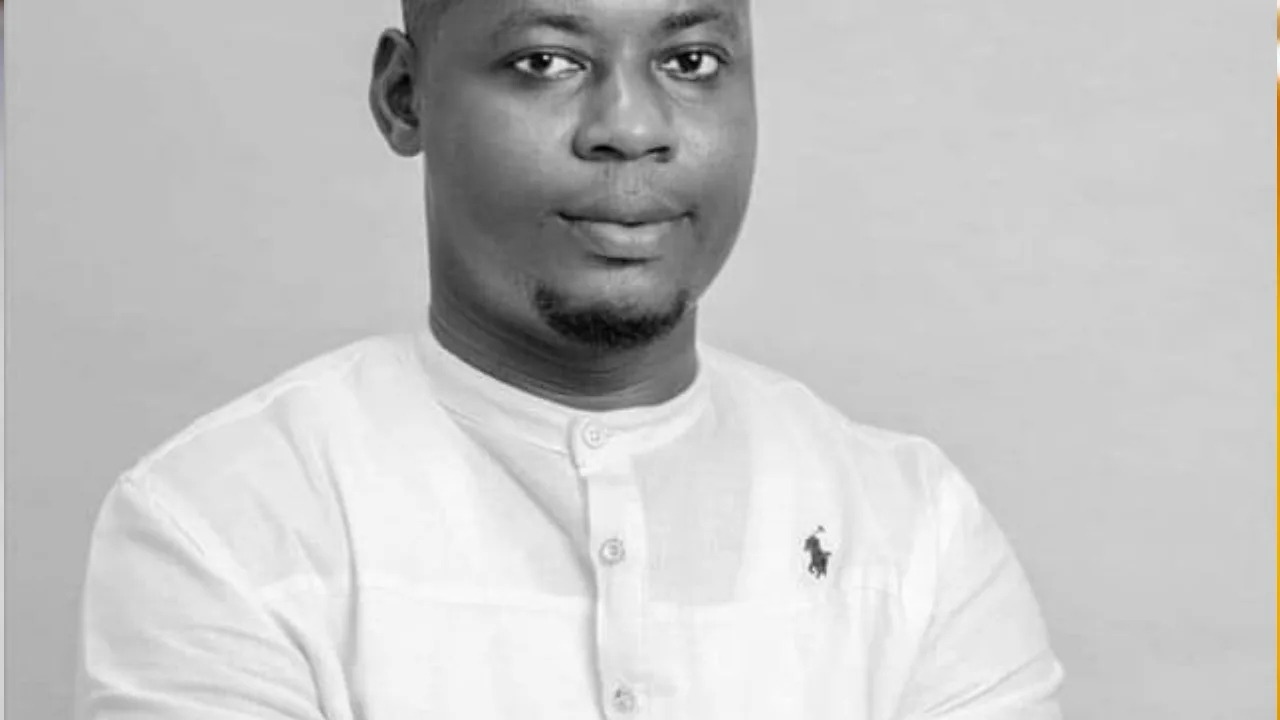
Officially invited to Abidjan to cover a digital innovation expo, the Beninese journalist Comlan Hugues Sossoukpè, a political refugee in Togo, was arrested in his hotel room and then expelled to Benin on a “private” plane, according to Reporters Without Borders (RSF).

SUMMARY

On July 8, 2025, Comlan Hugues Sossoukpè arrived in Abidjan full of confidence. According to Reporters Without Borders (RSF), he was officially invited by the Ivorian Ministry of Digital Transition and Digitalization to cover a regional digital innovation expo as a “renowned journalist in the subregion”.
Having been a political refugee in Togo since 2021, Comlan Hugues Sossoukpè believed he had strong diplomatic guarantees. He was staying at the Palm Beach Hotel, a property owned by the Ivorian Military Provident Fund, and began covering the event the day after his arrival.
What the journalist didn’t know though, was that this invitation was a cover for an entirely different manoeuvre. According to RSF, things escalated on the evening of July 10 when Ivorian police knocked on his hotel room door. He tried to resist but ultimately followed the officers, swayed by their promise that he would be brought before a judge.
Straight to the airport, without a hearing or recourse.
RSF reveals that the journalist was never presented to any Ivorian judicial authority. He was taken directly to the VIP lounge of Félix Houphouët-Boigny International Airport, an area usually reserved for high-profile guests. There, a small private Beechcraft 1900D type aircraft awaited him. Only the Ivorian police and the flight crew accompanied him on board. The airplane took off for Cotonou in complete administrative silence.
Yet, his status as a political refugee was indisputable. RSF, having examined his passport, confirms that this status was clearly indicated in the document which should have protected him from any form of forcible return. However, this guarantee was not respected by the Ivorian authorities, a fact RSF laments.
By 10 pm, the plane landed in Cotonou. Comlan Hugues Sossoukpè was immediately handed over to the economic and financial squad. The next morning, he was presented before an investigating judge of the Court for the Repression of Economic Crimes and Terrorism (CRIET).
The charges
Three charges have been levelled against him: “harassment through an information system”, “rebellion”, and “apology for terrorism”. He was immediately incarcerated in the civil prison of Ouidah, according to information provided by RSF.
His lawyer, Mr Serge Pognon, contacted by RSF, confirms that the journalist is physically well, but feels “trapped” and “betrayed” by Ivory Coast. RSF recalls that Comlan Hugues Sossoukpè had been living in exile for seven years, after criticizing the Beninese legislative elections of 2019. His media outlet Olofofo, banned in Benin in March 2025, had regularly denounced political abuses.
A complicit silence, a coordinated operation?
RSF expresses its strong indignation at what it considers a “shameful handover” of a journalist in exile. “The Ivorian authorities have clearly been complicit in the well-established persecution of a reporter by deploying considerable resources to deliver him to Benin,” says Arnaud Froger, head of RSF’s investigation department. The NGO demands official explanations from Abidjan, which is currently silent.
On the Beninese side, RSF reports that government spokesperson Wilfried Léandre Houngbédji has merely asserted that the journalist “will have to answer for the charges brought against him”, without commenting on the conditions of his arrest.
While waiting for his presentation to Criet on Monday, July 14, 2025, RSF calls for his immediate release and “reserves the right to take any appropriate action against this drift in security cooperation”.
For the journalist defense organization, what happened in Abidjan was nothing more than an illegal political refoulement operation, made possible by a mockery of procedure, a private flight, and the manipulation of diplomacy. A dark chapter for press freedom in West Africa.
Comments