
Benin: the Céna provisionally abolished by the National Assembly
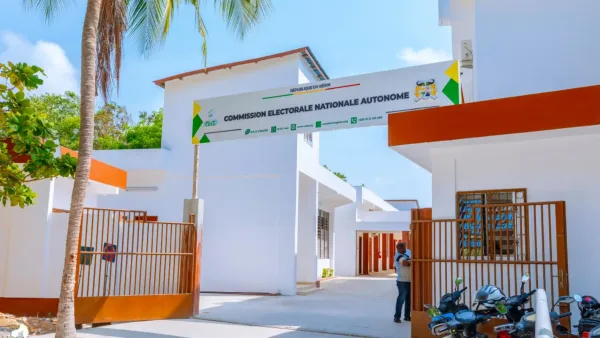
The Beninese deputies adopted, on Friday, July 10, 2026, a law that repeals the provisions of the Electoral Code relating to the Autonomous National Electoral Commission. The measure results in a temporary abolition of the institution, pending a reflection on its restructuring.

SUMMARY
The Autonomous National Electoral Commission is entering a transition phase. Meeting in plenary session on Friday, July 10, 2026, the deputies adopted law no. 2026-14 which repeals all provisions of Title II of Book One of Law no. 2019-43 of November 15, 2019, relating to the Electoral Code in the Republic of Benin, as amended by Law no. 2024-13 of March 15, 2024.
These provisions directly concern the institutional organization of elections in Benin, particularly the Autonomous National Electoral Commission, which is composed of the Electoral Council and the General Directorate of Elections. Therefore, their repeal temporarily eliminates the body responsible for organizing elections, pending a study on its restructuring and new configuration.
According to information reported by La Nation, the text stipulates that a decree issued in the Council of Ministers will define the methods for preserving the assets of the Céna as well as the liquidation of commitments already made by the institution. The staff of the Autonomous National Electoral Commission will, for its part, be made available to the public administration.
A decision linked to the absence of political elections before 2031
This reform comes just days before the expiration of the mandate of the current members of the Céna, set for July 14, 2026. Their mandate, lasting five years, is non-renewable. The question of the institution’s future therefore arose insistently, as a new team installed in July 2026 would have no political elections to organize before 2031.
This situation arises from political reforms that established a seven-year alignment for the mandates of the President of the Republic, deputies, and municipal councilors. In this context, maintaining a fully operational Céna for several years without political elections to organize was deemed illogical by the initiators of the reform.
The proposed law was championed by Deputy Augustin Ahouanvoebla. It was presented as a measure to rationalize public resources. The text received the support of the deputies present and was adopted unanimously.
The plenary session was led by the President of the National Assembly. The government was represented by the Minister of Justice and Legislation, Yvon Détchénou.
With this vote, the Céna is not definitively removed from the electoral architecture of Benin. It is placed in a state of temporary abolition, allowing authorities to define a new institutional framework adapted to the electoral calendar resulting from the latest political reforms.
Comments