
Benin: a lawyer petitions the ECOWAS Parliament over provisions of the electoral code
A few months before the 2026 general elections, a Beninese legal expert sent a letter to the President of the Parliament of the Economic Community of West African States (ECOWAS).

SUMMARY
In his letter, he draws the subregional institution’s attention to certain provisions of the Beninese Electoral Code deemed worrying. This appeal comes in a tense political climate and a regional context marked by a resurgence of terrorist threats.
The petitioner thus calls on ECOWAS to examine the situation in order to prevent potential electoral tensions and strengthen citizens’ trust in the democratic process.
The full correspondence below.
Adégbola Franck OKE
Legal expert – consultant
Phone. +229 0190483242
WhatsApp. + 229 0166937025
Email. [email protected]
Porto Novo, …
To the attention of the President of the Parliament of the Economic Community of West African States (ECOWAS).
Subject: Appeal regarding worrying provisions of the Electoral Code ahead of the 2026 general elections in the Republic of Benin, in a regional context marked by the rise of terrorism.
Mr. President,
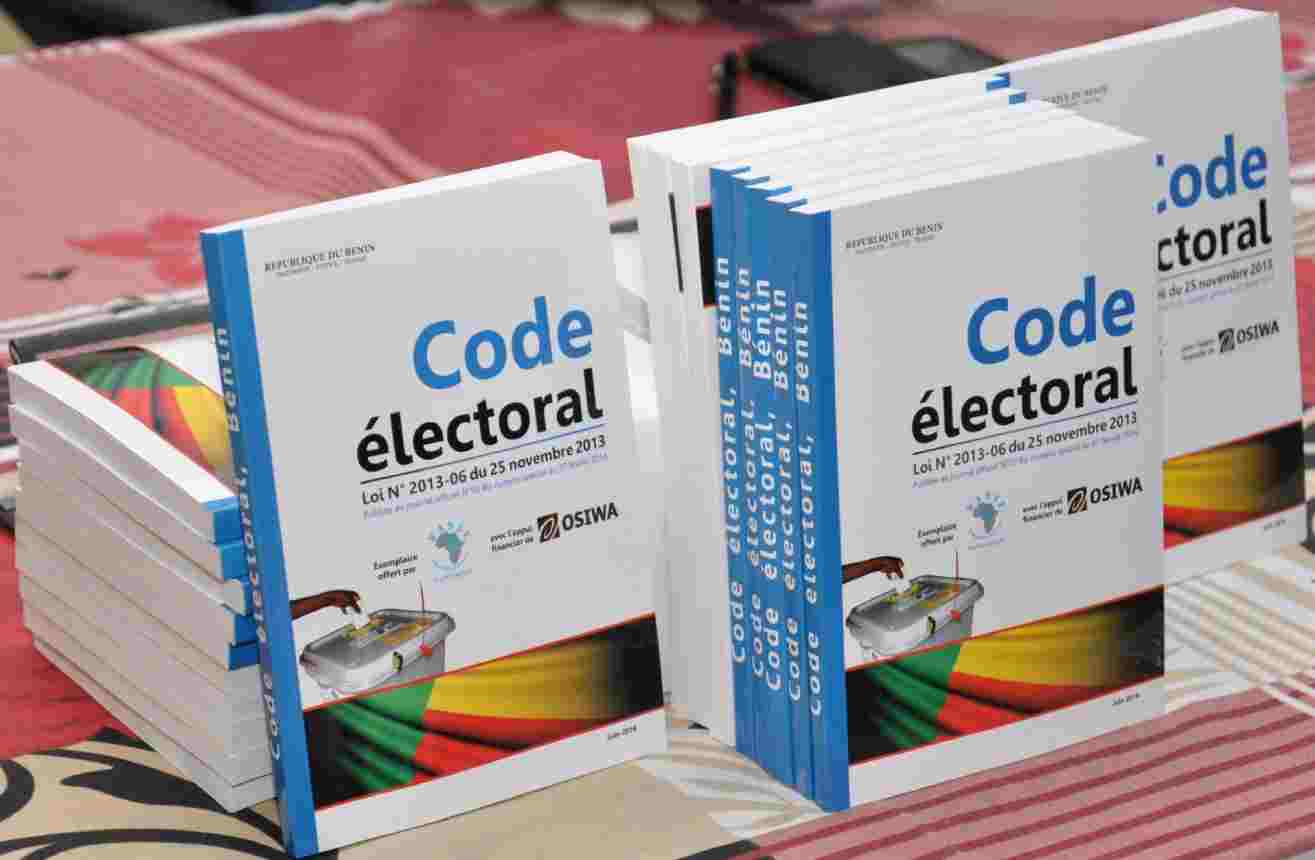
I have the honor to bring to your attention the deep concerns raised by certain provisions of the Electoral Code currently in force in the Republic of Benin, as the general elections scheduled for 2026 approach. These provisions, by their selective and unbalanced nature, seriously compromise the fairness of the electoral process and could, if left as is, lead to a sociopolitical crisis with worrying ramifications.
The new Article 132 of the Electoral Code now requires that any candidate for the presidency or vice-presidency of the Republic be endorsed by at least 15% of members of parliament and/or mayors, distributed across three-fifths (3/5) of the legislative electoral constituencies. This requirement, tightened compared to the previous version (10%), erects discriminatory barriers that restrict access to electoral competition, particularly for opposition forces, already weakened.
Equally concerning, the new Article 146 sets a 20% threshold in each electoral constituency to obtain seats, a threshold that nevertheless does not apply to parties that have formed a prior parliamentary coalition registered with the Autonomous National Electoral Commission (CENA). For those, a 10% threshold at the national level suffices. This asymmetric provision clearly benefits the two main formations of the presidential majority, the Bloc Républicain and the Union Progressiste – Le Renouveau, and gravely undermines the principle of equal opportunity in politics.
To these constraints is added a major institutional shortcoming: the Electoral Code does not guarantee parties access to original electoral documents, notably CENA minutes, thereby compromising the effective exercise of legal remedies in case of disputes. This lack of transparency undermines the credibility of the electoral process and erodes citizens’ trust in democratic mechanisms.
These concerns would already be serious in ordinary times. They become critical in the current regional context, marked by a sharp rise in terrorism and insecurity. The destabilization of democratic processes provides fertile ground for the expansion of extremist groups, which exploit popular disenchantment, political frustrations, and institutional weaknesses to establish a lasting foothold. Benin, until recently spared, is now facing jihadist incursions in its northern regions. Any deterioration of the domestic political climate, particularly through elections perceived as locked down or unfair, could seriously compromise national resilience in the face of this threat.
In this perspective, it appears more imperative than ever that ECOWAS, while maintaining its firm opposition to any seizure of power by unconstitutional means, also exercise heightened vigilance regarding the regularity, transparency, and inclusiveness of electoral processes in its member states.
The effectiveness of its crisis-prevention mechanisms depends closely on its ability to anticipate risks and act in advance, before tensions turn into conflicts.
I therefore kindly ask you, Mr. President, to consider this letter as a solemn call for preventive action, to preserve peace, strengthen the legitimacy of democratic institutions, and consolidate stability in our shared community space.
Please accept, Mr. President, the expression of my highest consideration.
Adégbola Franck OKE
Comments