
Togo: poverty below 15% by 2040, Faure Gnassingbé’s new promise raises questions
In Djamdè, in the Kozah prefecture, Faure Gnassingbé has set a new horizon for the Togolese government: to double the average standard of living and reduce poverty to below 15% by 2040. Presented as an ambition for economic and social transformation, this projection, however, comes after a long series of development plans whose results remain contentious. Between stated methods, debt constraints, territorial fractures, and accountability deficits, the 2040 goal will need to convince primarily through execution.

SUMMARY
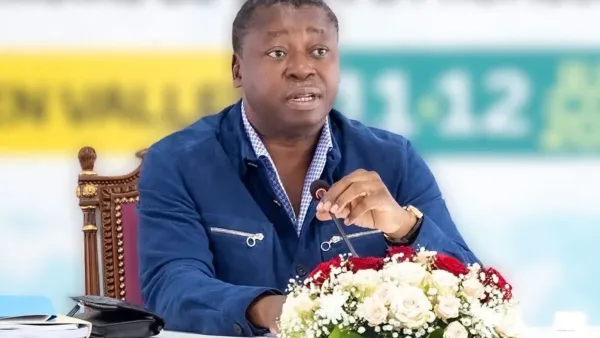
Faure Gnassingbé wants to project Togo towards 2040. Meeting on Thursday, June 11, 2026, in Djamdè, the Togolese government focused on the “strategic levers for accelerating Togo’s development.” At the heart of the discussions is an ambitious objective: to double the average standard of living of Togolese people and bring the poverty rate down to less than 15% by 2040.
The course is presented as a new step in the economic and social transformation of the country. The discussions relied on diagnostics carried out with the support of the World Bank and on analyses of experiences from countries that have successfully undergone economic transformations, including Vietnam, South Korea, Cambodia, Indonesia, Mauritius, and Brazil.
In his speech, Faure Gnassingbé emphasized the need for a method based on anticipation, alignment, execution, and evaluation. “Our method is clear: anticipate, align, execute, measure. It is the requirement of a results-oriented governance, aimed at inclusive and sustainable development,” he stated. The President of the Council of Ministers called for making strategic choices capable of transforming economic growth into concrete social progress for the population.
However, behind the solemnity of the announcement, one question remains: can Togo still convince with a new development horizon after more than two decades of plans, roadmaps, and programs whose results fall short of promises?
A new horizon after the 2020-2025 roadmap
The seminar in Djamdè comes two months after an earlier governmental seminar held on April 7 and 8, 2026, in Lomé. This meeting was presented as a “moment of truth and demand for the performance of government action” and launched the process of developing the governmental roadmap for 2026-2031, structured around three axes: protect, unite, and transform.
The current phase thus marks a strategic repositioning. The 2020-2025 roadmap has reached its conclusion with an overall execution rate reported at 68.79%. This figure, presented as a significant outcome by the authorities, also indicates that more than a third of the commitments were not fully realized.
For the government, the difficulties are largely attributed to external shocks: the Covid-19 pandemic, the war in Ukraine, global inflation, and security instability in the sub-region. These factors have indeed impacted public finances, supply chains, and budgetary margins.
But the debate is not limited to external constraints. In Togo, the central issue remains that of execution. The country does not lack strategic documents. Since the 2000s, the authorities have multiplied planning frameworks: PRSP I and II, SCAPE, PUDC, Vision Togo 2030, national development plan, and then the 2020-2025 governmental roadmap.
The PRSP was meant to lay the foundations for strong growth and reduce poverty. The SCAPE, during the 2013-2017 period, promised to make Togo an emerging country in fifteen to twenty years. Vision Togo 2030 aimed for 7% growth and a better-distributed wealth. The PND 2018-2022 promised 500,000 jobs, industrial hubs, and a path to emergence. The 2020-2025 roadmap included 42 projects and 10 structural reforms, with estimated investments of 4.4 billion dollars.
The announcement from Djamdè thus fits into a long history. It will not be judged solely on the quality of its formulations, but on its ability to break away from the logic of successive promises.
Poverty, the main test of credibility
The objective of reducing poverty to below 15% by 2040 is the strongest point of the seminar. It is also the most exposed to criticism.
Togo still faces significant poverty, deeply unequal across regions. Approximately 1.8 million Togolese are estimated to live on less than 1,140 CFA francs per day. The national poverty rate, measured against the national threshold, was 43.8% in 2021-2022. Using the international extreme poverty line of 2.15 dollars per day, it was estimated at 25.8% in 2023. More than a quarter of the population still lives in extreme poverty.
This social reality makes the 2040 objective particularly challenging. To move from a national poverty rate of 43.8% to below 15%, Togo would need to reduce poverty by about 29 percentage points in less than twenty years. However, previous strategies have not achieved results that are sufficiently rapid and sustainable.
The territorial divide is one of the major challenges facing the country. The Savanes region showed a poverty incidence of 65.1% according to the EHCVM survey 2018-2019. Rural poverty is estimated at around 59%, compared to 24% in urban areas. In 2018-2019, 64.9% of the Togolese population was considered poor or vulnerable to poverty.
Reducing poverty below 15% by 2040, therefore, requires more than overall growth. It will need inclusive growth that reaches rural households, young people, women, smallholder farmers, and populations living in the most fragile areas.
Faure Gnassingbé seems to have integrated this dimension into his speech. By discussing agricultural modernization, he emphasized the need to combine several levers. “Agricultural modernization requires roads, energy, storage, processing, secure land, financing, and skills,” he asserted.
This systemic approach is relevant. It recognizes that agriculture cannot be transformed through mere inputs or campaign announcements. It requires infrastructure, markets, financial services, training, and secure land governance.
But again, the problem lies less in the diagnosis than in implementation.
Debt limits maneuverability
The 2040 ambition also faces a major financial constraint. In recent years, Togo has made significant investments in infrastructure, logistics, energy, public services, and resilience for regions exposed to insecurity. This strategy has supported economic activity, but it has also weighed on public finances.
Public debt reached 4,217.73 billion CFA francs by the end of December 2024, or 69.16% of GDP, a level very close to the community ceiling of 70% set within the UEMOA zone. Even though this ratio has decreased to around 65% of GDP by the end of June 2025, the total amount of debt has continued to rise in value, exceeding 4,288 billion CFA francs in the first quarter of 2025. In three years, public debt is estimated to have increased by around 45% in nominal value.
This relative improvement in the ratio gives authorities some breathing room, but it does not eliminate the budget constraint. Togo must continue to finance its social priorities while pursuing the consolidation of public accounts.
However, doubling the average standard of living requires massive and sustainable investments. It involves funding education, health, vocational training, rural roads, energy, industrialization, agricultural transformation, digitalization, access to water, and social safety nets. It also means addressing growing security expenses in an unstable regional context.
The challenge is thus double: to mobilize more internal resources and improve the quality of public expenditure. Without budget discipline, the 2040 ambition risks becoming a new catalog of projects. Without sufficient social investments, it will remain an abstract promise for the most vulnerable populations.
The question of the private sector is also central. The 2020-2025 roadmap heavily relied on private investments, with about 80% of the funding expected from the private sector within the 4.4 billion dollars budget. If this mobilization did not achieve the expected results in the previous cycle, the new strategy must explain why and how it would succeed better.
In an environment marked by security risks, funding constraints, and limited domestic demand, the state must create stronger conditions to attract productive capital, beyond institutional announcements.
Foreign models difficult to transpose
The Togolese government claims to draw inspiration from several international trajectories, including those of Vietnam, South Korea, Indonesia, Mauritius, Cambodia, and Brazil. These comparisons can provide useful insights. They remind us that countries starting from modest levels of development have managed to transform their economies within one or two generations.
However, these models cannot be reduced to mere slogans. South Korea built its transformation on education, industrialization, administrative discipline, and innovation. Vietnam has combined economic openness, agricultural transformation, commercial integration, and manufacturing strength. Mauritius diversified its economy by relying on relatively stable governance, more predictable institutions, and a gradual specialization strategy.
Togo can learn from these experiences, but it cannot copy them mechanically. Its size, productive base, domestic market, social structure, dependence on external financing, and political environment differ.
The real question is which sectors can drive realistic Togolese transformation. Agriculture, logistics, the Adétikopé industrial platform, the port of Lomé, digital services, energy, and local processing can serve as levers. However, their impact will depend on their ability to create substantial and decent jobs, especially for a large youth population.
Growth will not suffice if it remains concentrated in a few modern hubs. It must reach various territories, reduce inequalities, and improve the income of ordinary households.
The weight of the political context
The 2040 objective also comes in a particular institutional context. Togo has entered a new political architecture after the adoption of the April 2024 Constitution, which has shifted the country towards a parliamentary regime. In this new system, the President of the Council of Ministers wields most of the executive power.
This evolution has been sharply criticized by the opposition and part of civil society, who see it as a mechanism for extending Faure Gnassingbé’s power, already at the helm since 2005 after succeeding his father, Gnassingbé Eyadéma. In May 2025, he was sworn in as President of the Council of Ministers, a position he can hold without term limits as long as his party retains a parliamentary majority.
The ruling party, the Union for the Republic, dominates the institutions. With 108 out of 113 seats won during the April 2024 elections, it has near-total control of the Parliament. This configuration significantly reduces political checks and balances and fuels criticism about the actual accountability of power.
This political dimension weighs on the credibility of major development promises. A goal set for 2040 requires a long-term vision, but also accountability mechanisms. Who will evaluate the results? Based on what indicators? With what independent audits? What consequences if interim objectives are not met?
Togo has already experienced ambitious numerical targets. The SCAPE was supposed to accelerate growth and employment. The PND was to structurally transform the economy. Vision Togo 2030 aimed to put the country on the path to emergence. The 2020-2025 roadmap promised structural projects and targeted reforms. The performance of these successive frameworks remains debated, particularly because independent and public evaluations of their social impact are limited.
For the 2040 objective to avoid being perceived as yet another communication exercise, it must be accompanied by a precise timetable, accessible indicators, documented financing, and a transparent evaluation mechanism.
An achievable ambition, but conditional
Reducing poverty to below 15% by 2040 is not impossible. Some countries have experienced rapid transformations when growth has been strong, sustainable, and redistributive. However, in Togo’s case, the gap between the current situation and the announced objective remains significant.
The country will need to maintain solid growth for many years. To reach such a goal, it will need sustained and inclusive average growth, close to the levels seen in countries that have successfully undergone rapid economic transformations. However, recent Togolese growth, estimated at around 5.3% in 2024 and projected at 6.2% in 2025, remains below the necessary pace for sustainably doubling the standard of living while absorbing demographic growth.
The country must also address the divide between the south and north, strengthen basic social services, modernize agriculture, create productive jobs, improve land governance, manage debt, and restore public trust.
The Djamdè seminar rightly sets a clear ambition. It also recognizes that development can no longer be envisioned in silos, ministry by ministry, without coordination or rigorous impact measurement. The government speaks of “increased selectivity,” “intersectoral coherence,” and “discipline in planning and evaluation.” These concepts indeed correspond to the demands of results-oriented governance.
However, Togo’s recent history calls for caution. The country will not be judged on the beauty of its roadmap or the quality of the foreign models cited, but on the visible results in the daily lives of Togolese. In 2040, the decisive indicator will not be the number of seminars organized, but the number of families that have sustainably escaped poverty, the number of young people who have found decent jobs, the number of villages connected to essential services, and the state’s ability to be accountable for its commitments.
In Djamdè, Faure Gnassingbé has set a course. It now remains to prove that this promise will not join the long list of Togolese development plans left halfway.
Comments