
Senegal: Diomaye Faye tries to reach out, but the criticisms are piling up
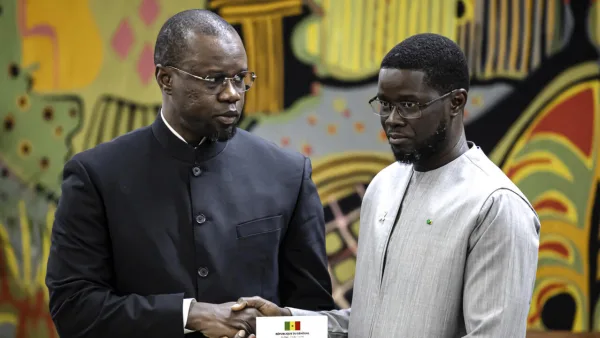
Bassirou Diomaye Faye launched the consultations for national dialogue by receiving several former Prime Ministers at the Palace of the Republic. Presented as a consultation process on the major challenges facing the country, the initiative is contested by part of the opposition and also raises concerns within Pastef itself, where some denounce a dialogue with figures from the old system.

SUMMARY
The Senegalese president Bassirou Diomaye Faye opened on Thursday, May 21, 2026, at the Palace of the Republic, the first cycle of consultations for the National Dialogue Day, scheduled from May 21 to May 31. He successively received four former Prime Ministers: Cheikh Aguibou Soumaré, Abdoul Mbaye, Aminata Touré, and Amadou Ba. According to the presidency, discussions focused on the economic, security, and political situation in the country.
The approach is based on a recommendation from the Consortium of Civil Society Organizations, which had requested, the Monday preceding the opening, a broad and inclusive representation of the nation’s vital forces, including former presidents of the National Assembly. The dialogue will take place in a modified format due to the proximity of the Tabaski festival, according to the authorities.
Several political parties have announced their refusal to participate. The Alliance for the Republic (APR), the party of former president Macky Sall, issued a statement denouncing the approach as far from a “transparent and inclusive” dialogue, calling the process a “targeted consultation” with insufficiently defined terms of reference. The APR also mentioned a “persecution” of several of its former leaders. The Front for the Defense of the Republic (FDR) criticized a “lack of transparency”.
Despite the boycott expressed by the APR, Sidiki Kaba, former prime minister and party figure, accepted the presidential invitation. Kaba’s presence alongside Cheikh Aguibou Soumaré, Abdoul Mbaye, Aminata Touré, and Amadou Ba was noted by several Senegalese media outlets. Idrissa Seck, also a former head of government, was absent from this first meeting.
Critical Voices Within Pastef
The presidential approach also raises concerns within Pastef, the ruling party led by Ousmane Sonko. Party activists and leaders believe that national priorities should focus on the daily concerns of Senegalese people rather than on consultations with actors from the old regime.
The deputy and departmental secretary of Pastef in Koumpentoum, Awa Sonko, publicly expressed her disapproval: “Inviting former PMs to the dialogue is like inviting the UCG to bring garbage back into our homes. Our martyrs did not die for this. Diomaye, come back to Earth!” This statement illustrates an internal rift regarding the format and the list of people involved in the dialogue.
These reservations reflect a broader tension between the two heads of the executive, documented since the end of 2025. On December 7, 2025, during the Martyrs’ Day, Ousmane Sonko publicly acknowledged his differences with President Faye. During the inter-ministerial council this week, Sonko called out Justice Minister Yassine Fall regarding the delays in accountability matters, indicating a persistent tension regarding government directions.
The Framework for the National Dialogue Day
The 2026 national dialogue is presented by the presidency as a framework for consultation on the economic, social, security, and political situation in Senegal. It differs in form from the dialogue of May 2025, which was held at the Abdou Diouf International Conference Center in Diamniadio under a public format and had already been boycotted by the APR.
The new format, described by the authorities as “more direct, more flexible, and less expensive,” relies on bilateral meetings at the Palace of the Republic rather than plenary sessions. Civil society has welcomed this procedural evolution while calling for a clearer definition of the terms of reference.
The consultations during the week of May 21 will cover former prime ministers as well as former ministers of Finance and Interior. The schedule anticipates that discussions will continue until May 31, 2026, at which point a summary will be provided by the presidency.
Comments