
Parliament of Benin: it’s already the end of the ninth legislature…
The second ordinary session of the National Assembly, opened on October 31, 2025, was officially closed on Friday, January 30, 2026 at the Governors’ Palace in Porto-Novo.

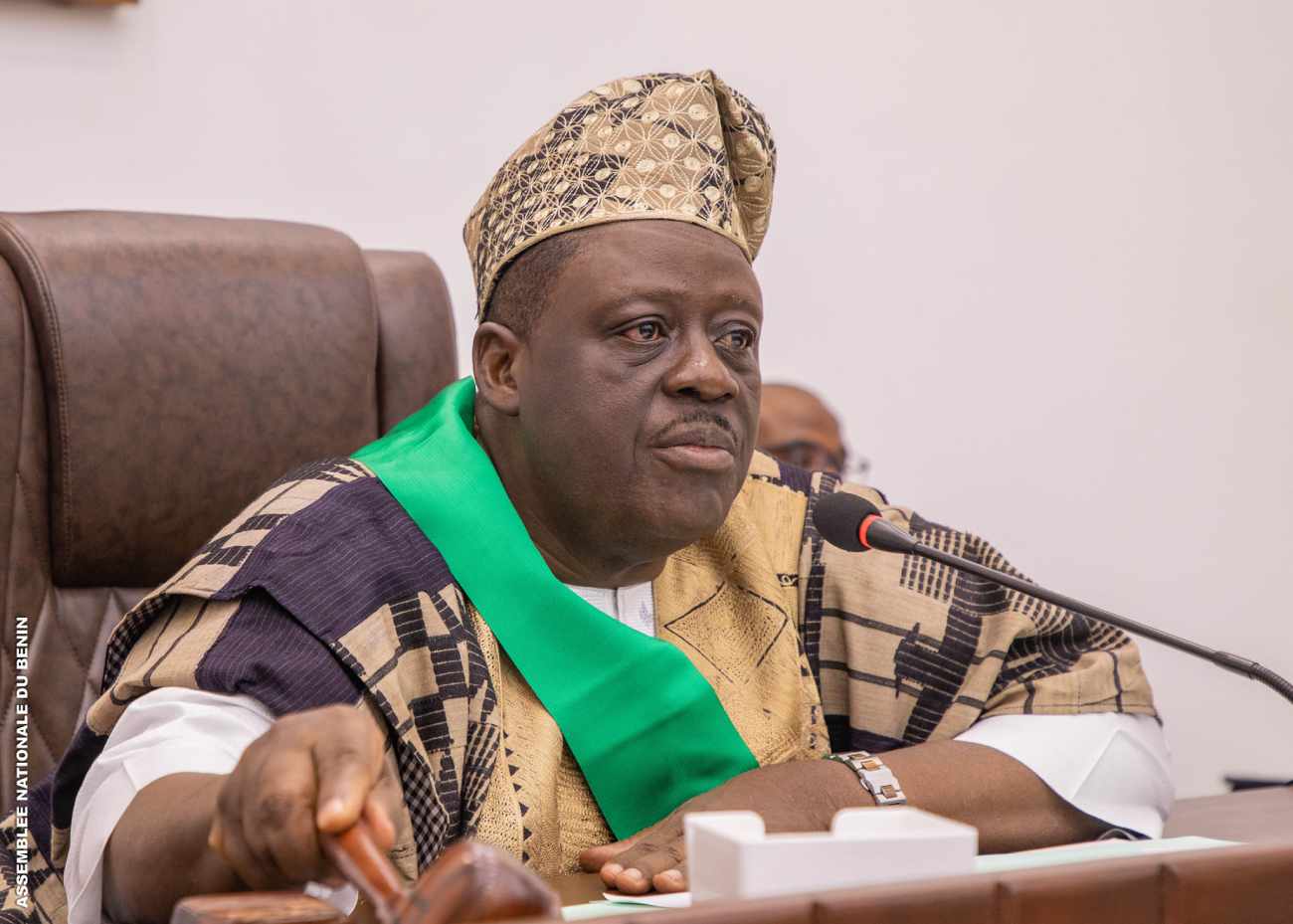

The ceremony, chaired by Louis Gbèhounou Vlavonou, marks an end not only to the parliamentary work of the session but also to the ninth legislature, in accordance with constitutional provisions and the Parliament’s Internal Rules.
In his closing remarks, the president of the National Assembly drew a record marked by intense legislative activity, dominated by budgetary issues. In just three months, nine plenary sessions allowed the adoption of eight major texts that permanently shape public policy. Among them are a constitutional law, two finance laws and several organic laws concerning key institutions such as the Constitutional Court, the Economic and Social Council, the national anti-corruption framework, public health, or the film and moving-image industry.
The 2026 Finance Law, adopted during this session, endows the country with a budget exceeding 3,000 billion CFA francs.
The parliamentary work also involved the examination of seven decrees ratifying financing agreements concluded with various technical and financial partners, notably BOAD, the European Investment Bank, the International Development Association, and the French Development Agency.
These agreements concern structural projects related to rainwater drainage, budget support, and the promotion of cultural policy.
Beyond legislative output, the session was punctuated by strong institutional moments, including the presentation of strategic reports, notably that of the Benin Caisse des Dépôts et Consignations, as well as the Head of State’s address on the state of the Nation, delivered before the national representation in December 2025.
Praising the work accomplished, Louis Gbèhounou Vlavonou underscored the commitment and discipline of the deputies throughout the legislature. He also recalled the importance of activities conducted outside the chamber, notably field missions, seminars and parliamentary workshops, which helped strengthen the capacities of elected representatives and the quality of the legislative work.
With this solemn closure, the Parliament turns a new institutional page and is about to open a new political cycle, in a national context marked by strong democratic and social expectations.
Comments