
Nigeria: the APC confirms its dominance in Ekiti and in the federal capital.
The ruling party All Progressives Congress (APC) secured a landslide victory on Saturday in Ekiti State, southwestern Nigeria, with its candidate Biodun Oyebanji being declared the winner of the gubernatorial election by INEC early Sunday morning, securing 319,224 votes against 40,543 for the Peoples Democratic Party (PDP) and 12,872 for the African Democratic Congress (ADC), out of a total of 375,777 valid votes.

SUMMARY
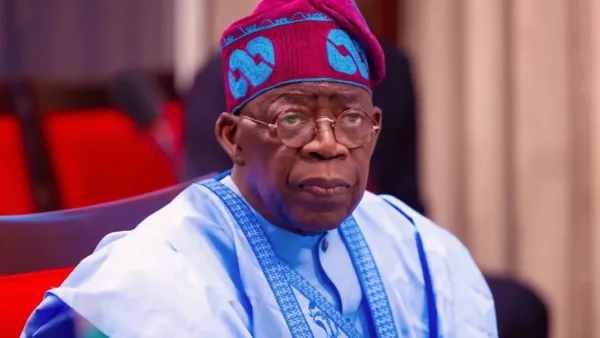
The All Progressives Congress under President Bola Tinubu has solidified its electoral foothold in several off-cycle elections held between November 2025 and June 2026 in Nigeria. Following its dominance in the area councils of the federal capital and its large victory in Ekiti, the ruling party now looks towards Osun, the next major political test against the PDP ahead of the general elections in 2027.
Since November 2025, Nigeria has conducted three off-cycle elections under the authority of the Independent National Electoral Commission (INEC): the gubernatorial election in Anambra in November, the elections for the area councils of the federal capital in February 2026, and the gubernatorial election in Ekiti on Saturday. The ruling party, the APC of President Bola Tinubu, has consolidated its territorial grip, except in Anambra where the APGA has governed for nineteen years.
Professor Adenike Oladiji, vice-chancellor of the Federal University of Technology Akure designated reporting officer, announced the results at 3:13 AM at the INEC headquarters in Ado-Ekiti, the state capital. Oyebanji won all 16 local government areas (LGAs) of the state, with his largest margin recorded in Ado-Ekiti (38,026 votes against 3,817 for PDP) and the closest in Ikere LGA (1,224 vote difference).
By securing a second term, Oyebanji becomes the first governor to be re-elected in Ekiti State since its creation in 1996 and the election of its first governor Adeniyi Adebayo in 1999 – all his predecessors having been limited to a single term.
A generally peaceful election, unproven vote-buying allegations
The election on June 20, which featured 14 candidates from 14 different political parties for an electorate of 1,028,929 registered voters who collected their voter cards, was described as “peaceful” by INEC and the observers on the ground, including a delegation from the British government.
The election monitoring organization Yiaga Africa, however, noted “inconsistencies in some electoral materials” and reported incidents of vote-buying in several areas. The candidate from the Accord Party, Opeyemi Falegan, and the one from the ADC, Dare Bejide, made allegations of irregularities, which Governor Oyebanji rejected, asking the complainants to provide evidence. The police commissioner in charge of electoral security, Abayomi Shogunle, stated that no cases of vote-buying had been officially reported to law enforcement. INEC uploaded 90% of the results by polling unit to its IReV portal before the final declaration.
Anambra: Soludo re-elected with 72% of the vote in November 2025
The off-season electoral cycle began on November 8, 2025, with the gubernatorial election in Anambra State, southeast Nigeria. The incumbent governor Chukwuma Soludo, candidate of the All Progressives Grand Alliance (APGA), was re-elected with 422,664 votes, representing 72.4% of the total valid votes counted, ahead of Nicholas Ukachukwu, the APC candidate, who garnered 99,445 votes. The Young Progressives Party (YPP) came in third with 37,753 votes, and the Labour Party fourth with 10,576 votes.
Soludo, a former governor of the Central Bank of Nigeria, won all 21 LGAs of the state. His victory confirmed the APGA’s hold on Anambra, a regionalist party that has governed the state continuously since 2006. The APGA’s resistance to the APC’s domination in this area is one of the peculiarities of the Nigerian electoral landscape: the southeast state remains the only major state to have consistently escaped the two main national parties.
The election was marred by allegations of vote-buying from both the APC candidate and Governor Soludo himself, each blaming the other camp. A local councilor was shot dead on polling day in Orumba South LGA, according to the governor.
FCT: APC wins five of the six area councils in Abuja in February 2026
On February 21, 2026, the elections for the chairs of the six Area Councils of the federal capital territory (FCT) confirmed the APC’s dominance in the Abuja region. The ruling party won five of the six council chair positions – Abuja Municipal Area Council (AMAC), Abaji, Bwari, Kwali, and Kuje – while the PDP emerged victorious in the lone constituency of Gwagwalada, where its candidate Mohammed Kasim secured 22,165 votes against 17,788 for the APC.
In AMAC, the most populous of the six constituencies with 837,338 registered voters, Christopher Maikalangu of the APC was re-elected with 40,295 votes out of 62,861 valid votes, with ADC coming in second with 12,109 votes. Voter turnout was low in several polling units, in line with the trend observed in Nigeria’s off-season local elections.
The organization Yiaga Africa deployed observers in all 62 wards of the FCT and noted logistical problems as well as isolated cases of vote-buying, while praising the overall peaceful conduct of the election. The Minister of the FCT, Nyesom Wike, himself from the PDP but allied with President Tinubu, commended the results, stating they “expose the emergency democrats.”
Osun in focus for the next step
INEC has scheduled the gubernatorial election for Osun State, in southwestern Nigeria, in its 2026 calendar, with no specific date set at the time of writing this report. Osun was won in 2022 by the PDP and its candidate Ademola Adeleke in a contested election, before the Electoral Tribunal and then the Appeal Court confirmed his victory. The 2026 election will be a major test between the APC and PDP in the region, less than a year before the general elections in 2027.
These off-season elections do not serve as direct indicators of the national popularity of the parties: local dynamics, turnout, and individual candidate profiles heavily influence the results. The chairman of INEC, Professor Mahmood Yakubu, indicated during a quarterly meeting with his resident commissioners that the Commission is also preparing a mock election to test its systems ahead of the general elections scheduled for 2027.
Comments