
2027 Presidential Elections in Nigeria: Bola Ahmed Tinubu for a Second Term Against a Fragmented Opposition
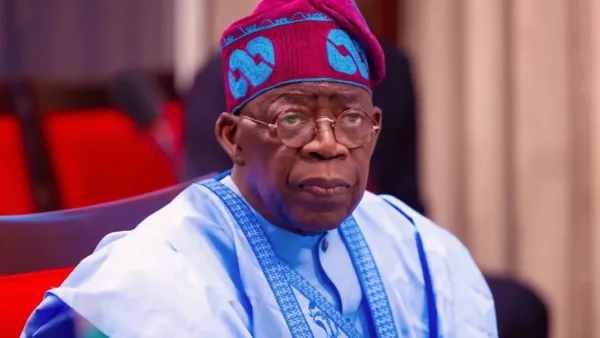
With less than a year to the Nigerian presidential election on January 16, 2027, the political landscape is reshaping around the outgoing president Bola Ahmed Tinubu, endorsed by the APC, and a still-divided opposition. Between the ambitions of Atiku Abubakar, Peter Obi’s breakthrough within the NDC, and uncertainties surrounding Rabiu Kwankwaso, the election promises to be decisive for the political balance in Nigeria.

SUMMARY
- Tinubu the favorite, but under economic pressure
- A challenging reorganization of the opposition
- A decisive election for the Nigerian political balance
- Confirmed candidates and aspirants
- Bola Ahmed Tinubu – APC (outgoing) Status: endorsed candidate
- Atiku Abubakar – ADC; Status: endorsed candidate
- Peter Obi – NDC; Status: endorsed candidate (confirmation primary on May 29, 2026)
- Rabiu Musa Kwankwaso – NDC; Status: aspirant (within the NDC, alongside Obi)
- Adewole Adebayo – SDP; Status: endorsed candidate
- Sandy Onor – PDP (Wike faction); Status: candidate of the Wike faction of the PDP
- Datti Baba-Ahmed – Labour Party; Status: declared aspirant
- Omoyele Sowore – AAC; Status: declared interested
- Goodluck Jonathan – PDP (main faction); Status: under observation – considering a candidacy
- Makinde Oluseyi Abiodun – APM; Status: aspirant
- Rotimi Amaechi – ADC; Status: aspirant (within the ADC, competing with Atiku)
- Nasir El-Rufai – ADC; Status: aspirant
With less than eight months until the formal closing of candidate submissions, the Nigerian presidential election on January 16, 2027, is already shaping up to be one of the most open and strategic elections in West Africa. Facing the outgoing president Bola Ahmed Tinubu, endorsed by the APC, the opposition is trying to regroup but remains divided among several factions, particularly around Atiku Abubakar, Peter Obi, and Rabiu Kwankwaso.
The Independent National Electoral Commission of Nigeria has set the presidential election for January 16, 2027. This election will open a crucial electoral cycle in Africa’s most populous country, ahead of the gubernatorial and state legislative elections scheduled for February 6, 2027. In the meantime, political parties must finalize their primaries and submit their candidate documents within the deadlines set by the INEC.
Tinubu the favorite, but under economic pressure
The outgoing president Bola Ahmed Tinubu starts with the advantage of incumbency. Elected in February 2023 with 36.61% of the votes, the head of state has been officially endorsed by the All Progressives Congress. He can rely on the machinery of his party, on the support of a large majority of APC governors, and on the political resources linked to his position.
However, his candidacy comes amidst a challenging economic context. The reforms initiated since his assumption of office, notably the removal of the fuel subsidy and the liberalization of the naira, have significantly impacted Nigerians’ purchasing power. Inflation, devaluation of the national currency, and the cost of living crisis are now the main points of attack from his opponents.
Meanwhile, Atiku Abubakar is making another attempt for the presidency. A former vice president and unsuccessful candidate several times, he left the PDP to carry the banner of the African Democratic Congress. His candidacy is based on a coalition strategy, aiming to rally personalities from the PDP, APC, and other political groups.
A challenging reorganization of the opposition
The ADC initially seemed to become the main convergence point for the opposition. Several influential figures, including Rotimi Amaechi, Nasir El-Rufai, and Seun Aregbesola, were associated with it. However, this dynamic was weakened by the departure of Peter Obi and Rabiu Kwankwaso to the newly registered Nigeria Democratic Congress.
Peter Obi, former governor of Anambra and the Labour Party candidate in 2023, was designated the candidate of the NDC during a confirmation primary held on May 29, 2026. Supported by the “Obidient” movement, which mobilized a strong youthful urban base during the previous election, he aims to place security and governance at the heart of the campaign.
His rapprochement with Rabiu Musa Kwankwaso continues to fuel speculation. The former governor of Kano, who retains a strong political base in the northwest of the country, has not yet definitively clarified his positioning. He could play a central role in the regional balance of the NDC, either as a contender for the presidency or a potential running mate.
The fragmentation of the opposition remains one of the main issues of the presidential election. In 2023, the division among Atiku Abubakar, Peter Obi, and Rabiu Kwankwaso contributed to scattering the anti-APC vote, facilitating Bola Tinubu’s victory. As 2027 approaches, the risk of a similar scenario remains real, despite attempts at reorganization.
The PDP, long considered the main opposition party in Nigeria, appears weakened by internal divisions. A faction close to Nyesom Wike designated Sandy Onor as their candidate, but this nomination is contested by other groups. Former president Goodluck Jonathan is also mentioned among those who might be approached, though there is no official statement at this stage.
Other candidacies complete the political landscape. Adewole Adebayo has been endorsed by the Social Democratic Party, while Datti Baba-Ahmed, former running mate of Peter Obi, has declared his candidacy within the Labour Party. Omoyele Sowore, founder of Sahara Reporters and an activist figure, is also reported to be interested in the race under the banner of the African Action Congress.
A decisive election for the Nigerian political balance
Beyond the candidacies, the 2027 presidential election is expected to rekindle the debate over regional power balance. Bola Tinubu hails from the Southwest, while Atiku Abubakar and Rabiu Kwankwaso come from the North. Peter Obi represents a candidacy from the Southeast, a region that has been demanding better representation at the summit of federal governance for several years.
The electoral calendar now imposes an acceleration of party strategies. The INEC portal for submitting documents is set to close on July 11, 2026, ahead of the formal deadline of August 29. By then, alliances, withdrawals, presidential tickets, and internal disputes may further alter the dynamics of the race.
With over 93 million registered voters, Nigeria is entering a major political cycle. The January 2027 election will hinge on the outgoing president’s economic record, the opposition’s ability to avoid fragmentation, and the candidates’ capacity to convince an electorate challenged by social and security difficulties.
Confirmed candidates and aspirants
Bola Ahmed Tinubu – APC (outgoing) Status: endorsed candidate
Outgoing president of the Federal Republic of Nigeria, elected in February 2023 with 8.794 million votes (36.61% of the votes). Tinubu was presented for his official endorsement by the APC national working committee led by Prof. Nentawe Yilwatda. In accepting the nomination, he stated his intent to prevent politicians “without a clear alternative vision from rolling back the country” and defended his administration’s record on economic reforms in the power, oil and gas, education, and taxation sectors.
Tinubu will benefit from the incumbency advantage and the support of at least 30 state governors who are APC members. His main challenge is the unpopularity of economic reforms—particularly the removal of the fuel subsidy in May 2023 and the floating of the naira—which have led to high inflation and a drop in purchasing power.
Atiku Abubakar – ADC; Status: endorsed candidate
Former vice president (1999-2007) and unsuccessful presidential candidate six times, including in 2023 under the PDP banner (6.984 million votes, 29.07%). Atiku won the primary of the African Democratic Congress (ADC), party that attracts defectors from the PDP, APC, and other formations. Senator David Mark, former Senate president and new president of the ADC, has called on other aspirants, Rotimi Amaechi and Muhammad Sa’id Hayatu-Deen, to maintain their commitment after the primary.
The ADC initially established itself as the main coalition hub of the opposition, attracting heavyweight figures: Rotimi Amaechi (former Minister of Transportation and governor of Rivers), Nasir El-Rufai (former governor of Kaduna), and Seun Aregbesola (former Minister of the Interior). The splitting of Obi and Kwankwaso to the NDC has reduced the scope of this coalition.
Peter Obi – NDC; Status: endorsed candidate (confirmation primary on May 29, 2026)
Former governor of Anambra (2006-2014), Peter Obi obtained 6.10 million votes (25.40%) in 2023 under the Labour Party banner, supported by the urban and youthful “Obidient” movement. He left the LP in January 2026 to initially join the ADC before migrating to the Nigeria Democratic Congress (NDC), a party recently registered in February 2026, with Rabiu Kwankwaso. The NDC held a confirmation primary on May 29, 2026, during which Obi was officially designated as the candidate. He nominated Dr. Radu Ogbogoso as his running mate. Obi centered his declaration on security: “No nation can prosper when its citizens can no longer sleep with their eyes closed.”
Speculation about a possible Obi-Kwankwaso ticket within the NDC remains lively but unconfirmed officially.
Rabiu Musa Kwankwaso – NDC; Status: aspirant (within the NDC, alongside Obi)
Former governor of Kano (1999-2003 and 2011-2015) and senator, Kwankwaso obtained 1.496 million votes (6.23%) in 2023 under the NNPP banner. He left the NNPP to join the ADC and then migrated to the NDC with Obi. His political base is concentrated in the northwest, particularly in Kano. His positioning as a presidential or vice-presidential candidate has not yet been formally resolved.
Adewole Adebayo – SDP; Status: endorsed candidate
A constitutional lawyer and the candidate of the Social Democratic Party (SDP) in the 2023 presidential election, where he received a marginal score. He is the first candidate officially designated by a party for 2027, having been endorsed by the SDP as early as late 2025. Notable media presence but lacking territorial organization comparable to the major parties.
Sandy Onor – PDP (Wike faction); Status: candidate of the Wike faction of the PDP
Former senator and member of the National Assembly, Sandy Onor has been designated as the presidential candidate by the PDP faction close to the Minister of the Federal Capital Territory, Nyesom Wike, during a primary organized by the committee chaired by former governor Samuel Ortom. The PDP has been in crisis since 2023 and is divided among several factions. The validity of this nomination is contested by other currents within the party.
Datti Baba-Ahmed – Labour Party; Status: declared aspirant
Senator and former running mate of Peter Obi in 2023, Baba-Ahmed announced his candidacy in January 2026 from the national headquarters of the Labour Party, specifying that he would not follow Obi in his migration to the ADC and then the NDC. The only representative of the LP in the race at this stage, he is constrained to wait for the official publication of the INEC calendar and the party primaries.
Omoyele Sowore – AAC; Status: declared interested
Founder and director of Sahara Reporters, activist and candidate recurrent in the Nigerian presidential elections under the banner of the African Action Congress (AAC). His engagement in 2027 is noted but has not yet been officially declared.
Goodluck Jonathan – PDP (main faction); Status: under observation – considering a candidacy
Former president of the Republic (2010-2015), Jonathan is cited as a potential candidate from the main faction of the PDP. He has not made an official statement. His potential candidacy raises constitutional debates: some legal experts believe that having already served two partial terms—having completed the term of Yar’Adua who passed away in 2010 and then being elected in 2011—new candidacy would be impossible under the Constitution. Others contest this interpretation.
Makinde Oluseyi Abiodun – APM; Status: aspirant
Governor of Oyo State, initially seen as a candidate for the ADC or as Atiku’s running mate in an Atiku-Makinde alliance. He is now followed as an aspirant under the banner of the Allied Peoples Movement (APM). His positioning remains fluctuating.
Rotimi Amaechi – ADC; Status: aspirant (within the ADC, competing with Atiku)
Former Minister of Transportation and former governor of Rivers, Amaechi participated in the ADC primary where Atiku was designated. The ADC president, David Mark, called on him to remain within the party. His political future is uncertain since the defeat in the primary.
Nasir El-Rufai – ADC; Status: aspirant
Former governor of Kaduna State (2015-2023), an intellectual figure of economic liberalism and reform, El-Rufai has left the APC, where he was one of the key thinkers, to join the ADC. His candidacy for the presidency or vice-presidency has not been formally announced.
Comments