
ECOWAS Parliament: in Cotonou, the deputies are working on the future of MSMEs
Gathered in Cotonou until July 31, ECOWAS parliamentarians, government members, experts, and private sector representatives are working on ways to make micro, small, and medium enterprises (MSMEs) the real drivers of regional value chains. Facing ongoing challenges such as access to financing, informality, and barriers to intra-community trade, the participants will try to identify concrete reforms to accelerate West African economic integration and fully leverage the African Continental Free Trade Area (AfCFTA).

SUMMARY
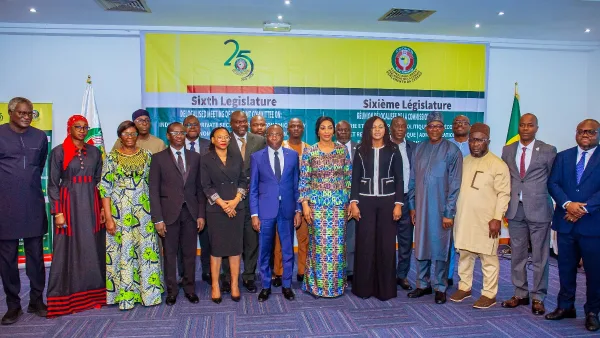
The Parliament of the Economic Community of West African States (ECOWAS) opened a decentralized meeting of its joint committee on Monday in Cotonou, focusing on a central issue for the economic future of the sub-region: strengthening the role of micro, small, and medium enterprises (MSMEs) in regional value chains. Until July 31, parliamentarians, government representatives, experts, and private sector stakeholders will seek to identify reforms capable of removing the barriers that still prevent these businesses from becoming true drivers of economic integration.
The choice of theme is not trivial. MSMEs represent nearly 90% of the West African entrepreneurial fabric and provide the majority of jobs. However, they continue to face the same constraints: difficulties in accessing financing, the burden of informality, weak local transformation capacities, regulatory obstacles, and barriers to regional trade.
In opening the proceedings, the head of the Beninese delegation to the ECOWAS Parliament, Cécile Ahouménou, called on member states to transform the resilience demonstrated by the region in the face of crises into sustainable growth. “Micro, small, and medium enterprises remain the backbone of our regional economy. They drive innovation, create jobs — especially for women and youth — and strengthen local production as well as economic resilience,” she stated. For the Beninese parliamentarian, the formalization of businesses is now an essential lever for competitiveness and integration.
Beninese authorities share the same conviction. Representing the President of the National Assembly, Mahougnon Kakpo reminded that SMEs are “the backbone” of West African economies and will be crucial for the success of the African Continental Free Trade Area (AfCFTA). According to him, improving the business climate requires both legislative reforms and better access to financing, infrastructure, and regional markets.
The Beninese Minister of Small and Medium-sized Enterprises and Employment Promotion, Awaou Baco, presented the reforms initiated by Benin to promote the formalization of businesses and their empowerment. “The economic future of West Africa will be built with micro, small, and medium enterprises,” she asserted, before calling for regional mobilization to develop competitive value chains in view of the AfCFTA.
Representing the President of the ECOWAS Parliament, the second Vice-President, Adjaratou Traoré, also placed MSMEs at the heart of the community strategy. “MSMEs are an essential lever for inclusive growth, job creation, and regional economic integration,” she emphasized. “Building a more competitive, more inclusive, and more resilient regional economy means making MSMEs the true engines of wealth creation,” she affirmed. Adjaratou Traoré also advocated for the establishment of innovative financing mechanisms and increased support for businesses led by women and youth, before expressing her confidence in the adoption of “ambitious, realistic, and pragmatic” recommendations at the end of the proceedings.
The Challenge of Implementation
Beyond the opening speeches, the first day was marked by several technical presentations focused on concrete levers for developing the private sector. The Director General of the SME Development Agency (ADPME), Aline Alia, presented the Beninese model, particularly based on the Glo-Djigbé Industrial Zone (GDIZ), described as an accelerator for the formalization of businesses.
The Director of Private Sector Administration at the ECOWAS Commission, Dr. Tony Luka Elumelu, estimated that the region does not suffer from a lack of community texts but from an implementation issue. “We must implement what we have adopted. It is no longer about multiplying policies, but about making the existing ones work,” he insisted, calling on member states to better respect community commitments and remove obstacles that continue to hinder trade.
The Weight of the Informal Sector at the Heart of the Debates
The discussions also highlighted the contradictions of West African economic integration. Speaking during the debates, Professor Arifari Bako reminded that although official statistics place intra-community trade around 15%, this figure would reach nearly 75% when including informal exchanges. For him, this reality demands new approaches, based on support mechanisms rather than a simple logic of control.
The academic also denounced the proliferation of checkpoints along regional corridors, citing the Sèmè-Kraké-Badagry axis, where he claims to have counted more than sixty checkpoints over less than forty kilometers. A situation that, according to him, illustrates the ongoing difficulties in implementing community texts on free movement.
The work of the joint committee will continue until July 31. Parliamentarians will need to formulate recommendations aimed at enhancing the competitiveness of MSMEs, accelerating their formalization, and promoting their integration into regional value chains, against the backdrop of ambition.
Comments