
Benin – 4th day of the work of the ECOWAS Parliament Joint Commission: the deputies exchange with the women of the PK3 market in Cotonou.
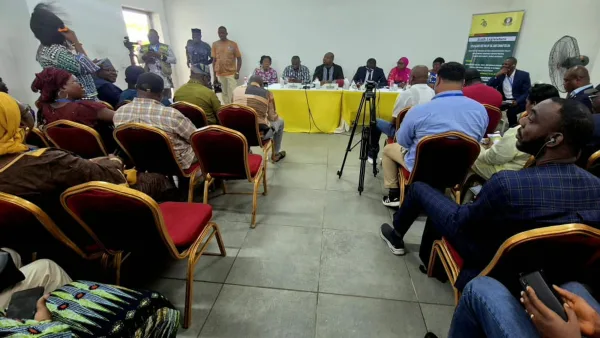
During the fourth day of their offsite meeting in Benin, members of the mixed commission of the ECOWAS Parliament visited the field on Thursday, July 30, 2026. The aim of this approach was to engage directly with the women at the modern PK3 market in Cotonou. Central to the discussions were customs hassles, the free movement of people and goods, and the formalization of business activities.

SUMMARY
This is an important step for the parliamentarians of the Economic Community of West African States (ECOWAS). Present in Benin’s economic capital since the beginning of the week to work on the formalization and financing of Micro, Small, and Medium Enterprises (MSMEs), the community deputies traded the plush conference center lounges for the bustling aisles of the PK3 thrift market in Cotonou.
This immersion is not a coincidence. The PK3 market, a showcase for the modernization of merchant infrastructures initiated by the Beninese government, serves as a real open-air laboratory for the regional delegation. Hosting thousands of traders, mostly from the informal sector, this site provides a condensed view of the realities, challenges, and economic potential of women in West Africa.
The Realities on the Ground Exposed to the Deputies
During this fourth day of work, the parliamentarians met with female vendors and wholesalers. In front of parliamentarians from several member states, the traders made a unanimous observation: despite the ambitions expressed by ECOWAS regarding regional integration, obstacles to free movement remain numerous. Speaking on behalf of the women from the PK3 market, their president, Anasthasie Chodaton, denounced the harassment and administrative hassles that complicate trade exchanges in the sub-region. “We are traders operating throughout the sub-region. But today, we are facing a major problem: harassment and hassles at the borders,” she declared.
According to her, these practices go against the founding principles of ECOWAS, which is supposed to guarantee the free movement of people and goods. “We therefore ask the ECOWAS parliamentarians to tackle this problem head-on so that a sustainable solution can be found. Customs hassles and other obstacles to regional trade must be lifted,” she pleaded. Beyond the difficulties encountered at the borders, the leader of the traders also stressed the need for players in the informal sector to engage in the formalization process of their activities, believing that it is an essential condition to fully benefit from the support mechanisms put in place by states and regional institutions.
The Traders Demand More Transparent Controls
Similar sentiments were echoed by Ms. Alao, a trader, who believes that border controls are often driven more by the desire for illicit gains than by the respect of procedures. “Even when all your documents are in order, what interests them is only the money. We really need to find a solution to this problem,” she lamented. The challenges related to free movement were also highlighted by Ms. Adjé Geneviève, president of the reflection circle of economic operators in Benin. Referring to her travels between Ivory Coast, Ghana, Togo, and Benin, she condemned the multiple controls and the sometimes harsh treatment of travelers. “How can we talk about the free movement of people and goods when such situations still exist between African countries?,” she questioned.
She specifically pointed out the long procedures faced by some travelers at the Ghanaian border posts, as well as repeated controls that significantly slow down commercial exchanges. For the head of the economic operators, African fraternity should take precedence over administrative burdens. “We are Africans. African fraternity should take precedence over administrative barriers,” she insisted, calling on member states to further harmonize their customs procedures and import policies.
The Parliamentarians Call for Better Use of Existing Mechanisms
In response to these concerns, the parliamentarians sought to provide some solutions. Recently appointed head of the Department of Human Development and Social Affairs of the ECOWAS Commission, Nassirou Bako-Arifari invited traders to use existing institutional mechanisms to raise their concerns.
The former Beninese minister also reminded that the biometric national identity card now allows citizens of several member states to travel within the ECOWAS space without a passport. He encouraged traders to obtain this document and to better inform themselves about community texts in order to assert their rights. “If you do not know the texts that govern these issues, it will be difficult for you to assert your rights,” he insisted.
Guy Marius Sagna Advocates for Modernization and Digitization
Senegalese deputy Guy Marius Sagna, for his part, commended the model of the PK3 modern market, which he considers an example to be replicated throughout the sub-region. “I congratulate the Beninese government for this initiative. It should be continued, expanded, and improved,” he stated. The parliamentarian emphasized that the modernization of markets is a key lever to improve the working conditions of African traders. He also urged economic operators to show tax citizenship in order to allow states to sustainably finance merchant infrastructures.
Addressing the issue of border hassles, Guy Marius Sagna believed that the digitization of procedures is one of the main responses to the challenges raised. “The day when procedures are fully digitized and transparent, corrupt practices will disappear,” he affirmed. He assured that the concerns expressed by the traders would be integrated into the recommendations to be made at the end of the mixed commission’s work.
This field visit allowed the deputies to confront the ambitions of regional integration with the realities faced daily by economic actors. The data collected and the poignant testimonies of these women on the ground will serve as raw material for the parliamentarians. They will be included in the final mission report as well as in the strategic recommendations that the commission will convey to the heads of state of the community.
Comments