
Amnesty International Benin: 20 journalists enhance their skills on climate justice
Gathered this Monday at the Xwéfa reception house in Cotonou (formerly Chant d’Oiseau), about twenty journalists participated in a training focused on climate justice, initiated by Amnesty International. At the heart of the discussions: the role of the media in raising awareness about environmental issues, the impacts of climate change on vulnerable populations, and the need to strengthen media coverage of climate-related topics.

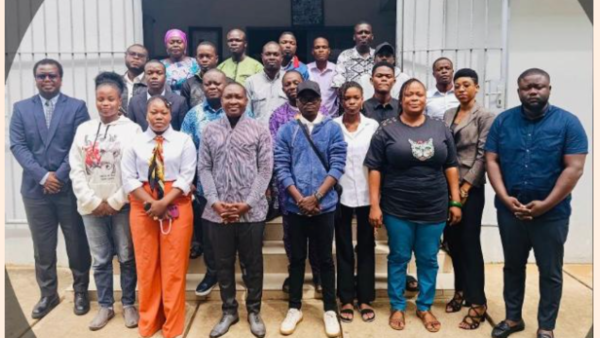
At the Xwéfa reception house in Cotonou this Monday (formerly Chant d’Oiseau), about twenty Beninese journalists participated in training dedicated to climate justice and the role of the media in raising awareness among populations. Initiated by Amnesty International, the meeting allowed for the exploration of the links between climate change, human rights, and media responsibility.
Through presentations, discussions, and debates, participants were invited to reflect on how the media can contribute to making climate issues more accessible to the general public. “The media strongly influence the priorities of populations as well as those of decision-makers,” recalled Glorys Houssou, media officer of the organization. According to him, climate justice is still insufficiently addressed in the public space, even though it constitutes a major global governance issue. For his part, the Director of Amnesty International in Benin, Dieudonné Dagbeto, encouraged participants to become more involved in advocacy efforts to promote respect for the commitments of authorities regarding environmental issues and human rights.
During the session, trainers emphasized the need for a rigorous and contextualized approach to environmental information. Radio, television, print media, and digital platforms were presented as essential actors in disseminating climate-related content. However, this increase in information channels also poses challenges regarding verification, credibility, and editorial quality.
Discussions also focused on the concrete consequences of climate change: flooding, pollution, drought, soil degradation, and rising sea levels. These phenomena particularly affect the most vulnerable populations, who are often the least responsible for polluting emissions.
Participants also exchanged views on environmental public policies, waste management, the importance of recycling, and the growing role of digital media in awareness strategies. Several journalists questioned speakers about content dissemination mechanisms, media partnerships, and the technical means available to support communication campaigns.
Beyond the observations, this initiative led by Amnesty International aims to strengthen the capacities of media professionals so they can better cover climate and environmental issues. The project specifically includes the production of educational content, the organization of a national forum on climate justice, and the development of digital campaigns aimed at raising citizen awareness.
In a studious atmosphere, discussions also highlighted the importance of an equitable approach. “The most exposed populations are often those who contribute the least to global emissions,” emphasized the organizers, reminding everyone that climate justice fundamentally revolves around issues of responsibility and international solidarity. Through this training, the organizers hope to create a network of journalists capable of sustainably addressing environmental issues in the Beninese and regional public debate.
Comments