
Rewrite the history of Benin: ANSALB unveils the foundations of a major scientific project
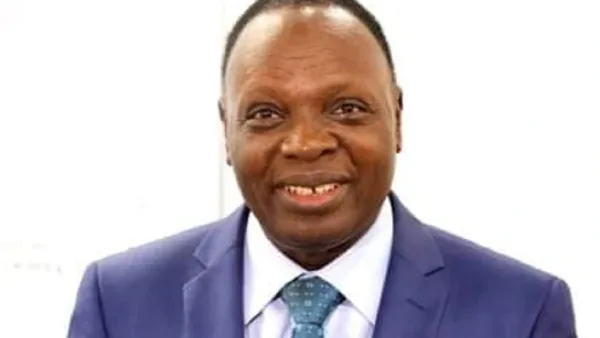
Invited on Sunday, June 28, 2026, to the Canal 3 Bénin set during the show Zone Franche, Professor François Adebayo Abiola shed light on the ongoing work at the National Academy of Sciences, Arts and Letters of Benin (ANSALB).

SUMMARY
Central to his intervention was an ambitious and sensitive program: the scientific rewriting of Benin’s history, led by Beninese and African researchers.
From the outset, the academic made sure to commend the commitment of the Academy’s leadership, mentioning its president Nazaire Padonou, vice-president Manzourou Moudachirou, and perpetual secretary Michel Boko.
An intellectual undertaking he describes as rigorous, voluntary, and already noticeable in its initial effects on Beninese society.
A scientific institution under presidential protection
Coordinator of the national history rewriting program, Professor Abiola revisited the statutory missions of ANSALB. According to its foundational texts, the Academy works towards the development of Benin through sciences, arts, and letters, advises public authorities and the private sector, and promotes scientific research.
However, one institutional point continues to spark debate. ANSALB is placed under the sponsorship and protection of the President of the Republic. This provision is fully embraced by the academic, who believes that a still-young institution tasked with dealing with historically and politically sensitive topics needs a framework of guarantees and resources.
He clarifies, however, that this protection is neither an intellectual tutelage nor a political influence. The funding for activities is ensured through an Annual Work Program submitted to the Presidency, in a formal and transparent framework. The Academy is organized around three colleges and six permanent commissions.
Four axes to reconstruct national memory
The program for rewriting the history of Benin is based on four structuring fronts. The first concerns anti-colonial revolts, aiming to document local resistances and restore the values of courage and sovereignty often absent from official narratives.
Surveys have already been conducted in several regions, including the Plateau, Borgou, Alibori, Tchaourou, and the Sahouè area.
The second focus is on studying great Beninese figures, known or remaining in the shadows, in order to provide younger generations with historical reference points and models rooted in their own culture.
The third front tackles the episode of the Thiaroye massacre on December 1, 1944, in a historical truth approach aimed at deconstructing what Professor Abiola describes as biased official narratives and state silences.
Finally, a fourth project focuses on the history of indigenous deities, coordinated by Professor Bada, in a national context marked by a resurgence of interest and debates around Vodun and African spiritualities.
For the academic, the stakes are clear. It’s about correcting a historiography inherited from the colonial period. He cites the example of Sakété in 1905, where colonial archives report minimal losses on the administration’s side, in stark contradiction to local oral testimonies and traditions mentioning a large-scale massacre. For him, the historical science has the duty to confront these versions and restore the facts.
A historically opportune moment
Professor Abiola places this initiative within a broader African context, marked by a growing desire to reclaim national narratives. He mentions Senegal as an example, as well as the decision made by former president Patrice Talon to now lay the wreath on August 1 at the feet of national heroes.
All these signals, according to him, confirm that the time has come for Benin to fully assume its memory and history.
Before concluding, the academic made two requests to the Beninese authorities. He advocates for an official recognition of King Adélou of Sakété’s resistance against colonial administration and wishes for the initiation of a procedure to repatriate his ashes, currently in Nouadhibou, Mauritania. Two symbolic gestures that, in his view, would fully contribute to restoring national historical dignity.
Comments