
Legislative elections in Benin 2026: the final day of a discreet but strategic campaign.
In Benin, the campaign for the legislative and municipal elections on January 11, 2026 has entered its decisive phase. Launched on December 26, 2025, it ends this Friday, January 9, 2026, in a distinctive political climate marked by major institutional issues, a weakened opposition and citizen mobilization still uncertain.

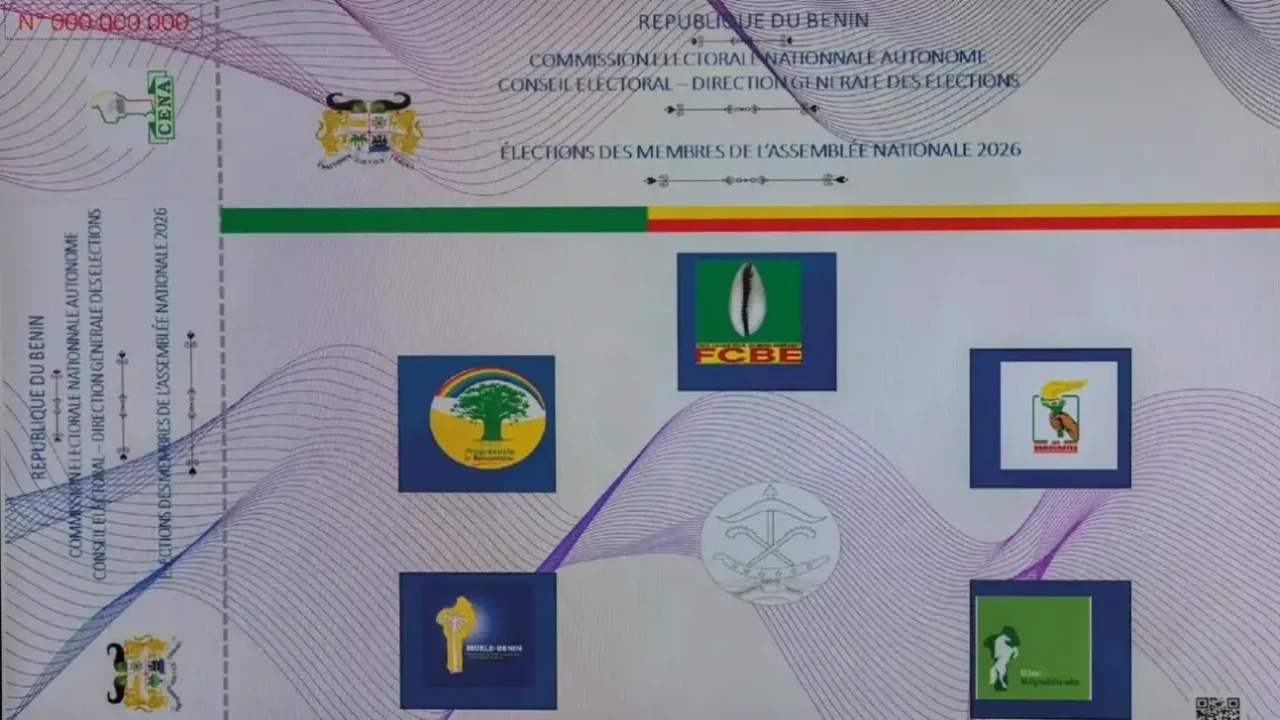
SUMMARY

The 2026 legislative elections in Benin, coupled with the municipal elections, constitute a decisive political milestone. Beninese voters are called to the polls to elect 109 deputies, now entrusted with a seven-year term, as well as their municipal councillors. This election takes place in a sensitive context. At the end of December, the country was marked by a foiled coup attempt, without altering the electoral calendar. An episode that weighs on the political atmosphere, though it did not officially disrupt the conduct of the campaign.
Five political formations participate in the 2026 legislative elections in Benin, with a clear dominance of the presidential majority. Three parties concentrate most of the electoral momentum, namely, the Union progressiste le Renouveau, the Bloc Républicain and Moele-Bénin. These formations, which currently hold 81 seats out of 109 in the National Assembly, are also present in the municipal elections, alongside Force Cauris pour un Bénin Émergent.
Facing them, the main opposition party, Les Démocrates, is contesting only the legislative elections. It is absent from the municipal elections and from the presidential election in April 2026, due to a lack of the required endorsements.
A locally focused, on-the-ground campaign
On the ground, the campaign for the 2026 legislative elections in Benin stands out for its relative sobriety. Few large meetings, but a strong proximity presence: door-to-door canvassing, political caravans, direct exchanges in neighbourhoods and villages. This strategy aims to reconcile voters with the ballot boxes, in a country where turnout remains low at 27% in 2019 and 37% in 2023.
Several citizens interviewed laud this more direct approach, deemed more accessible and less spectacular. So far, no major incidents have been reported. Posters, banners and rallies of militants rhythm the campaign, with no notable outbursts.
The electoral authorities, notably the Autonomous National Electoral Commission (CENA), are calling for a responsible campaign. Its president, Sacca Lafia, has urged political actors to prioritise a robust exchange of ideas within the framework of democratic rules.
In practice, the climate remains marked by a political asymmetry between the majority and the opposition. Civil society organizations speak of a narrowing of the civic space, pointing to pressure on certain media and political actors. Despite these concerns, the overall mood remains peaceful, dominated by messages of national cohesion and institutional stability.
A mobilization still uncertain
A few hours before the vote on January 11, 2026, the main unknown remains turnout. Will voters be present despite a campaign considered discreet in places and a singular political context?
The results of the 2026 legislative elections in Benin will determine not only the new configuration of the National Assembly and the municipal councils, but will also serve as a political barometer ahead of the presidential election in April 2026. A key ballot for the country’s institutional future.
Comments