
Iran: Gulf countries will no longer be a shield for Washington, warns Mojtaba Khamenei
Mojtaba Khamenei has stated that Gulf countries can no longer serve as a “shield” for American bases, in a message broadcast by Iranian state television on the occasion of the Hajj. This declaration comes amid high tension between Tehran and Washington, following American strikes near Bandar Abbas and while both sides continue parallel diplomatic discussions.

SUMMARY
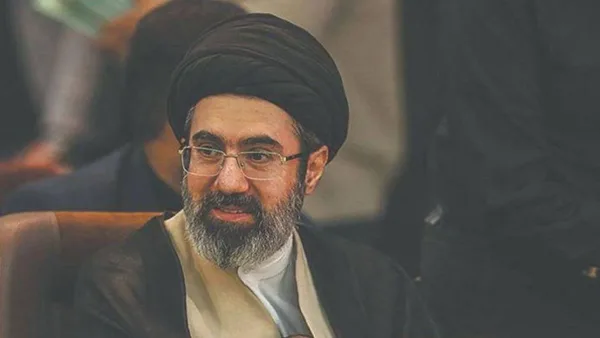
In a message broadcast on Tuesday, May 26, by Iranian state television during the Hajj pilgrimage, Supreme Leader Mojtaba Khamenei asserted that countries and territories in the region would no longer serve as a “shield for American bases,” in a text read by a presenter — the Supreme Leader has not been seen in public since he took office in early March. The declaration came the day after American operations against Iranian missile sites near Bandar Abbas, and while Washington and Tehran both claimed to be close to an agreement.
According to the official Iranian news agency IRNA, Khamenei’s text proclaims: “Time will not stop, and the nations and lands of the region will no longer serve as a shield for American bases. They will no longer be a safe haven for evil and will not accommodate military bases in the region.” The declaration also specifies: “There will certainly be no turning back.” The Supreme Leader reaffirmed that the slogans “Death to America” and “Death to Israel” would remain “the rallying cries of the Islamic world, especially among the youth.”
On the same day, the Islamic Revolutionary Guard Corps (IRGC) announced that it had shot down an American MQ-9 Reaper drone after detecting a “hostile aircraft” in Iranian airspace, according to LaPresse/IRNA. Washington had not confirmed this information at the time of publication.
American Strikes the Day Before in Bandar Abbas
On Monday, May 25, U.S. Central Command (CENTCOM) announced that it had struck missile launch sites and Iranian vessels attempting to lay mines near the strategically located port of Bandar Abbas, at the entrance to the Strait of Hormuz. These strikes were “carried out to defend American troops against Iranian threats,” according to CENTCOM spokesman Tim Hawkins, who added that Washington had shown “restraint in the context of the ceasefire.” Iran described the American operations as “aggression” and warned that “new attacks will lead to a severe response that will extend beyond the region,” according to the Iranian Ministry of Foreign Affairs.
During the night of May 25-26, several explosions were heard in the Bandar Abbas area and in the Persian Gulf, particularly near Sirik and Jask, according to the semi-official Iranian agency Fars.
Both sides are simultaneously maintaining diplomatic contacts. U.S. Secretary of State Marco Rubio stated on Tuesday that the Strait of Hormuz would reopen “in one way or another” and that reaching an agreement with Tehran remained possible. An Iranian delegation traveled to Doha, Qatar, on Monday for discussions with intermediaries, according to consistent diplomatic sources. Tehran had indicated the previous week that an agreement “was not imminent” and that any settlement should include the end of military operations.
The Profile of the New Supreme Leader
Mojtaba Khamenei, 56, was appointed Supreme Leader on March 8, 2026, by the Assembly of Experts after the death of his father, Ali Khamenei, who was killed on February 28 during joint American-Israeli strikes on Tehran. His wife also perished in those strikes. According to U.S. Defense Secretary Pete Hegseth, who spoke on March 13, Mojtaba Khamenei may have been injured and possibly disfigured during the initial strikes — explaining why all his statements since the beginning of his term have been read by state television presenters, without the Supreme Leader making a physical appearance.
His first statement on March 12 set out the broad outlines of his agenda: maintaining the closure of the Strait of Hormuz, attacks on American bases in the region, and urging neighboring countries to expel American forces or face the consequences. Since February 28, Iran has launched over 3,000 drones and missiles toward the Gulf monarchies — Saudi Arabia, Qatar, and the United Arab Emirates — which host significant American military bases, including Al-Udeid Air Base in Qatar, the largest U.S. Air Force command center in the region.
The statement on May 26, broadcast on the occasion of the Hajj — a pilgrimage with its holy site in Saudi territory — implicitly addresses Arab countries that tolerate or host the American military presence. It comes amid concerns that these same monarchies have expressed dissatisfaction regarding the transformation of their region into a battlefield, following months of missiles and drones.
Comments