
Ceuta Crisis: The Hypothesis of Moroccan Instrumentalization
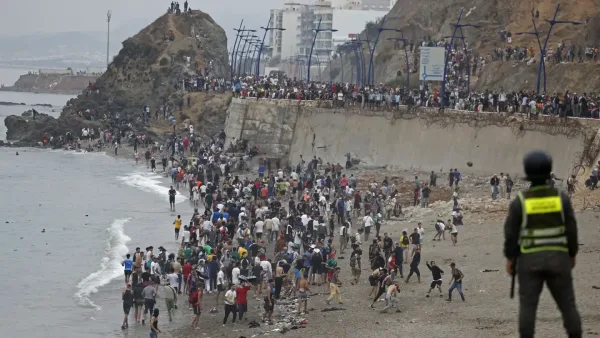
Since the end of July 2026, the Spanish enclave of Ceuta in North Africa has been experiencing the most significant wave of migratory arrivals ever recorded at its border. Starting from July 30, between 50,000 and 70,000 people, mostly young Moroccans and teenagers, crossed the border in just a few hours, swimming around the breakwater of El Tarajal, climbing over the border fences, or along the coast. This number represents about 70% of Ceuta’s total population, which barely stands at 84,000 residents, immediately overwhelming local reception capacities.

SUMMARY
The human toll of the episode has been increasing day by day. Initially estimated at 18 dead on July 31, it rose to 34, then to 67, before reaching at least 72 dead according to a report published on August 2, most having drowned while attempting the crossing by swimming or having been crushed in stampedes on the breakwater. The majority of those who entered have returned to Morocco in the hours and days following, often driven by hunger, exhaustion, and hostility from the local population, but several hundred are reportedly still present in Ceuta without housing or food solutions.
This crisis did not come out of nowhere. A report from the think tank of the Spanish Ministry of Defense, published in May 2026, had already warned of a “Moroccan buildup” at the borders of Ceuta and Melilla, recommending a specific defense plan for these two “vital nodes” of Spanish security. This document mentioned a Moroccan strategy of “gradual and prolonged attrition” aimed at weakening Spain’s position without resorting to military force, combining economic asphyxiation through the closure of trade customs and the instrumentalization of migration.
In the first half of 2026, Ceuta had already recorded an increase of over 149% in land crossings compared to the previous year, signaling that migratory pressure was intensifying well before the end of July episode. The immediate trigger identified by the Spanish government is a ruling by the Supreme Court issued on July 8, 2026, which decided that the “summary return” procedure could not apply to migrants intercepted at sea trying to reach Ceuta or Melilla, imposing the ordinary immigration procedure on them. Madrid claims that smuggling networks have exploited this decision, spreading rumors on social media that the border would now be impassable without consequences.
The Hypothesis of Moroccan Instrumentalization
The central question raised by this crisis is the role played by the Moroccan authorities. Several elements support the thesis of deliberate instrumentalization. First, the initial attitude of Moroccan agents, who allowed the flow to develop before interrupting it several hours later with a decision that seemed political, has fueled suspicions of a coordinated operation from within the Moroccan apparatus. Rejected migrants have also claimed that no reinforced checkpoints were deployed on routes leading to Fnideq, the Moroccan locality bordering Ceuta.
Riccardo Fabiani, an analyst at the International Crisis Group, estimates that “there are enough elements to suggest that the power in Rabat is involved in this crisis.” Haizam Amirah Fernández, director of the Center for Contemporary Arab Studies in Madrid, expresses a similar view, stating that “it is hard to believe that the authorities were not aware of what was happening, or even facilitated such a massive population movement.” Historian Pierre Vermeren sees it as a “warning message” sent to Pedro Sánchez’s Spain regarding the issue of Western Sahara, a territory not autonomous according to the UN, controlled by Morocco but claimed by the Polisario Front, backed by Algeria. Journalist Quentin Müller summarizes this interpretation by referring to “the instrumentalization of its own population by Morocco to make Spain pay for its rapprochement with Algeria.”
This pattern is not unprecedented. In 2021, Morocco was already accused of facilitating the entry of over 10,000 young Moroccans into Ceuta to pressure Madrid after Spain provided medical care for the Polisario leader, Brahim Ghali. A note from the NGO Migreurop highlights that Rabat “does not hesitate to use migration as a political, economic, and diplomatic rent,” having instrumentalized it several times to gain recognition of its sovereignty over Western Sahara, favorable trade and fishing agreements, or an advanced status with the European Union.
However, this interpretation is not unanimous. Political scientist Ruth Ferrero calls for caution, estimating that “the available information does not suggest, a priori, a deliberate Moroccan political will,” and that the role of disinformation networks and trafficking routes remains central in this escalation. A study by the Nordic Human Rights Observatory in Morocco, cited in this debate, reveals that 81% of young Moroccans surveyed consider irregular migration as a “solution to improve their living conditions,” which cultivates a social foundation conducive to this type of mass movement, regardless of any state manipulation. On the Moroccan side, the Ministry of the Interior has officially denied any easing of controls, pointing instead to the “malicious exploitation” of social media. Nevertheless, the Moroccan Association for Human Rights has called for the opening of a “serious and independent investigation to establish responsibilities.”
Internal Divisions in Spain
On the internal Spanish front, the crisis has immediately revived longstanding political fault lines. Locally, the five parties represented in the Ceuta Assembly (PP, PSOE, Vox, MDyC, and Ceuta Ya!) initially jointly called for a declaration of national emergency, the closure of the border, and an increase in police and military presence. The president of Ceuta, Juan Jesús Vivas (PP), described the situation as an “absolute humanitarian and social emergency,” referring to pressure that was “impossible to absorb.”
However, this local consensus quickly gave way to a more classical political clash between the government and the opposition. The head of the PP, Alberto Núñez Feijóo, accused Pedro Sánchez of sending a “message of permissiveness” regarding migration for years and of opening diplomatic disputes with Spain’s European partners. Vox, for its part, denounced a “criminal migration policy,” while the PSOE criticized the right for pure “political opportunism.” The Madrid government rejected the national emergency declaration request made by Ceuta, believing that the existing legal framework does not allow invoking this measure for a migratory crisis.
These local tensions go beyond just the migratory episode. A month before the crisis, Vox had already accused Vivas and the PSOE government delegate, Miguel Ángel Pérez Triano, of forming a bipartisan “alliance of interests” to marginalize the political alternative represented by the far-right party in Ceuta, accusing these two officials of neglecting the city’s structural problems (employment, security, migratory pressure) in favor of an ideological confrontation against Vox. This previous episode illustrates how polarized the political debate in Ceuta was even before the outbreak of the end of July crisis.
On the national level, Pedro Sánchez qualified the massive crossings as a “violation of Spain’s territorial sovereignty,” mobilizing the army to reinforce overwhelmed police forces while attributing primary responsibility to smuggling networks that allegedly exploited the Supreme Court ruling. A radical left collective, on the other hand, criticized the PSOE-Sumar government for having taken up “line by line” a roadmap dictated by the far right and the right, deploying the army and hardening pushback measures, instead advocating for free movement and safe, legal migration pathways.
The European Divide: Schengen, Solidarity, and Mutual Accusations
The crisis in Ceuta quickly overflowed the bilateral Hispano-Moroccan framework to become a test of European solidarity concerning migration. Italy, under Giorgia Meloni, temporarily suspended for a month the Schengen agreement regarding free movement with Spain, describing the scenes in Ceuta as “shocking,” a decision supported by Finland and Denmark, while Czech Prime Minister Andrej Babiš also called for a temporary suspension of Spain’s participation in Schengen.
Twenty-two EU member states sent an open letter calling for an emergency meeting of interior ministers and implicitly accusing Spain of inadequate management of its southern border. In response to these criticisms, Pedro Sánchez denounced the “selfish, polarizing, and illegal” reaction of some European partners, reminding that Ceuta and Melilla are subject to specific Schengen rules that prevent any further movement towards the rest of the European area, and that Spain has, according to Frontex, one of the least porous external borders in the Union, with a number of irregular entries two times lower than that of Italy in the 2021-2026 period.
The President of the European Commission, Ursula von der Leyen, characterized the images from Ceuta as “unacceptable,” reminding that access to the Union cannot happen without respecting its rules, while proposing a reinforced deployment of the Frontex agency and economic, technical, and operational assistance to Spain. The European Commissioner for Home Affairs and Migration, Magnus Brunner, confirmed that no person had crossed the border into the continental territory of the EU, a key point that Madrid emphasizes to counter accusations of laxity. This episode illustrates a now-classic divide within the EU between frontline countries calling for solidarity and northern or central European countries more inclined towards security firmness and individual accountability of bordering states.
A Diplomatic Management Under Constraint between Spain and Morocco
Despite the accusations against Rabat, Madrid and Morocco displayed rapid cooperation to stem the crisis. As early as July 30, both countries assured they were working “in coordination” to organize the repatriation of all persons who entered Ceuta illegally, and a bilateral agreement was reached in record time to expedite these returns. This rapid cooperation, despite underlying tensions, illustrates the paradoxical nature of the Hispano-Moroccan relationship: Morocco remains an indispensable partner for managing migratory flows towards Europe, which limits Spain’s ability to openly denounce any potential instrumentalization, even when some Spanish diplomatic and security voices mention its likelihood.
This structural dependence is summarized by Riccardo Fabiani: the migratory influx “reminds Spain that Ceuta remains a contested and difficult territory to defend, and that Madrid needs Rabat to protect its interests.” On the ground, Spain has also announced the installation of a line of buoys stretching 500 meters and floating barriers along the pier at El Tarajal, as well as the reinforcement of personnel with drones, divers, and additional military units.
Thus, the end of July to early August 2026 episode highlights three dynamics that transcend the Spanish case alone. First, the structural vulnerability of the enclaves of Ceuta and Melilla as points of diplomatic pressure in the hands of Rabat, a lever already documented since at least 2021 and anticipated by Spanish intelligence services. Second, the persistence of internal political fractures in Spain, where migratory management remains a battleground between the ruling PSOE, the opposition PP, and Vox, even at the local level in Ceuta.
Finally, the crisis exposes the limits of European solidarity regarding migration, a mechanism weakened by the temptation of certain member states to unilaterally suspend common arrangements like Schengen as soon as a specific migratory pressure arises, even when the flows remain, as the Commission reminded, confined to the enclaved territory without ever reaching the European continent. These three axes (external instrumentalization, internal Spanish divisions, and intra-European fractures) combine to transform a one-time migratory influx into a political and diplomatic crisis with lasting repercussions for relations between Madrid, Rabat, and Brussels.
Comments