
Benin: ex officio member, Théodore Holo defines his mission within the Senate
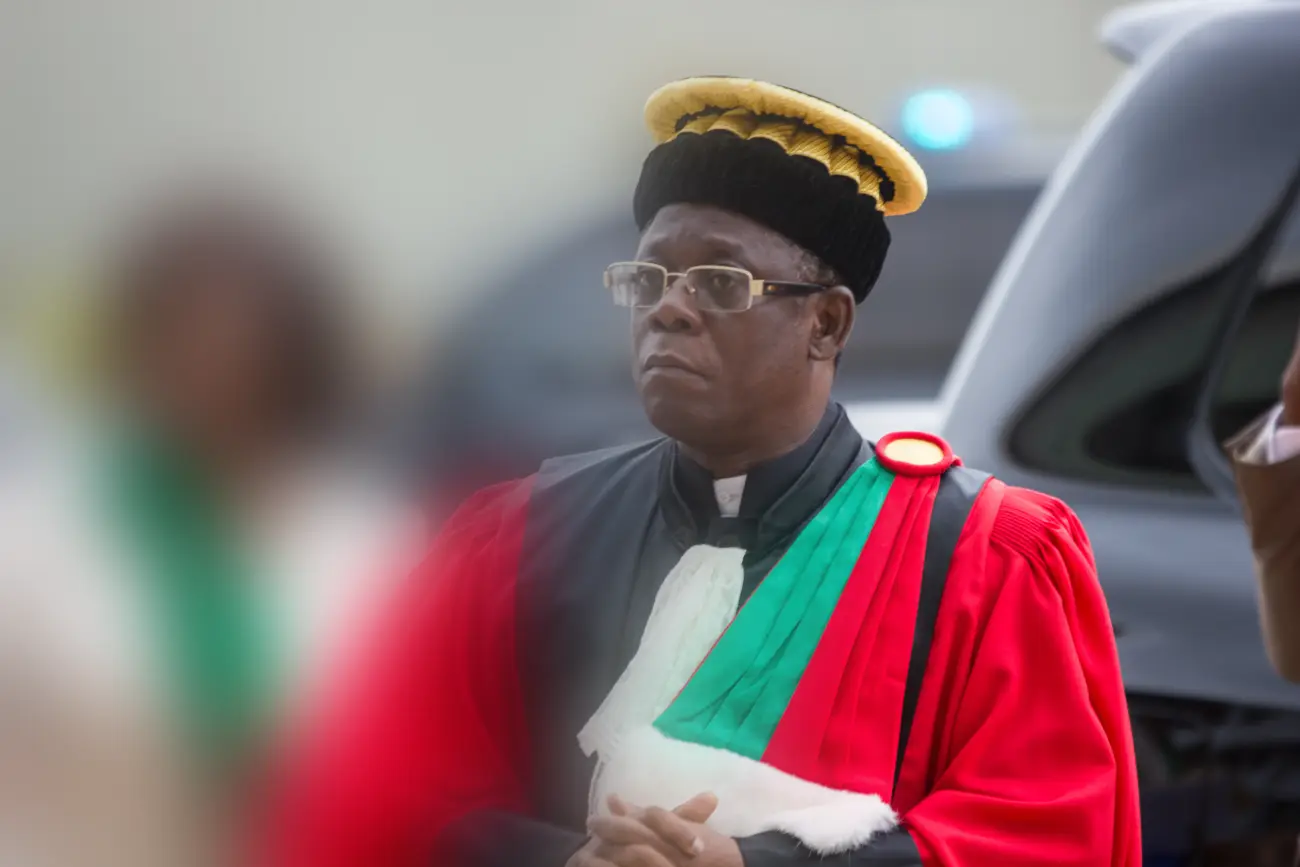
Just a few days before the official installation of the Beninese Senate, Professor Théodore Holo clarified how he intends to carry out his mandate within the new upper chamber. The former president of the Constitutional Court stated that he wants to contribute to peace, national unity, political stability, and the deepening of democracy.

SUMMARY
The future Beninese Senate is preparing to officially take office. Appointed as a member ex officio of this new institution, due to his status as former president of the Constitutional Court, Théodore Holo shared his initial insights on the mission he intends to pursue there.
Invited on ESAE TV on July 10, 2026, the constitutional law expert placed his commitment within an institutional perspective. For him, the functioning of the Senate should be approached with caution, while also being mindful of preserving what is essential: national cohesion.
“I will go and work keeping my vision in mind,” said Théodore Holo, as quoted by La Nouvelle Tribune. He expressed hope that his contribution would help preserve “peace, social unity, political stability, the unity of the country, and development.”
The new upper chamber, resulting from the constitutional revision of November 2025, is set to be officially installed on July 30, 2026, in Porto-Novo. The first members of the Senate were appointed during the Council of Ministers meeting on July 1, 2026. The composition includes ex officio members, notably former presidents of the Republic and former presidents of the Constitutional Court, as well as personalities designated by the president of the Republic and by the National Assembly.
A mission focused on national unity
In his remarks, Théodore Holo mentioned the reservations raised by certain institutions at the time of their creation, before recalling the experience of the National Conference. “When I went to the National Conference, there were political parties that thought it would be of no value. We saw the results it produced,” he asserted.
The former president of the Constitutional Court does not present the Senate as a perfect institution. He acknowledges that “not everything can be rosy,” while believing that there are “positive aspects in the Senate’s provisions.” This stance reflects a measured approach: participating in the new institution without dismissing the questions it raises in public opinion.
Regarding political differences, Théodore Holo calls for not losing sight of the higher interest of the country. “Even if we differ on issues, we have only one priority, we have only one homeland, and we will not destroy it,” he insisted.
For him, the Senate must thus play a stabilizing role in the Beninese institutional framework. His mission, as he envisions it, goes beyond the examination of texts. It also involves preserving political, social, and territorial balances.
Théodore Holo also claims he wants to adapt his commitment to the evolving political context. “The world is changing, and I too must be able to evolve and contribute to the deepening of democracy,” he stated.
The installation of the Senate, scheduled for July 30, 2026, will mark an important step in the implementation of the bicameral Parliament in Benin. It will also open a new institutional phase, in which the appointed personalities will be expected to demonstrate their ability to provide concrete substance to the role of this upper chamber.
Comments