
Benin: Djibril Mama Cissé Moussa takes over the Ministry of the Interior.
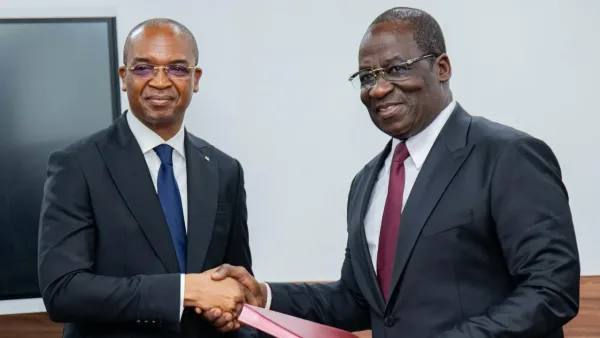
Djibril Mama Cissé Moussa has officially assumed his role as the Minister Delegate in charge of Interior and Public Security, after nearly ten years as the prefect of Borgou. In a context marked by the terrorist threat in northern Benin, cross-border crime, and the ongoing closure of the Nigerien border, he announced his intention to strengthen security cooperation with neighboring countries.

SUMMARY
Djibril Mama Cissé Moussa officially started his duties as Minister Delegate in charge of Interior and Public Security on Tuesday, May 26, at the ministry’s headquarters in Cotonou, in the presence of cabinet council members, the directors’ committee, and staff from various departmental structures. He succeeds Alassane Seidou, who had been in office since May 2021. In his speech, the new minister expressed his desire to “continue the momentum with rigor and determination” and committed to enhancing security cooperation with neighboring countries to address cross-border threats.
Citing terrorism, violent extremism, cross-border crime, and cybercrime as priority challenges, Mama Cissé specified that he would work under the leadership of President Wadagni to “promote a common approach with neighbors.” He called on ministry staff to “demonstrate a high sense of duty, republican spirit, and responsibility,” asserting that “no sustainable development can thrive without peace, stability, and security.”
Alassane Seidou, who leaves behind a record focused on public security, civil protection, integrated management of border areas, and internal affairs, received tributes from the Secretary-General of the ministry and the representative of social partners before handing over the reins.
A Borgou Prefect Promoted to National Level
A civil administrator by training and former Secretary-General of the Parakou City Hall, Djibril Mama Cissé was appointed prefect of the Borgou department by President Patrice Talon on June 22, 2016. He held this position for nearly ten years until his appointment in the first Wadagni government on May 24, 2026. Borgou, located in northeastern Benin, is one of the largest and most populated departments in the country, with Parakou as its capital, the third largest city in Benin.
During his prefecture, he distinguished himself with a documented commitment to children’s rights. In 2017, he participated in launching the national campaign “Zero Tolerance” against violence and sexual abuse of minors, in partnership with UNICEF. The following year, in 2018, he brought together traditional leaders from the department, including the emperor of Nikki, to engage in dialogue about child marriage, a documented practice in the rural municipalities of Borgou. His appointment to a technocratic government is praised in administrative circles and by residents of Parakou on social media.
The assumption of office by Mama Cissé comes amid growing security pressure in northern Benin. The provinces of Alibori and Atacora have been experiencing incidents involving armed groups operating from Burkina Faso and Niger since 2020. The attempted coup on December 7, 2025, heightened the authorities’ vigilance regarding internal stability. The border with Niger has remained closed since the coup in July 2023, reducing the channels for bilateral security cooperation.
The direct presidential oversight over both the Interior and Defense ministries, with both ministries reporting directly to the president rather than functioning independently, places Mama Cissé in close coordination with his counterpart Gildas Agonkan in Defense, both of whom report directly to the presidency. The Republican Police, which recruited and trained 1,785 new agents between 2025 and 2026, represents one of the immediate operational challenges for the new appointee.
Comments