
Benin: Aristide Médénou outlines his three priorities as Minister of Economy and Finance
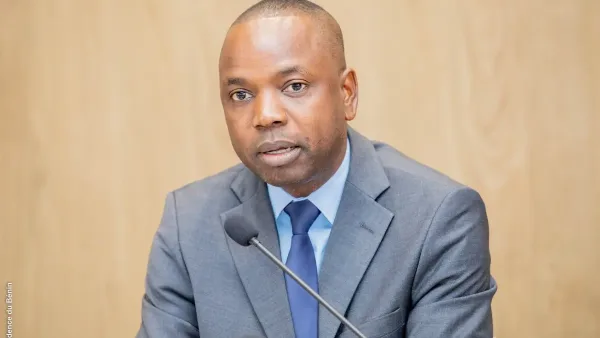
Aristide Médénou has officially taken over the Ministry of Economy and Finance following the handover with Abdoulaye Bio Tchané. Upon taking office, the new minister set three priorities: maintaining budgetary discipline, making economic growth more visible in the daily lives of the people, and enhancing the status of Benin on the international stage.

SUMMARY
The first handover ceremony of the Wadagni government took place on Tuesday, May 26, at the Ministry of Economy and Finance in Cotonou, between Abdoulaye Bio Tchané, the outgoing Minister of State for Development and Government Action Coordination, and Aristide Médénou, the new Minister of Economy and Finance in charge of Cooperation. The two men simultaneously co-signed the transmission registers, sealing the official take-over of the expanded portfolio now incorporating cooperation, along with three delegated ministers responsible for Finance, Budget, and External Resource Mobilization.
For Abdoulaye Bio Tchané, it is “with a feeling of duty accomplished and an unwavering conviction” that he leaves his post after serving ten years alongside President Patrice Talon. “The development of Benin is a permanent project that requires commitment, clarity, and perseverance from everyone,” he stated before commending the “rigor of analysis, sense of state, and mastery of subjects” of his successor, with whom he had the opportunity to discuss “over the years” budgetary trajectories, public policies, and structural challenges.
“Mr. Minister, you are taking on an essential responsibility for the future of our country today. But you are not discovering it. Your background, experience, and understanding of economic and financial issues make you a man already familiar with these topics. Over the years, we have had the opportunity to exchange views on the major challenges facing our economy, on budgetary trajectories, public policies, and structural challenges of our development. Moreover, you know this building well, as you often frequent it. I have always appreciated your analytical rigor, sense of state, and mastery of subjects. It is therefore with confidence that I hand you the keys to these responsibilities today.”
Speaking before the ministry teams, Aristide Médénou promptly set three priorities: maintaining budgetary discipline and a healthy macroeconomic framework, which he described as a “guarantee of the state’s credibility”; ensuring that economic growth is felt in the daily lives of citizens, “especially the most vulnerable, the extremely poor,” echoing President Wadagni’s words in his inaugural speech; and working to ensure that Benin “counts even more in the concert of nations.”
“Our priorities can be summed up in three points. First, maintaining budgetary discipline and a healthy macroeconomic framework. This is a guarantee of our credibility and our ability to act. Second, to ensure, as clearly expressed by the President of the Republic, that the growth we create, and will continue to create, is felt in the daily lives of our citizens, particularly the most vulnerable and the poorest. Third, to work today so that tomorrow, Benin counts even more in the concert of nations.”
A Portfolio that Médénou Knows from the Inside
Aristide Médénou is no stranger to the building he has taken over. An economist by training, with degrees from the University of Abomey-Calavi and the American University, he spent most of his career at the Ministry of Finance, where he led the General Directorate of Economy from 2014 to 2022. He notably managed the 2021 SDG eurobond, the first Beninese bond issue indexed to sustainable development goals on international markets. He then joined the International Monetary Fund in Washington as a senior economist before being appointed on May 24 by decree n ° 2026-314.
Among the first files awaiting him are the preparation of the 2026 amending finance law and the structuring of a possible agreement with the IMF, with technical discussions announced for the coming months. Benin has been without an active IMF program since 2024, amidst revelations about the true extent of the public debt inherited from previous years. The explicit mention of “budgetary discipline” as Médénou’s top priority, coupled with his previous tenure at the IMF, indicates that negotiating a new framework with the Washington institution may top his agenda.
Bio Tchané, a Figure of Regional Integration
Abdoulaye Bio Tchané, 71, is stepping down from a portfolio he received in 2016 with the arrival of Patrice Talon in power, after a career marked by the presidency of the West African Development Bank (BOAD) from 1994 to 2008 and the leadership of the Sub-Saharan Africa department of the IMF. He also served as President of the National Assembly of Benin from 2011 to 2015. His departure from the government does not signify a withdrawal from the political scene: he remains the president of the Republican Bloc, the largest party in the majority alongside the UPR, and a reference figure of the Wadagni coalition.
Comments