
National Assembly: after Houngbédji, Louis Vlavonou pays homage to Amoussou, Nago and Idji
After Maître Adrien Houngbédji on Wednesday, February 4, 2026, the president of the National Assembly, Louis Gbèhounou Vlavonou, organized on Thursday, February 5, 2026 a ceremony to honor his predecessors Antoine Kolawolé Idji, Bruno Amoussou and Mathurin Coffi Nago.

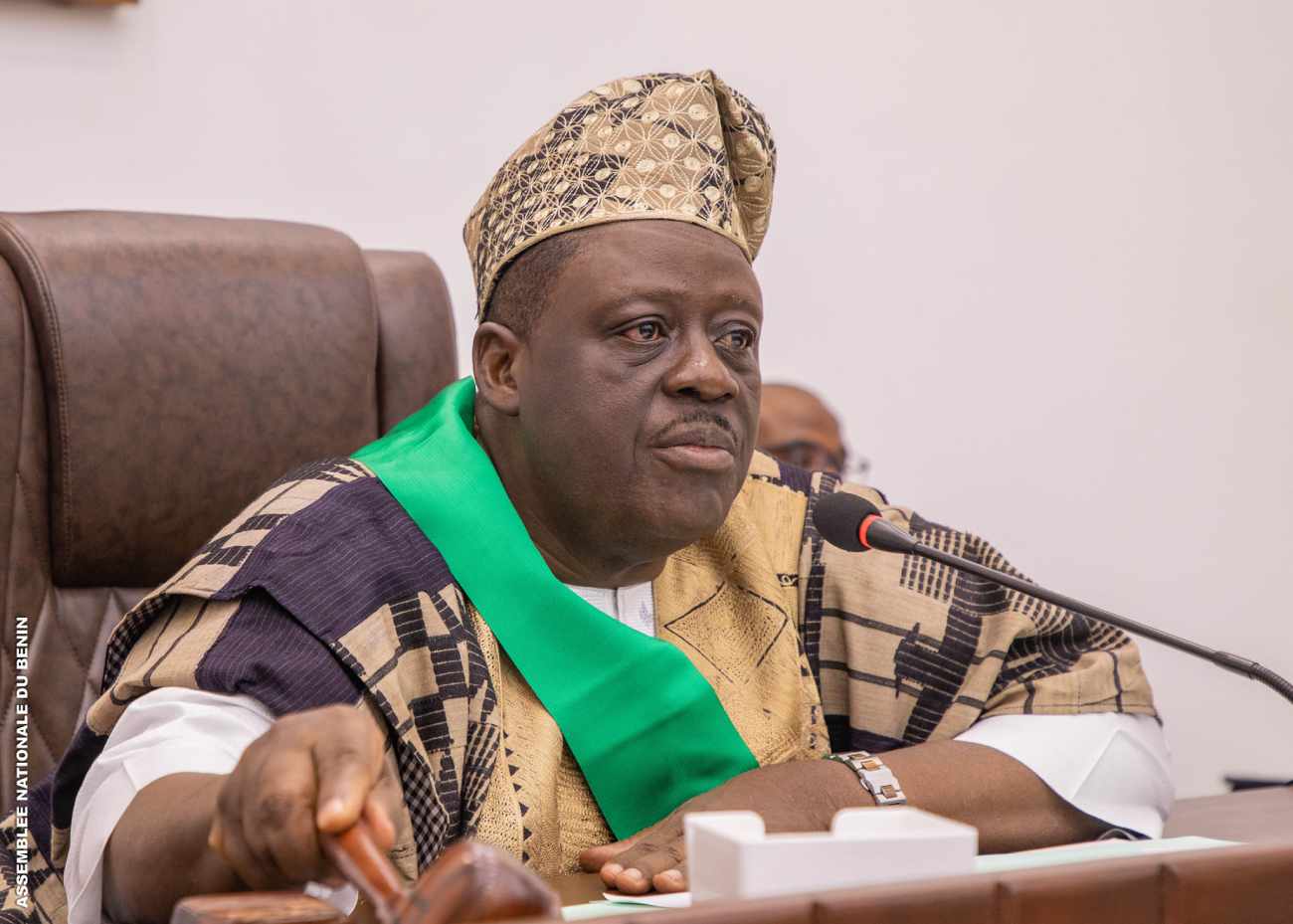

The event took place at the Palais des gouverneurs in Porto-Novo and brought together several dignitaries, among them the Vice-President of the Republic, Mariam Chabi Talata, Victor Dassi Adossou, president of the Supreme Court, Sacca Lafia, president of the CENA, and Joseph Fifamin Djogbénou, former president of the Constitutional Court, as well as many deputies from all legislatures.
Parents, friends and former collaborators of the three political figures came from all regions of the country to attend this first in the history of Benin’s Parliament. After the ceremonial introduction, Professors Gildas Enagnon, Mohamed Aboudou and Joël Adéloui presented the syntheses of the studies devoted to the parliamentary and political trajectories of the three honorees, through the works that were dedicated to them.
According to President Vlavonou, these works do not merely recount facts: “These books offer demanding readings of the trajectories, methods, and key moments of our parliamentary history.”
Bruno Amoussou: An exceptional career
The book devoted to Bruno Amoussou highlights a career deeply rooted in Benin’s political and institutional history. As President of the National Assembly, Amoussou carried out his duties with balance, moderation, and a concern for relations between public powers, demonstrating that parliamentary leadership is as much a function of authority as a mediation mission.
For Vlavonou and Professor Enagnon, his career embodies Alexis de Tocqueville’s maxim: “Political institutions are strong only when they are upheld by the mores of society.”
Antoine Kolawolé Idji: A presidency rooted in listening
For Antoine Kolawolé Idji, president of the 4th legislature, the work highlights a presidential style based on restraint, availability, and openness. His presidency was distinguished by constant dialogue, political pedagogy, and mutual respect, strengthening the Parliament’s credibility and internal functioning.
Vlavonou recalled that his approach rested on a simple conviction: “The Parliament is not durably strengthened unless it remains a space for structured debate and mutual respect.”
The event thus highlighted the richness of the careers and approaches of three major figures in Benin’s parliamentary history, while reaffirming the continuity and the solemnity of the institution.
Comments