
Guinea: Flooding devastates school in Coyah, 269 people affected
Heavy rains have struck Coyah and Manéah, where 269 people have been reported affected. In Batouya, a school lost its archives and some equipment, jeopardizing the upcoming school year.

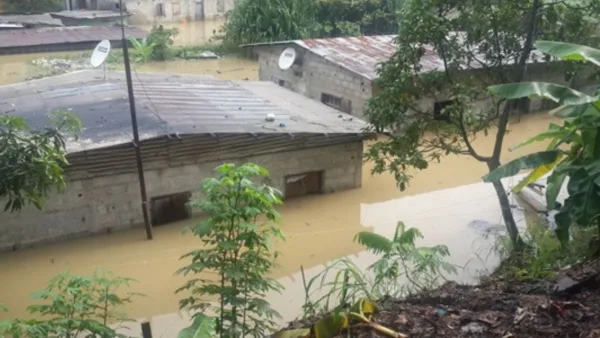
Heavy rains in Coyah and Manéah have displaced hundreds of residents and damaged public infrastructure. The National Agency for Emergency Management (ANGUCH) reported that 269 individuals were affected, with eight injuries and one fatality. Coyah’s mayor, Mohamed Bangoura, later mentioned two fatalities during a situation update reported on Monday.
The ANGUCH assessment counted 218 affected individuals in Coyah and 51 in Manéah. Among those impacted are 87 children under the age of 10, 113 women, and 69 men, including six pregnant women and three people with disabilities. Families have been relocated to the Youth House in Coyah and a school in Bananeraie, Manéah.
In Batouya 1, the primary school suffered significant damage. Its director, Mamadouba Camara, stated that the floodwaters destroyed administrative and educational materials, including teacher files, textbooks, grade registers, and original diplomas stored at the school. With the school year starting soon, he believes that a normal resumption of classes will require prompt assistance.
The flooding also damaged several homes along the Sarinka River. The Guinean Press Agency reported collapsed houses and disrupted traffic on several routes connecting Tougandé, Karba, Kendoumaya, Tômboya, and Kontaya. The old bridge in Sambaya was also submerged.
In Coyah, local authorities organized the reception of the displaced and the distribution of meals in collaboration with ANGUCH. The governor of Kindia visited the area, while rescue teams continued to provide assistance in the affected neighborhoods. In Manéah, residents of Bananeraie were impacted by the overflow of the Kitema River.
The National Meteorological Agency had issued a high flood risk warning for the coastal area during the rainy episode over the weekend. According to ANGUCH, damage and needs assessments are ongoing in the field.
Comments