
Ethiopia: Abiy’s party wins 90% of seats as seven armed groups unite

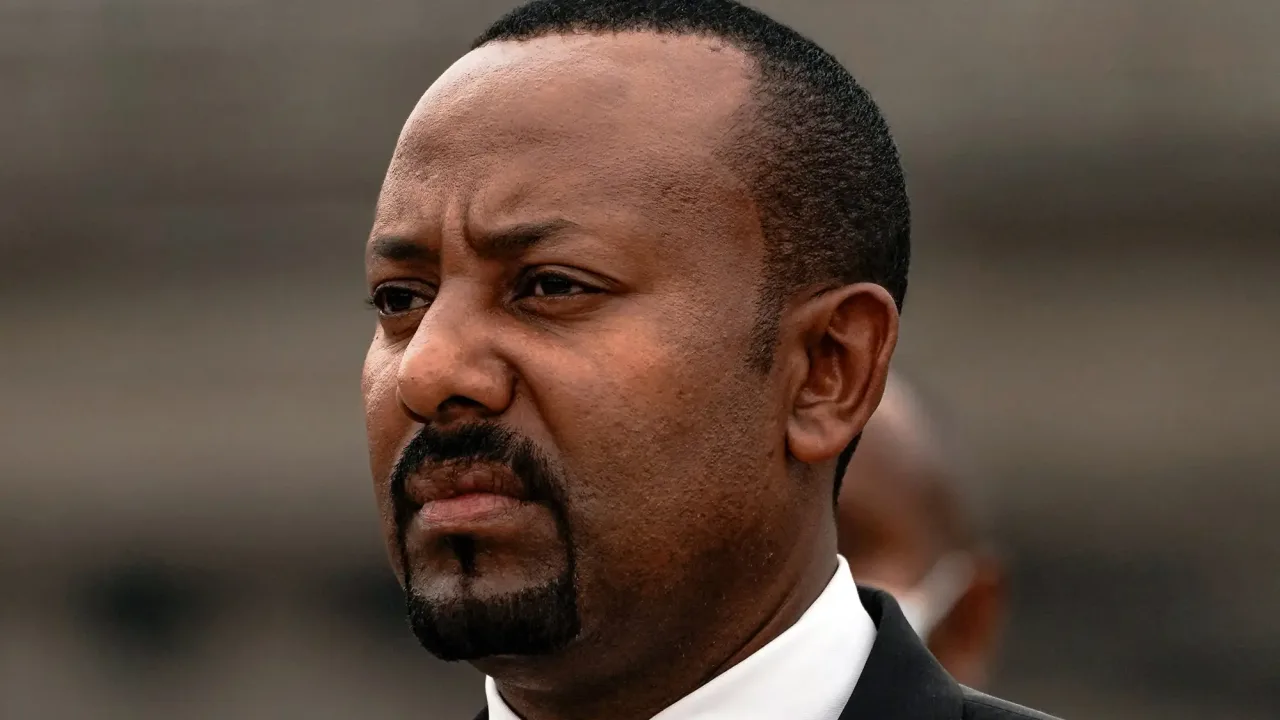
Seven armed groups, including the TPLF, Fano, and OLA, have formed an alliance against Abiy Ahmed's government. This rapprochement comes three months after a massive electoral victory for the ruling party, but in a country where several regions remain outside ordinary political control.
Seven Ethiopian armed groups, including the TPLF, Fano, and OLA, announced on September 20 an alliance aimed at ousting Abiy Ahmed’s government and establishing a transitional administration.
The coalition also includes the Ogaden National Liberation Front, the Afar Revolutionary Democratic Unity Front, the Benishangul People’s Liberation Movement, and the Gumuz People’s Democratic Movement. Fano leader Zemene Kassie is set to preside over the alliance, according to officials cited during the announcement.
This rapprochement comes three months after the June elections. Abiy Ahmed’s Prosperity Party secured 438 seats, approximately 90% of those for which results were announced, while 274 were needed for an absolute majority. However, voting did not take place in Tigray and was interrupted or canceled in several constituencies in Amhara and Oromia due to security concerns.
The Tigray crisis had already worsened before the alliance was formed. In January, the African Union urged the parties to uphold the ceasefire agreement signed in Pretoria in November 2022. In May, the TPLF reinstated the former regional administration, a move that Washington later cited as a threat to the peace process. In July, the TPLF declared the Pretoria agreement “effectively dead.”
Fighting has not ceased elsewhere. Federal forces are clashing with the Oromo Liberation Army in Oromia and the Fano militias in Amhara. During the June elections, 143 polling stations did not open due to security issues. An updated U.S. travel advisory at the end of August classified Tigray and Amhara as areas to avoid due to armed conflicts.
An alliance can create multiple fronts without forming a unified army.
The main change lies in geography. Until now, the federal government managed distinct hotspots, with Tigray in the north, Fano in Amhara, and OLA in Oromia. Real coordination among these forces could compel the military to spread its personnel, drones, logistics, and intelligence across multiple theaters simultaneously.
This pressure does not imply that the seven organizations possess comparable military capabilities. The TPLF, Fano, and OLA have experience in prolonged combat against federal forces, while several smaller partners have more limited presence and resources. Specialist Kjetil Tronvoll estimates that military coordination could impose four to five fronts on the government, while highlighting Addis Ababa’s advantage in drone usage.
The challenge is not only measured by the number of fighters. The Fano have already managed to hold or contest rural areas in Amhara, while the OLA has maintained an armed presence in parts of Oromia for several years. For federal forces, simultaneous operations in multiple regions would increase the costs of rotations, aerial surveillance, securing roads, and maintaining functional local administrations.
The contrast with the June elections is therefore central. The Prosperity Party overwhelmingly dominates Parliament, but this majority was achieved in a vote that did not cover the entire territory. The absence of voting in Tigray and certain areas of Amhara indicates that the institutional strength of the government does not correspond everywhere to equivalent political and security control.
Yesterday’s enemies remain divided by deep grievances.
The alliance also brings together actors who have fought or directly opposed each other. The Fano supported federal forces against the TPLF during the Tigray war from 2020 to 2022. Amhara nationalists and Tigrayan authorities continue to claim disputed territories in western Tigray, complicating any sustainable cooperation beyond a simple agreement against Abiy Ahmed.
Thus, the rapprochement formalizes a tactical convergence without addressing the root causes of previous conflicts. The Tigray war had precisely reshaped alliances between Addis Ababa, Amhara forces, and Eritrea, before these relationships deteriorated. The new anti-government front now includes actors who do not share the same understanding of federalism, regional borders, or power-sharing.
The political objectives are also not identical. The TPLF seeks to restore its influence in Tigray, the OLA represents a rooted dissent in Oromia, and the other groups defend distinct regional interests. Their joint declaration calls for a transitional administration, a charter, and national dialogue, but it does not detail power-sharing, territorial dispute resolution, or a common military command structure.
As of September 21, no joint operations or military timetable had been announced by the alliance. The federal government had also not publicly issued an official response to its formation.