
IMF supports Senegal’s debt treatment and aims to expedite agreement
Kristalina Georgieva endorsed Dakar's approach to addressing its debt and aims to expedite the new $2.2 billion program, which is still pending approval from the IMF board of directors.

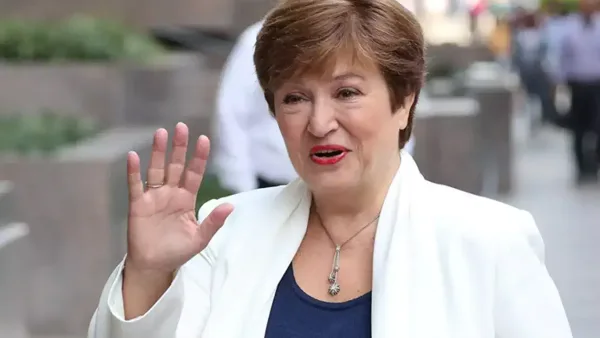
Kristalina Georgieva, the Managing Director of the International Monetary Fund, expressed support on Tuesday, September 15, in Washington for Senegal’s approach to addressing its debt and stated her desire to move quickly towards finalizing a new program with Dakar.
This statement comes two weeks after an agreement was reached at the IMF staff level on a three-year extended credit facility of approximately $2.2 billion. The program is still subject to approval by the institution’s management and board of directors.
During her meeting with President Bassirou Diomaye Faye, Kristalina Georgieva praised the progress made in discussions and the authorities’ commitment to swiftly restore the viability of public finances. The Senegalese head of state and the IMF leader also expressed their intention to accelerate the next steps towards the new program.
The meeting extends the September 15 encounter announced prior to Bassirou Diomaye Faye’s trip to Washington. Meanwhile, World Bank President Ajay Banga indicated a desire to assist Senegal in expediting its debt treatment within the G20 common framework, a mechanism that has often required over a year for previous African cases.
Senegal plans to utilize an enhanced version of this framework while excluding debt denominated in CFA francs from the treatment. This option is intended to allow Dakar to maintain access to the regional financial market, which has become an important source of budget financing.
The technical agreement of September 1 outlines reforms aimed at restoring macroeconomic stability and debt sustainability, reducing budgetary and external vulnerabilities, increasing social spending, and supporting private sector growth. The IMF also calls for corrective measures related to inaccurate financial information provided under the previous administration.
Before a board vote, the Fund is still awaiting the implementation of these corrective measures as well as necessary financing assurances from Senegal’s partners.
Comments