
Google and Gates invest $100 million in AI for 200 million farmers
Google and the Gates Foundation aim to increase the number of smallholder farmers targeted by their artificial intelligence tools in sub-Saharan Africa and South Asia from 50 million to 200 million. The program mobilizes $100 million in combined funding.

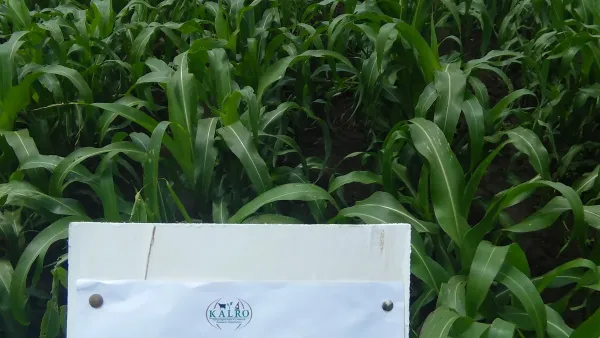
Google and the Gates Foundation announced on Friday, September 18, 2026, the expansion of an artificial intelligence program aimed at smallholder farmers in sub-Saharan Africa and South Asia. The initiative aims to increase the number of targeted farmers from 50 million to 200 million, supported by $100 million in combined funding, along with technical assistance from researchers and engineers at Google.
In Africa, deployments of the Agricultural Land Use data layer are underway in Kenya, Uganda, Ghana, Rwanda, Zambia, and Nigeria. Google and the Gates Foundation intend to leverage AI to better identify plot boundaries and crops, refine weather alerts, and provide farmers with information tailored to their soils, crops, and climate risks.
The program is based on Google’s Agricultural Understanding Platform, which provides data on plots, crop types, and planting and harvesting periods. The platform is designed to enable governments, agricultural businesses, and financial services to more accurately monitor farms and better target public interventions and certain financial services.
The partnership also plans to integrate AI forecasts into TomorrowNow, a climate platform supported by the Gates Foundation, the UK, and Google.org. Part of the funding will also support CGIAR’s work on developing more drought-, heat-, and disease-resistant crop varieties.
Another aspect focuses on languages. The partners announced support for open-access voice and text datasets in over 40 African languages, aiming to make digital agricultural advice accessible to more producers in their native languages.
This announcement comes four days after the Gates Foundation unveiled a $1 billion commitment over two years to expand access to AI in health, education, and agriculture. According to the Associated Press, the foundation aims to develop tools that can provide small farmers with advice tailored to their local conditions. However, the target of 200 million announced on Friday encompasses both sub-Saharan Africa and South Asia, without a public breakdown by country at this stage.
Comments