
Gabon: Washington enters the battle over imported chicken

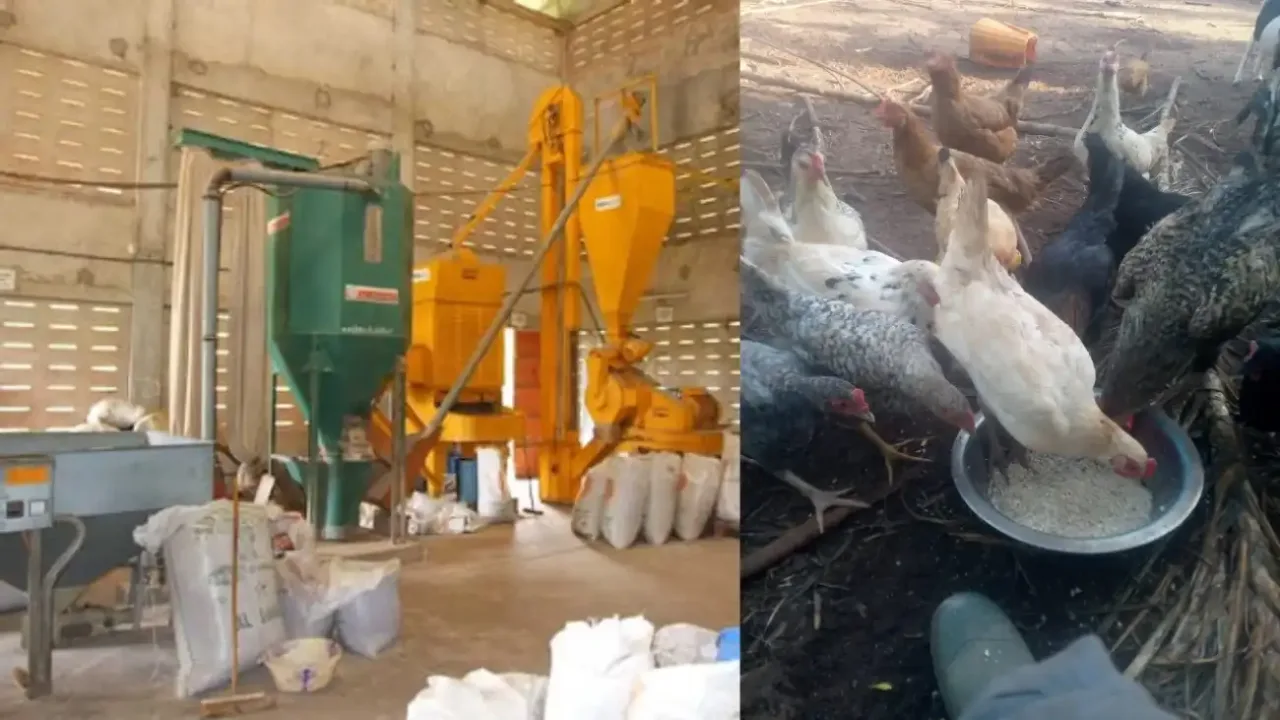
Gabon is maintaining its ban on broiler chicken imports set for January 1, 2027, despite a U.S. challenge at the WTO. The country still faces a significant gap between local production and imported volumes.
Gabon is sticking to its plan to ban imports of broiler chicken starting January 1, 2027, despite a challenge from the United States at the World Trade Organization (WTO). During a meeting on September 18, the Council of Ministers announced the preparation of a strategy based on exceptions outlined in WTO agreements and diplomatic negotiations. No postponement of the deadline has been announced.
The timeline remains tight. Gabonese authorities estimate annual imports of broiler chicken at around 55,000 tons, compared to a national production estimated at only 4,000 tons. By the end of 2026, the Ministry of Agriculture anticipates an increase to 8,000 or 9,000 tons, still significantly below the volumes currently covered by imports.
Libreville has made significant investments to accelerate this catch-up. Five agreements representing over 775 billion FCFA in private capital were signed in May to develop integrated farms, poultry feed production units, hatcheries, slaughterhouses, and distribution capacities. The government aims for an eventual production target of around 130,000 tons of broiler chicken per year, exceeding current import needs.
The United States has a direct commercial interest in the matter. World Bank data from Comtrade shows that in 2023, Gabon imported 82,628.9 tons of poultry meat and offal, a broader category than just broiler chicken included in government statistics. Of this total, 16,518.8 tons came from the United States.
The American approach does not currently constitute a formal dispute announced by the WTO. The Council of Ministers refers to it as a “challenge” and indicates a desire to avoid a trade dispute. WTO rules strictly regulate quantitative import bans while allowing for exceptions under certain conditions. Libreville has not yet specified the legal basis it intends to invoke. The government also reported 228,997 Swiss francs in outstanding contributions to the WTO, approximately 164 million FCFA, which has restricted access to certain documents and information for its permanent mission.
The timeline complicates Gabon’s gamble.
The most sensitive issue is not the goal of food sovereignty itself, but the speed at which Gabon aims to transition from a heavy reliance on imports to a local supply capable of meeting market demand. With an expected 8,000 to 9,000 tons by the end of 2026 and an average of 55,000 tons imported each year, the gap remains too large to consider that the substitution will be completed by the time the ban is set to take effect.
The announced 775 billion FCFA investment changes the scale of funding, but does not automatically increase the production available by January 1. A poultry sector does not rely solely on the number of farmers; it also depends on access to chicks, corn, and soy, feed mills, slaughtering capacities, cold storage, transport, and distribution. As long as these links do not strengthen simultaneously, theoretical capacity may remain far from the actual volumes available in the markets.
This is where the measure becomes delicate for consumers. A ban on imports before local supply catches up could reduce available volumes and create upward pressure on prices. Conversely, indefinitely extending imports would undermine the protection sought for producers who are investing precisely because the government promises them a market less exposed to foreign competition. The choice thus hinges on the pace of the transition as much as on its principle.
The American challenge adds an additional constraint. A general ban is one of the instruments most exposed to international trade rules. Gabon can defend objectives related to food security, agricultural development, or health protection, but it will need to demonstrate that the chosen measure falls within the exceptions provided by applicable agreements. The Council of Ministers has itself left open the possibility of an adjustment by placing legal exceptions and diplomatic negotiation on the same level.
The government must therefore align three timelines that do not progress at the same pace: the ramp-up of investments, the actual availability of locally produced chicken, and the implementation of the trade measure. As of September 18, the ban remains set for January 1, 2027, while the expected local production at the end of the year is still between 8,000 and 9,000 tons.