
Sudan: 19.5 million face hunger as WFP funding collapses

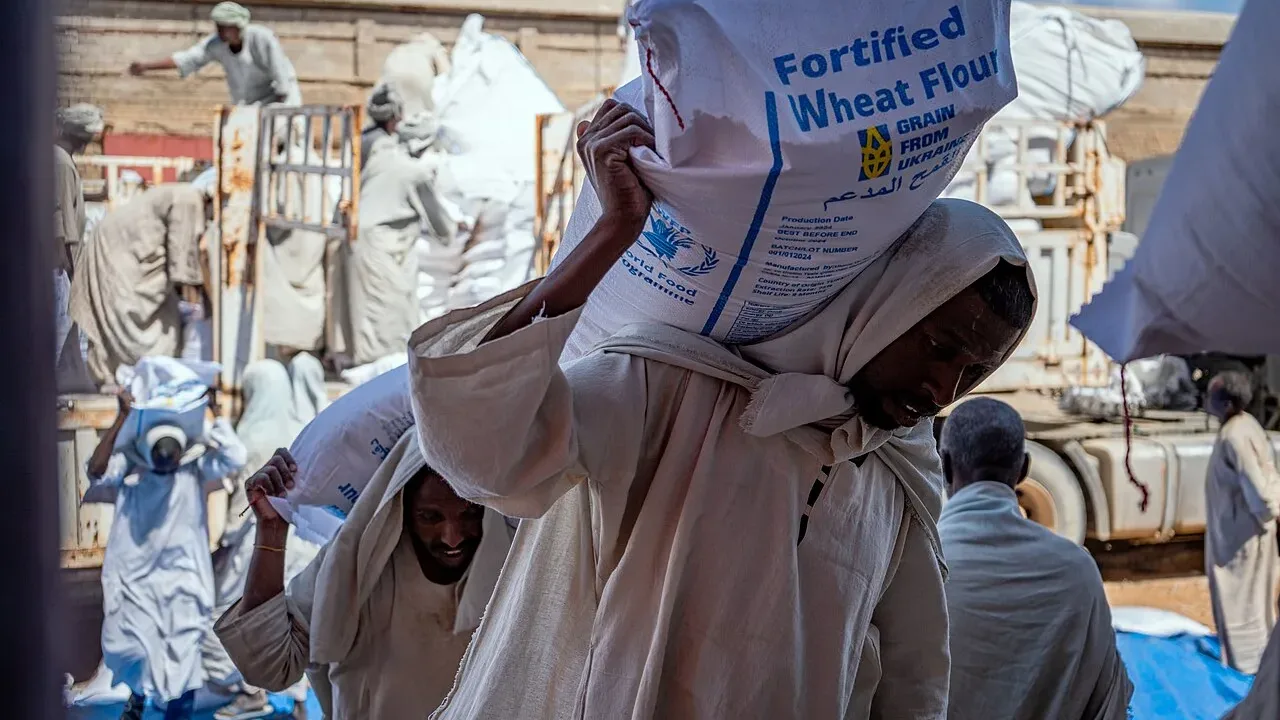
The WFP has received approximately $206 million this year compared to $645 million last year, while nearly 19.5 million people face acute food insecurity. The agency is already scaling back its assistance despite improved access in some areas.
Nearly 19.5 million people are facing acute food insecurity in Sudan. At the same time, funding received by the World Food Programme (WFP) has dropped to approximately $206 million this year, down from $645 million last year.
The agency estimates it still needs nearly $300 million to maintain its current operations.
This funding shortfall is already forcing the WFP to focus its assistance on about 5 million of the most vulnerable individuals. It reaches just over 4 million each month, often with reduced rations.
The financial contraction comes at a time when access is improving in certain areas of Khartoum, Al-Jazira, and Sennar. The WFP reports that it is supporting more than 800,000 people per month in these regions where fighting has decreased. The agency thus has more operational opportunities, but fewer resources to fully exploit them.
The lack of funding not only reduces food volumes but also impacts transportation, storage, humanitarian aviation, emergency telecommunications, and the ability to pre-position supplies ahead of a potential resurgence of violence.
Access is improving faster than available resources.
Significant physical obstacles remain. On August 30, two trucks carrying WFP aid to South Kordofan were attacked. More than 50 tons of food were destroyed, enough to assist approximately 5,800 people for a month. The WFP reports that it has recorded eight airstrikes damaging its facilities or disrupting its operations since the beginning of the year.
The agency estimates it needs $579 million to continue its operations until October 2026. This need pertains to the coming months, while the $206 million cited by Reuters reflects the resources received this year. In both cases, there remains a significant gap between needs and the funds actually mobilized.
A $5 million contribution announced by South Korea in early September illustrates what such funding can achieve. It is intended to cover emergency food assistance for 365,000 people and school meals for 23,000 children. The WFP plans to purchase 2,600 tons of sorghum and millet for emergency needs and an additional 500 tons for schools.
These contributions remain limited on a national scale. The IPC had already estimated that 135,000 people were in a state of catastrophe between February and May 2026. A risk of famine was identified in 14 areas of Darfur and Kordofan during the lean season, while projections from the FAO and WFP indicated that up to 200,000 people could fall into the most extreme phase between June and September.
The most threatened areas are also the most expensive to reach.
In Darfur and Kordofan, humanitarian agencies must contend with degraded roads, shifting front lines, fluctuating permissions, and direct attacks on operations. Delivering the same amount of aid there costs more than in more stable areas.
The reduction in budgets does not lead to a uniform decrease in assistance. It primarily impacts the most costly operations and forces agencies to cut rations or concentrate resources on a smaller number of beneficiaries.
The food crisis is exacerbated by population displacement. The UNHCR estimated in April that around 14 million people had been forced to flee since the war began in 2023. Nearly 9 million remained displaced within Sudan, and approximately 4.4 million had crossed borders.
Available projections maintain an extreme alert level until early 2027 in parts of Darfur and Kordofan. The WFP must simultaneously fund food, transportation, warehouses, and air links necessary to reach populations in these areas.