
Serbia: Vučić dissolves Parliament and calls for early legislative elections on October 25
Serbian President Aleksandar Vučić dissolved Parliament on Wednesday, September 9, and set early legislative elections for October 25, against the backdrop of nearly two years of anti-corruption protests and intense political tensions.

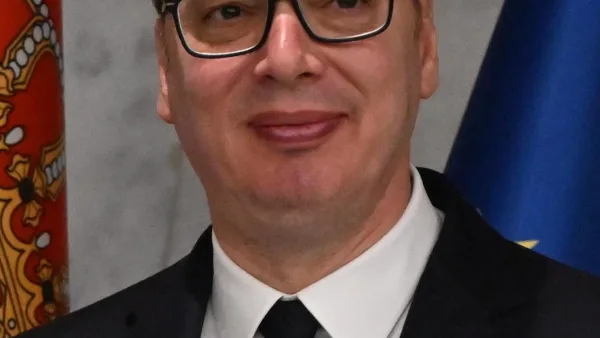
SUMMARY
Serbian President Aleksandar Vučić dissolved Parliament on Wednesday, September 9, and called for early legislative elections on October 25, following nearly two years of anti-corruption protests.
The election must renew the 250 seats of the National Assembly. It could also allow the head of state, who cannot run for a new presidential term, to attempt a return to the position of Prime Minister.
The dissolution was announced by Aleksandar Vučić in a televised address. According to Reuters and the Associated Press, the president explained that holding early elections had become necessary due to the tensions and divisions affecting the country. The legislative elections were originally scheduled for 2027.
Aleksandar Vučić has dominated Serbian political life since 2014, first as Prime Minister and then as President. His Serbian Progressive Party (SNS) recently designated him to lead its campaign for the position of Prime Minister. The head of state also indicated that he intends to leave the presidency in the coming weeks in order to participate in the campaign.
The election will take place in a climate of sustained protest. Demonstrations began after the collapse, in November 2024, of a canopy at Novi Sad station, which caused 16 deaths. The tragedy fueled a movement led notably by students, teachers, and professionals, who demand greater public accountability and denounce corruption as well as the weakening of institutions.
Two days before the dissolution, the Serbian government had officially requested the president to end the mandate of the Assembly and to call for legislative elections. In its proposal of September 7, the government stated that a new vote should help reduce political tensions and allow for a clearer expression of the voters’ will.
A high-stakes election for the government
The Serbian Progressive Party remains the country’s main political force, but it must contend with a mobilization that has expanded over the months. A list supported by the student movement, including notably academics and civil society figures, is preparing to participate in the election, while several opposition parties seek to transform the street protests into an electoral alternative.
The authorities reject the accusations of authoritarian drift and corruption made by their opponents. Aleksandar Vučić, for his part, has repeatedly accused foreign actors of fueling internal divisions, without publicly presenting specific evidence to support these claims. Serbian authorities have also been criticized by European organizations for the use of force and arrests during certain demonstrations.
The campaign will open as Serbia officially continues its goal of joining the European Union, while maintaining close relations with Russia and China. Brussels is closely monitoring the domestic political situation and has regularly linked the progress of the accession process to the functioning of democratic institutions, the rule of law, and electoral conditions.
Vučić aims for a return to the position of Prime Minister
Aleksandar Vučić cannot run for a third presidential term. The Associated Press reports that an early presidential election must be held separately, while the outgoing president is preparing his candidacy for the position of Prime Minister. The date of this presidential election had not yet been announced as of Wednesday, September 9.
Comments