
El Niño threatens a West Africa already afflicted by hunger
The UNDP calls for immediate funding for anticipatory measures against the risk of rainfall deficits in West and Central Africa, amid conflict, displacement, and widespread food insecurity.

SUMMARY
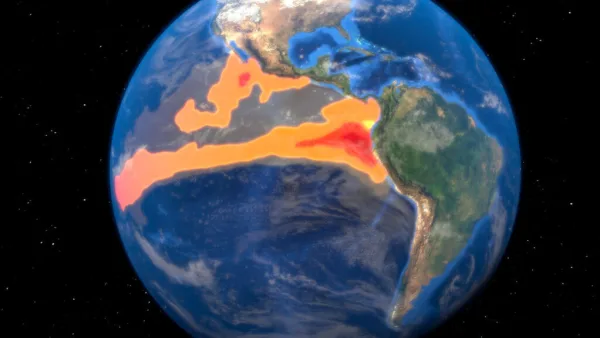
The United Nations Development Programme (UNDP) called on Tuesday, September 15, for West and Central African governments and donors to accelerate anticipatory measures in response to El Niño, as the climatic phenomenon increases the risk of rainfall deficits in areas already weakened by conflict and hunger.
The alert particularly concerns the Sahel, where regional forecasts indicate an expansion of areas exposed to below-normal rainfall during August, September, and October. The UNDP specifically cites Western Sahel, with a marked risk in Chad, while emphasizing that models remain more uncertain for West and Central Africa than for Eastern or Southern Africa.
The region starts from an already high level of vulnerability. According to data from the Harmonized Framework cited by the UNDP and FAO, 41.8 million people faced crisis-level food insecurity or worse in West Africa and the Sahel between October and December 2025. Projections made before the last lean season estimated that this number could reach 52.8 million between June and August 2026.
However, climate is not presented as the main driver of this crisis. The UNDP identifies conflicts in Central Sahel, the Lake Chad basin, and Eastern Democratic Republic of the Congo as the primary factors behind displacement and food insecurity. Climate shocks can exacerbate pressure on water, pastures, and agricultural land, disrupt transhumance, and complicate humanitarian access.
An El Niño episode expected until early 2027
The World Meteorological Organization estimates that the ongoing El Niño episode is expected to remain strong over the coming months and extend into early 2027. This configuration can significantly alter rainfall and temperature patterns, with varying effects across African sub-regions.
The UNDP urges states to cross-reference climate forecasts with data on conflicts and humanitarian access to trigger funding and interventions earlier. The agency also recommends enhanced monitoring of cocoa-growing areas in Côte d’Ivoire and Ghana, where risks may arise from both rainfall deficits and excess moisture that promotes crop diseases.
The FAO had warned in January that acute food insecurity in the region was fueled by conflict, climate shocks, high food prices, and declining humanitarian funding. The UNDP also notes a significant contraction in humanitarian resources at a time when anticipatory measures need to be strengthened.
Comments