
Coup in Guinea-Bissau: ECOWAS clearly takes a stand and threatens
The Economic Community of West African States (CEDEAO) took a firm stance on the political crisis in Guinea-Bissau at the summit of its Authority of Heads of State and Government, held this Sunday in Abuja (Nigeria). Following the meeting, the regional organisation rejected the transition plan proposed by the military junta and threatened to impose targeted sanctions on anyone obstructing the return to constitutional order in the country.

SUMMARY
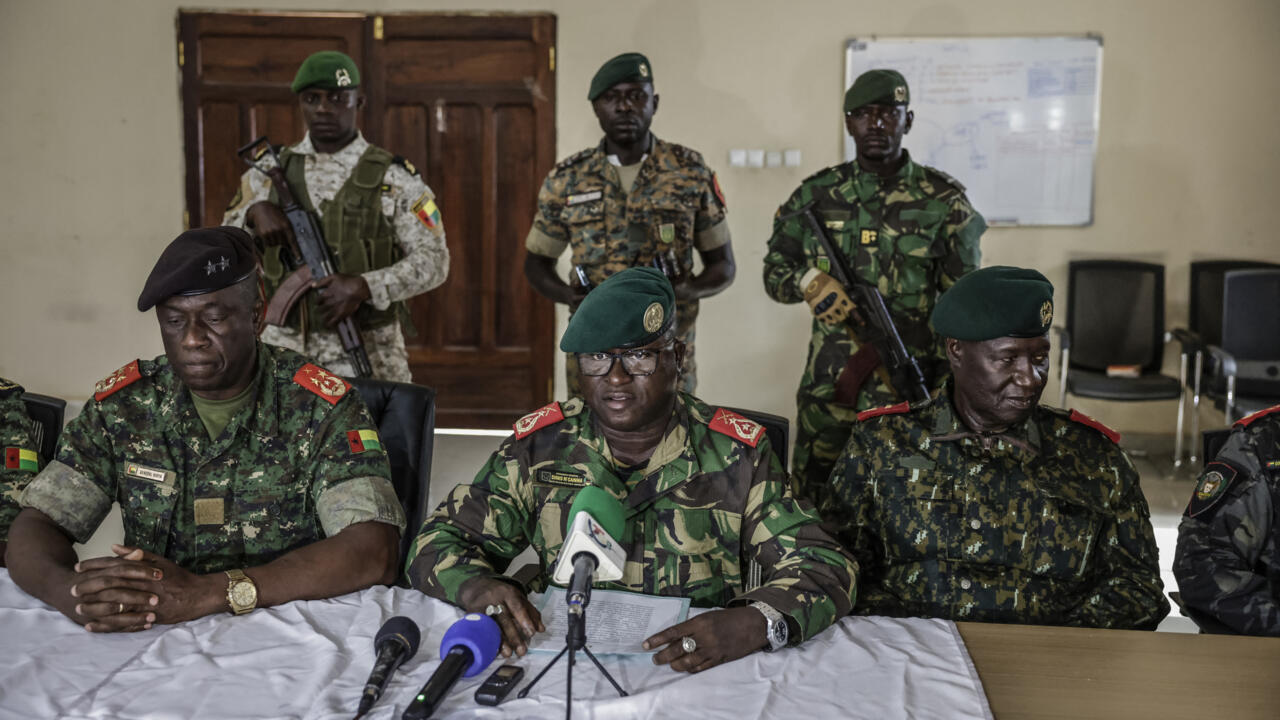
The coup took place on 26 November 2025, when soldiers overthrew President Umaro Sissoco Embaló, suspending the ongoing electoral process after the presidential and legislative elections of 23 November, while the results had not yet been declared. The soldiers, calling themselves the « Comité militaire de haut commandement », appointed General Horta Inta-a to head a transitional government.
This takeover was condemned by the African Union, which suspended Guinea-Bissau from its bodies, while calling for respect for the electoral process and the release of detained political figures.
CEDEAO’s reaction at the 14 December summit
At its extraordinary summit this Sunday in Abuja, CEDEAO firmly rejected the military transition plan proposed by the junta and called for a prompt return to constitutional order, in line with its commitments to democracy and good governance.
The final communiqué adopted in Abuja stresses the rejection of any attempt to legitimize a takeover by force. The organisation reiterated its position that the 23 November elections were held in a free and transparent environment, validated by international observers, and that their interruption constitutes a blatant violation of the popular will.
If the military authorities refuse to comply with CEDEAO’s demands — notably the release of detained political leaders and the organisation of an inclusive civilian transition — the organisation warned it would impose targeted sanctions. These include individual measures aimed at those who would obstruct the return to a civilian democratic regime and who would block the transition to the restoration of constitutional order.
These sanctions would be applied in accordance with CEDEAO’s protocols on democracy and good governance. They could include travel restrictions, asset freezes and other targeted economic or political measures against those responsible for undermining the democratic process.
Suspension of participation in CEDEAO bodies
Even before the 14 December summit, Guinea-Bissau had already been suspended from all CEDEAO decision-making bodies after the coup, a decision taken during an extraordinary virtual session held at the end of November. The suspension remains in effect until constitutional order is restored.
CEDEAO also announced that it would send a high-level delegation to continue dialogue with the military leaders in Bissau, hoping to negotiate the terms of a return to a democratic civilian government. The mission aims to combine political and diplomatic pressure for a rapid transition.
Comments