
Ceuta: 1,700 places opened, up to 4,000 migrants remain outside
Nearly two months after the massive influx from Morocco, Madrid estimates that around 10,000 migrants are still in Ceuta. A new site with 1,700 places is set to accommodate some of those remaining on the beaches, while between 3,000 and 4,000 continue to lack formal housing.

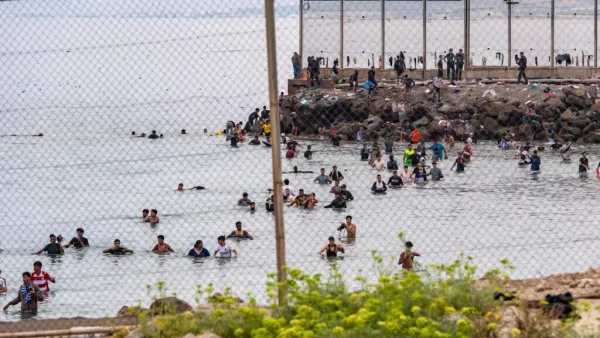
Spanish authorities launched an operation on Friday, September 18, to transfer migrants living on the beaches of Ceuta to a temporary center set up in the port, which has a capacity of 1,700 places. However, the central government estimates that between 3,000 and 4,000 people still lack formal accommodation in the enclave.
According to figures provided by the Spanish government and reported by Europa Press, around 10,000 irregular migrants are still in Ceuta. Nearly 6,000 are housed in facilities established by the authorities, while the others sleep in the streets, hills, or on the beaches.
Friday’s operation involved riot police and military personnel. Reuters reports that tensions erupted at the start of the transfer due to the limited number of available places, and police fired rubber bullets into the air. Migrants were then escorted to the port area.
This operation comes after the exceptional influx on July 30 and 31. The Spanish government had estimated that around 70,000 people entered Ceuta irregularly from Morocco. In the 72 hours that followed, approximately 63,000 had left the enclave, representing over 90% of those who entered, according to Madrid.
On September 3, the government also indicated that it had relocated 3,300 migrants and carried out 3,658 repatriations since August 10. It announced the goal of removing at least 1,500 additional people from the streets over the following two weeks by enhancing reception capacities and return procedures.
On September 9, the European Commission granted emergency aid of €114.7 million to Spain for managing the situation in Ceuta. These funds are intended to finance the strengthening of border surveillance, security infrastructure, control and reception facilities, as well as the return of individuals who do not have the right to stay.
Comments