
Alabuga could supply enough materials to produce an additional 28,000 Russian drones per year
Internal Rosatom documents outline a new carbon fiber line producing 500 tons per year in Tatarstan. An expert estimates this volume sufficient for the cells of 28,000 additional drones, representing a potential increase of 78%.

SUMMARY
An expansion of the Russian Alabuga-Volokno plant could provide enough carbon fiber for the cells of approximately 28,000 additional attack drones annually starting in 2029. This figure is not an official target announced by Moscow; rather, it is an estimate from an expert based on industrial capacity described in internal Rosatom documents obtained by POLITICO.
The plans involve a new line capable of producing an additional 500 tons of aerospace-grade carbon fiber each year in the Alabuga special economic zone in Tatarstan. According to documents reviewed by the American media, the Russian government approved the project in May 2026. Construction is expected to be completed in 2027, with full capacity anticipated by 2029.
Satellite images taken between May and July show preparatory work on the site adjacent to the existing plant. David Albright, president of the Institute for Science and International Security, also examined August images and noted the preparation of foundations. The documents have also been reviewed by American and Ukrainian officials, who confirmed their authenticity to POLITICO. Rosatom has not commented on their content.
An estimate, not an official target of 28,000 drones
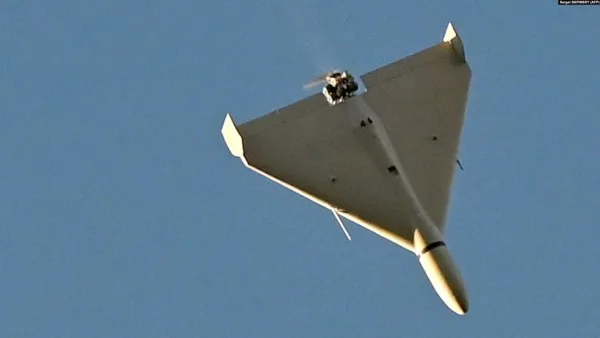
Carbon fiber is used to reinforce the wings and certain internal structures of drones while minimizing their weight. The documents specifically mention a UMT42S-3K fiber intended for the aerospace industry. Based on the additional 500 tons planned, David Albright estimates that the plant could provide enough material for approximately 28,000 cells of Shahed-136 type drones, from which the Russian Geran drones are derived.
When compared to the Ukrainian estimate of over 36,000 Geran drones produced each year, this volume would represent a potential increase of about 78%. However, this calculation assumes that the additional carbon fiber capacity will indeed be dedicated to this family of devices. No public Russian documents consulted set an official target of 28,000 additional drones per year.
The industrial ramp-up comes as one-way drones play an increasingly significant role in Russia’s aerial campaign. The Center for Strategic and International Studies estimated in July that Russia was deploying more than 5,000 Shahed-type drones per month on average by early 2026. Their lower cost compared to missiles allows for increased salvos and puts significant pressure on Ukrainian air defenses.
This drone warfare is now operating in both directions. On September 20, Moscow experienced a record drone attack that resulted in casualties and struck a refinery, according to Russian authorities. At the same time, Russian forces continue their long-range strikes against Ukrainian cities and infrastructure.
The Alabuga-Volokno site belongs to Rosatom’s advanced materials division. In its 2015 annual report, the Russian state nuclear group indicated that this carbon fiber plant had been built at its request in the Alabuga special economic zone. The current expansion also aims, according to internal documents reported by POLITICO, to reduce dependence on imports of components necessary for aerospace-grade composites.
Comments