
Secondhand Clothing in Benin: 6 Tips for Buying Secondhand Without Unpleasant Surprises
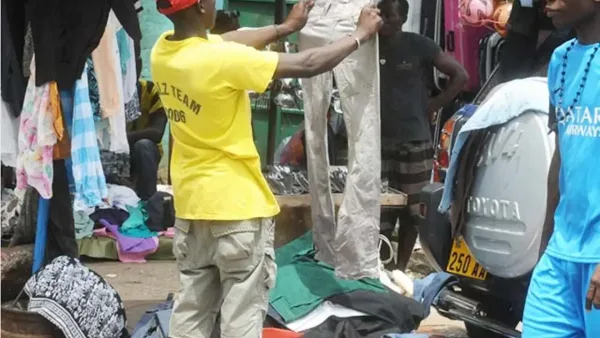
Second-hand appeals for its prices and unique items. In Benin, here are six simple checks to better shop at thrift stores, especially at the PK3 market in Cotonou.

SUMMARY
- 1. Come with your measurements, not just your usual size
- 2. First inspect the areas that wear out the fastest
- 3. Check the material and care label
- 4. Do not buy solely because “it is cheap”
- 5. Wash or clean the item before wearing it
- 6. Calculate the true cost: purchase, alteration, and maintenance
- Second-hand, between economy and personal style
Thrift shopping is no longer just a way to dress cheaply. It has also become a means of finding unique pieces, building a more personal style, and extending the life of clothing. In Benin, the issue has a very tangible resonance: since January 2026, the modern market of PK3 in Akpakpa has taken over from Missèbo as the main second-hand market in Cotonou.
The movement extends far beyond Benin’s borders. In its Resale Report 2026, ThredUp, based on data from GlobalData, estimates that the global second-hand clothing market could reach $393 billion by 2030, with growth twice as fast as that of the overall clothing market. This momentum confirms that second-hand clothing is no longer a niche trend.
But a good deal is only truly worthwhile if the garment will be worn. Before giving in to a dress, a pair of jeans, or a jacket, a few habits can help avoid regrettable purchases.
1. Come with your measurements, not just your usual size
From one brand to another, and even more so between clothes made in different eras, sizes can vary significantly. An “M” can fit like an “S” or an “L.” The most practical approach is to know at least your chest, waist, and hip measurements, or even the width of a pair of trousers or a shirt that fits you well.
When trying on is not possible, a small measuring tape can prevent many disappointments. For online purchases, ask for actual measurements of the garment rather than relying solely on the label.
2. First inspect the areas that wear out the fastest
Before looking at the brand, observe the actual condition of the item. The seams, armpits, collar, cuffs, crotch, knees, and pant hems often reveal wear that is not visible at first glance. Also test the zippers, buttons, and snaps.
A small loose stitch is easy to repair. However, a severely thinned fabric, a difficult-to-replace zipper, or a stubborn stain can turn an attractive price into a false economy.
3. Check the material and care label
The fabric composition matters as much as the cut. Cotton, linen, viscose, wool, or synthetic fibers do not have the same care requirements. A low-cost item that requires expensive cleaning or complicated care can ultimately be more costly than a garment that is slightly more expensive but easy to maintain.
If the label is still present, check the washing instructions before purchase. For a delicate item, anticipate from the outset the potential cost of dry cleaning or alterations.
4. Do not buy solely because “it is cheap”
Thrift stores can give the impression that you must immediately seize every good deal. This is precisely where duplicates accumulate. Before paying, ask yourself three questions: Does the item really fit me? Can I pair it with at least two or three pieces of clothing I already own? Do I have a realistic occasion to wear it?
This short pause allows one to distinguish a good find from an impulsive purchase. A low-priced garment that is never worn remains an unnecessary expense.
5. Wash or clean the item before wearing it
Even when a garment appears clean, an appropriate wash before first use remains a sensible precaution. Follow the care label and avoid mixing or using harsh products that could damage the colors or fibers. For items that cannot be machine washed, cleaning according to the manufacturer’s recommendations is preferable.
It is not necessary to turn this step into a “miracle disinfection”: the goal is simply to clean the garment without damaging it.
6. Calculate the true cost: purchase, alteration, and maintenance
A jacket costing 2,000 FCFA can become less appealing if it requires a new zipper, multiple alterations, and specialized cleaning. Conversely, a slightly more expensive piece that is impeccable, well-tailored, and easy to wear may be the better choice.
To shop effectively in a large market like PK3, it is best to arrive with a short list: what you are looking for, your maximum budget, and your measurements. This allows room for the pleasure of discovery, without losing sight of practicality.
Second-hand, between economy and personal style
The current success of resale also reflects a change in the way fashion is consumed. ThredUp’s 2026 report notes that social media now plays an important role in discovering second-hand items, particularly among young consumers. In Africa, thrift markets had already established this approach long before it became a global digital trend.
In Benin, the best approach remains simple: prioritize the condition, cut, and actual use rather than just the price or the brand name. The best second-hand piece is not necessarily the most spectacular one: it is the one that naturally finds its place in your wardrobe.
Comments