
Political truce: Patrice Talon embraces and defends a new democratic pace
The President of the Republic, Patrice Talon, defended during his media appearance on Thursday, December 18 the establishment of the political truce introduced by the recently enacted constitutional revision.

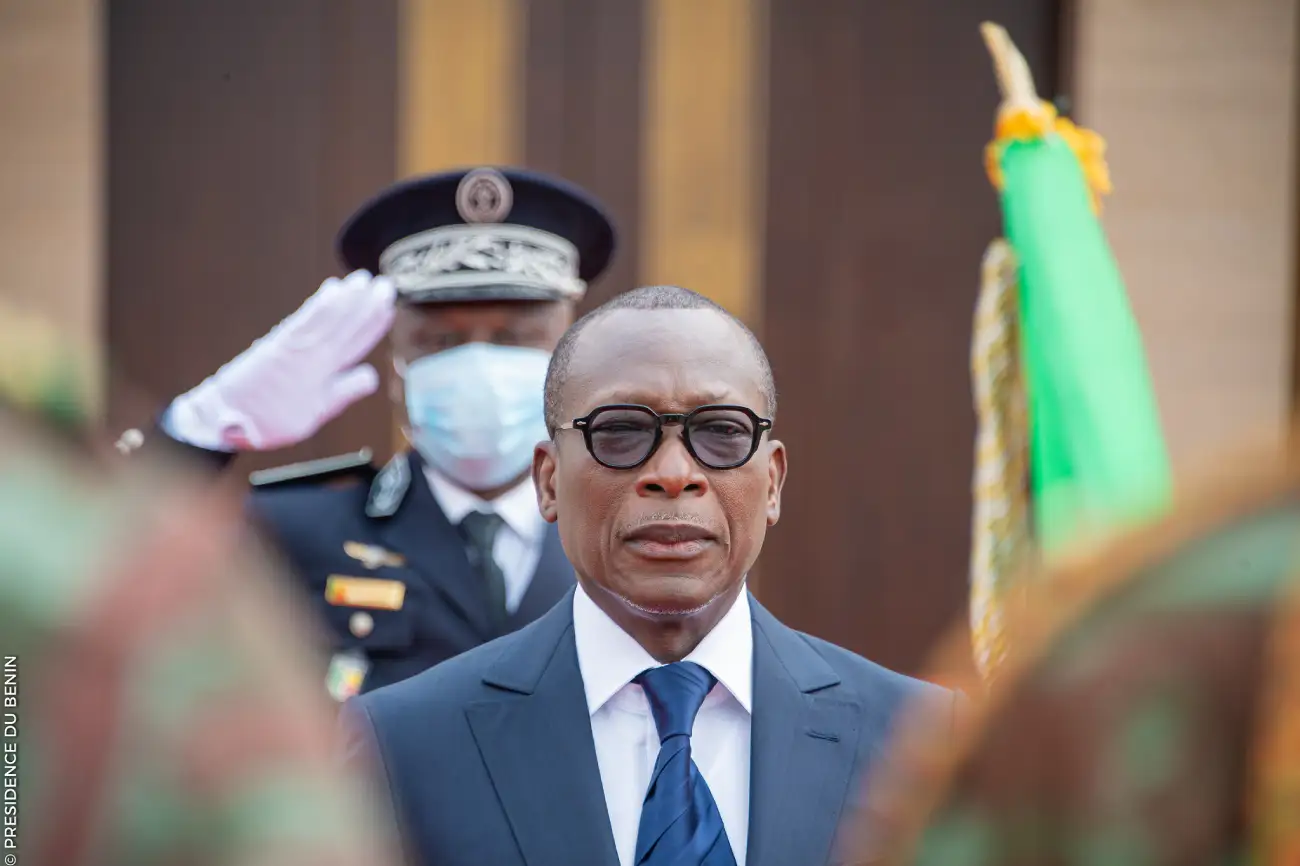
For the head of state, this reform meets a need: to get Benin out of a cycle of permanent political tension which, he says, slows public action and weakens the effectiveness of development policies.
In his view, the political truce is neither a silencing of the opposition nor a restriction of democratic freedoms.
Patrice Talon insists that this is not about banning political expression, but about framing electoral competition in time. The goal is clear: to allow institutions and those in power to work in a calmer environment, without constantly being brought back into campaign mode.
The head of state believes that Beninese democracy has long operated under tension, with political actors stuck in an almost permanent confrontation, even outside electoral deadlines. This situation, he says, has helped polarize public debate and slow down the implementation of structural reforms. The political truce thus aims to create institutional breathing space, conducive to governance and stability.
Patrice Talon also argues that this reform helps clarify roles. Electoral periods remain fully open to competition, adversarial debate and party mobilization. By contrast, the interim phases should be dedicated to public action, policy evaluation and building sustainable solutions to the country’s challenges.
Facing criticism, the President of the Republic stands by a choice he presents as pragmatic and suited to Beninese realities. For him, development requires time, continuity and a minimum of political calm. The political truce therefore fits into a broader vision of rationalizing the democratic process, where institutional stability becomes a lever for public performance.
By defending this reform, Patrice Talon is taking an explicit political bet: that of a less turbulent but more effective democracy, in which electoral competition regains a clear framework without permanently encroaching on the time for action.
The head of state even finds another positive aspect to this reform in that it allows the election campaign period to be extended from two weeks to one year.
Comments