
Guinea is requesting France to return the skull of Bokar Biro and that of three of his associates.
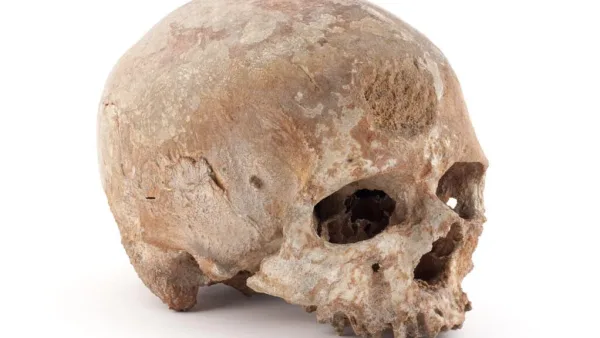
Guinea has officially requested from France the return of the skull of Bokar Biro Barry, the last almamy of Fouta-Djalon, as well as those of three of his relatives, his father, his brother, and his war chief. The request was submitted on July 27, as indicated by the Guinean Minister of Culture, Moussa Moïse Sylla, in an interview broadcast by RFI.

SUMMARY
Bokar Biro was both the political and religious leader of the theocratic state of Fouta-Djalon, established in 1725 in present-day Central Guinea. By the late 19th century, he had become one of the main figures resisting French expansion in West Africa.
This initiative follows an earlier Guinean request concerning the personal documents of Samory Touré, another significant figure in the fight against French colonization. Decapitated in 1896, Samory Touré had his skull and some of his possessions transferred to France.
Searches initiated at the request of Conakry have located the skulls of Bokar Biro and his companions, according to the minister. The French authorities informed Guinea of this discovery at the end of July, paving the way for an official restitution request.
A restitution based on French law
The procedure relies on the French law adopted in 2023 concerning human remains held in public collections. Guinea has formed a scientific committee tasked with preparing for the return of the remains, which could take place within one to two years, according to the authorities.
“This is not someone ordinary whose skull should continue to be displayed in a museum in France,” said Moussa Moïse Sylla. The minister stated that Bokar Biro’s remains should return to Guinea due to his role in opposing colonial encroachment.
“Alongside almamy Samory Touré and the heroes we have known in Forest Guinea and Lower Guinea, almamy Bokar Biro, as the last almamy of Fouta-Djalon, is a hero,” he added. His story holds a significant place in Guinean national memory.
The director of the National Museum of Guinea in Conakry, Mohamed Amirou Conté, a member of the scientific committee, recalled that Bokar Biro was beheaded due to his opposition to colonization. “He was a fierce defender of freedom,” he stated.
Remains intended for burial
After his death, Bokar Biro’s skull was taken to France as a war trophy, a common practice during the colonial era. It is now kept at the Musée de l’Homme in Paris, along with the remains of his three companions.
France has already returned about twenty skulls to Algeria in 2020 and three others to Madagascar in 2025. These restitutions are part of a broader movement to reassess collections formed during the colonial period.
Guinea does not plan to display the remains after their return. “Displaying a skull here is not acceptable. Human remains are buried with dignity,” explained Mohamed Amirou Conté, who referenced Guinean traditions and culture.
The burial location has not yet been decided. Authorities are hesitating between Conakry and Timbo, the former capital of Fouta-Djalon, but Bokar Biro is expected to have a national funeral due to his status as a historical hero.
Comments