
FIFA: CAF maintains its support for Gianni Infantino
The African Football Confederation has reiterated its support for FIFA President Gianni Infantino after the abandonment of his controversial World Cup privatization project. This position contrasts with the criticisms expressed by several other confederations, notably UEFA and CONCACAF.

SUMMARY
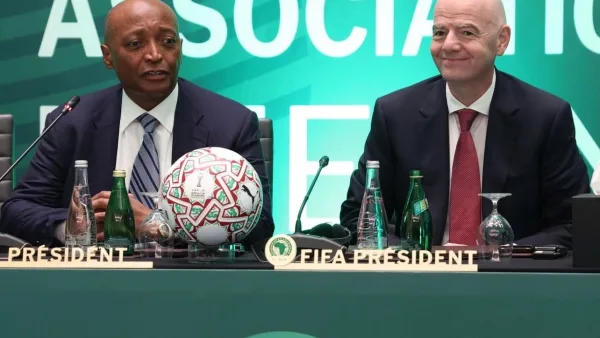
The FIFA president can still count on a significant ally. While his initiative to profoundly change the management of the World Cup has sparked sharp dissent in the football world, the African Football Confederation (CAF) has chosen to maintain its trust in Gianni Infantino. Meeting this Thursday, the executive committee of the African body unanimously adopted a resolution reaffirming its support for the Swiss leader. The CAF also welcomed the apologies offered by the FIFA head following the withdrawal of this project, which had provoked numerous negative reactions.
In a statement, Patrice Motsepe, president of the CAF, explained that Infantino’s remarks had been “well received” by the continental organization. This show of support comes at a tense time for the FIFA president, who has faced criticism for the approach taken in handling this matter.
The CAF Emphasizes Transparency
While expressing its solidarity with Gianni Infantino, the CAF has nonetheless reminded everyone of the importance of adhering to institutional rules. The African body emphasized that “governance, regular procedures, and transparency” remain “essential and non-negotiable principles.” This clarification aims to remind stakeholders of the operational requirements of global football, as the FIFA-backed project had been met with skepticism by several actors.
This position taken by the CAF clearly differs from that adopted by other confederations. UEFA and CONCACAF notably expressed their opposition to the project and requested that FIFA reconsider its approach. Despite the criticism, Gianni Infantino thus retains the backing of the majority of African leaders, support that could weigh in future discussions regarding the governance of international football.
Comments