
Crisis in the Strait of Hormuz: London refuses to follow Washington
As tensions between the United States and Iran rise, the United Kingdom declines to participate in the American maritime blockade project. London prioritizes freedom of navigation and calls for a coordinated response with its allies.

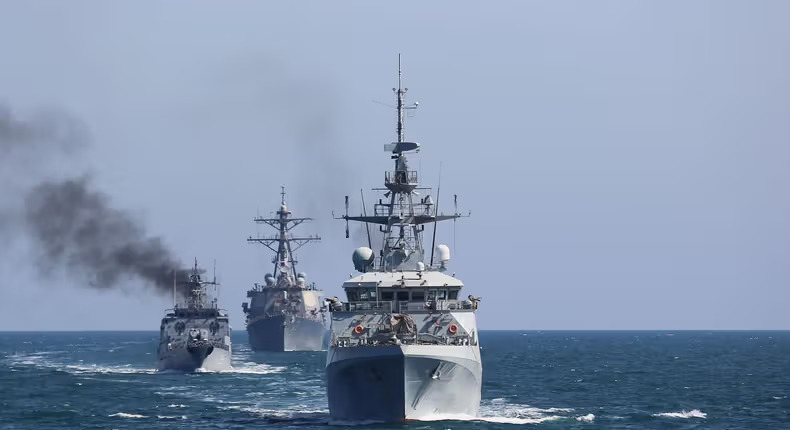
The United Kingdom distances itself. As tensions between the United States and Iran continue to rise, the United Kingdom has clearly stated that it would not join Washington’s maritime blockade project for the Strait of Hormuz. This stance follows a directive from U.S. President Donald Trump, asking the U.S. Navy to restrict ships’ passage through this strategic artery of global trade.
At the origin of this escalation is the failure of nuclear negotiations between Washington and Tehran. After 21 hours of intensive talks, the discussions did not yield any agreement, leaving several major points unresolved, including the Iranian nuclear program. A true energy crossroads, the Strait of Hormuz alone accounts for nearly 20% of global oil transport, making it a top geopolitical issue. According to Sky News, London favors a more measured approach. A spokesperson for the British government thus reaffirmed the country’s willingness to guarantee the security and fluidity of maritime exchanges, without resorting to coercive measures.
“We continue to support freedom of navigation and the reopening of the Strait of Hormuz, which is vital for the global economy and the cost of living at the national level”, he said. Before adding: “ The Strait should not be subjected to a toll. We are actively collaborating with France and other partners to form a broad coalition to preserve maritime navigation.” Behind the scenes, the United States had, however, sought British support, notably for the deployment of mine countermeasure ships to secure the area. A request that went unanswered.
London, however, clarified that its naval assets already present in the region, although equipped for mine warfare, would not be engaged in this operation. For his part, Donald Trump formalized his plan on his Truth Social platform, arguing that such a setup was warranted after the diplomatic impasse with Iran. While he acknowledged some progress during the discussions, the occupant of the White House stressed that no resolution had been reached on key issues.
Comments