
Benin-Niger Border: Toumba announces a gradual reopening under supervision
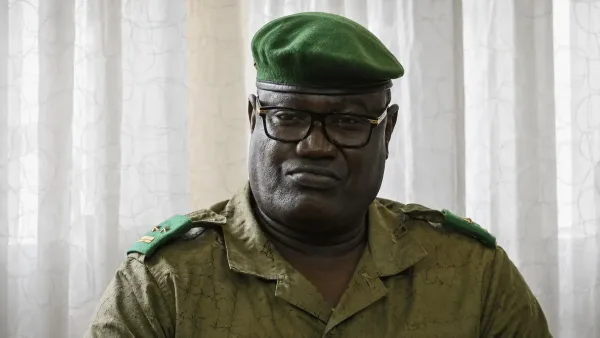
Gathered in Cotonou to discuss the conditions for reopening the common border, Beninese and Nigerien experts concluded their discussions with a note of calm. At the end of the discussions, General Mohamed Toumba praised the common commitments regarding security, transit, fees, and disputes, while calling to now move “with method and perseverance” through the door opened by dialogue.

SUMMARY
The discussions in Cotonou on reopening the border between Benin and Niger ended on a calming note. At the closure of the proceedings, Major General Mohamed Toumba, Niger’s Minister of State for the Interior and Public Security, praised a principle agreement concerning security, economic, and legal issues. However, he especially emphasized one idea: dialogue has allowed for reopening a perspective between two countries long engaged in a crisis of trust.
“We have opened a door; we must now cross it together with method and perseverance,” declared General Toumba, in a phrase that summarizes the spirit of the meeting. For the Nigerien official, the exchanges in Cotonou have allowed them to surpass mere recognition of differences to lay the groundwork for a gradual normalization between Niamey and Cotonou.
The Security Priority at the Heart of Commitments
In his intervention, General Toumba first praised “the quality of the exchanges,” “the depth of the analyses,” and “the courtesy” that marked the debates between the two delegations. According to him, the commitments made at the outset have been respected.
“We have upheld our commitment. We have locked in the security priority,” he asserted, reminding that the issue of security remains central to the process of reopening the common border.
Since the closure of the border following the coup in July 2023 in Niger, Niamey has regularly emphasized security concerns to justify the maintenance of the measure. Cotonou, for its part, has recently increased signals of renewed dialogue, in a regional context marked by tensions in the Sahel, the fight against terrorism, and economic issues related to the Benin-Niger corridor.
General Toumba acknowledged that the security threat remains real, but he estimated that the response could not be limited to distrust or confrontation. “The threat is significant, we did not deny it. But what saves is the outstretched hand, the willingness to overcome grievances,” he declared.
Economic and Legal Foundations Established
Beyond the security aspect, the discussions in Cotonou also addressed economic, customs, and legal questions related to a gradual reopening of the border. General Toumba mentioned several principles now incorporated into the common commitments of both parties.
He particularly cited the exemption from transit taxes, the prohibition of consumption, the revision of certain charges, and the resolution of disputes. These points are crucial for the resumption of trade flows between the two countries, which have been heavily impacted by the border closure.
For Benin, Niger represents a strategic partner, especially through the Cotonou corridor, historically used for supplying the Sahelian country. For Niger, access to the Beninese port remains a significant economic challenge, particularly for the transport of goods and oil-related exports.
In his speech, General Toumba defended a pragmatic vision of cooperation. “Peace and security produce more wealth than conflict,” he stated, before adding that by choosing “dialogue over confrontation,” the two countries had created “value for our economies, security for our populations, and hope for our youth.”
Ratification and Timeline for Gradual Reopening
However, the closure of the discussions in Cotonou does not mean an immediate and total reopening of the border. General Toumba clearly indicated that work must now continue on both the political and technical levels.
The next expected step is the ratification of the agreements by the respective authorities of both countries. The Nigerien minister expressed a desire for this validation to occur “as soon as possible.” Once this step is completed, the technical implementation of the annexes should be entrusted either to the Joint Cooperation Commission or to dedicated working groups.
The validated timeline for gradual reopening discussed should, according to him, be strictly followed, with periodic evaluations. This gradual approach aims to reconcile the resumption of exchanges with the security requirements put forth by the two states.
General Toumba did not overlook the difficulties ahead. “The road is still long. Technical details will need to be discussed. Obstacles will inevitably arise,” he warned. But he estimated that both parties now have a “solid political framework,” “monitoring mechanisms,” and a “common will.”
In closing his remarks, the Nigerien minister praised “the vision and courage” of the Beninese and Nigerien heads of state, as well as the work of the experts from both delegations. He called for making these commitments “the beginning of a new era” between Benin and Niger, with peace and security as the foundations for closer cooperation.
The effective reopening of the border now depends on the final political decisions and the implementation of the technical arrangements made in Cotonou.
Comments